
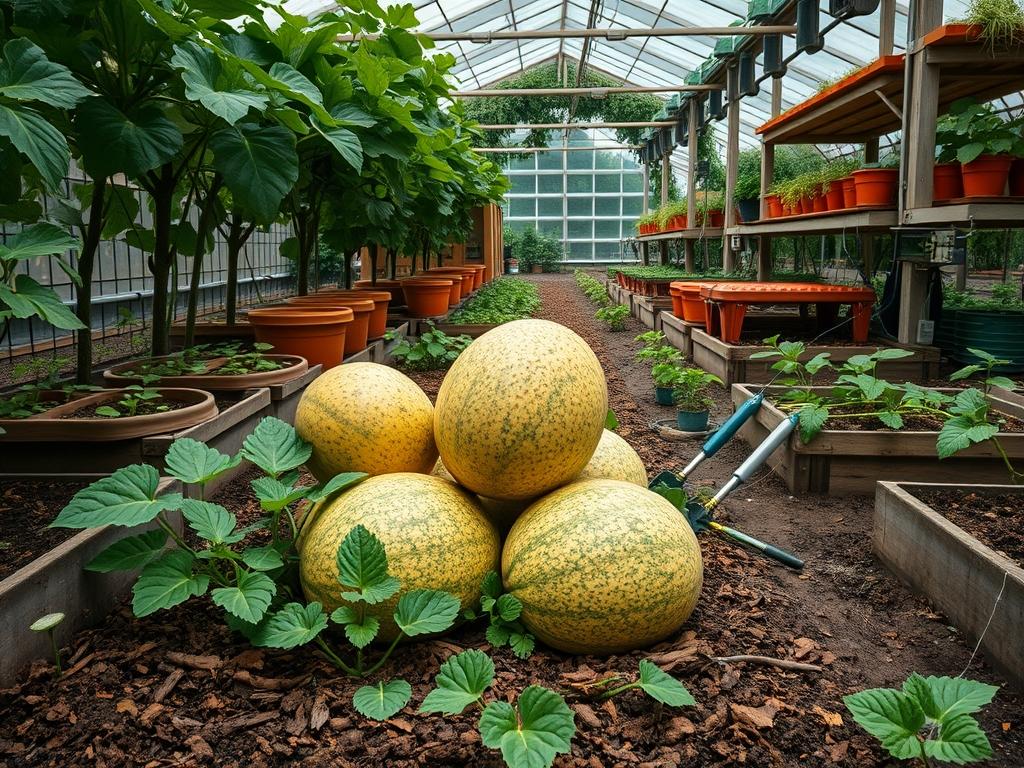
Integrating a productive kitchen garden into a high-end residential landscape requires more than just a dedicated patch of soil; it demands an understanding of spatial dynamics, solar orientation, and the lifecycle of the specific crops intended for harvest. When a landscape architect designs a space for Cantaloupes, the primary objective is to create a microclimate that fosters the ripening process, culminating in the successful execution of the slip test. This test is the definitive method for determining fruit maturity, where the melon effortlessly detaches from the vine at the point of attachment. Achieving this milestone is the ultimate performance metric for an edible landscape, signifying that the soil health, drainage, and thermal properties of the site were correctly calculated. Homeowners often struggle with the transition from a purely aesthetic lawn to a functional food forest because they treat the two as separate entities. However, a professional consultant views the Cantaloupe vine as a ground cover or a vertical accent that must be managed with the same precision as a Boxwood hedge or a Japanese Maple.
The challenge lies in the sprawling nature of the Cucumis melo species. Without a structural framework, a flourishing vine can quickly overwhelm a well-planned garden, compromising the curb appeal and obstructing pedestrian traffic. By applying landscape design principles to the vegetable garden, we can ensure that the journey toward picking ripe cantaloupes is as visually pleasing as it is productive. This involves strategic site grading to prevent water from pooling around the fruit, which would otherwise lead to ground rot before the slip test can ever be performed. Furthermore, the selection of materials for the surrounding hardscape, such as Flagstone or River Rock, can serve a dual purpose by absorbing heat during the day and radiating it back to the plants at night. This thermal mass shortens the time to maturity and improves the sugar content of the fruit. In high-wind environments, the landscape must also include windbreaks consisting of Evergreen Shrubs or Lattice Fencing to protect the delicate blossoms that eventually become the sun-ripened melons the client anticipates.
Landscape Design Principles
Symmetry and visual balance are the hallmarks of a professional outdoor environment, yet edible plants often introduce a chaotic element. To counteract this, landscape architects use Steel Edging or Cedar Raised Beds to define the boundaries of the melon patch. These structures provide a clean line that separates the wild, trailing vines from the manicured Kentucky Bluegrass or Fescue lawns. Elevation layers also play a critical role; by planting cantaloupes on a slight mound or within a tiered garden, the designer ensures that the fruit sits above the moisture line. This elevation is vital for the slip test, as a melon sitting in soggy soil will often develop soft spots or fungal infections that prevent the stem from drying and “slipping” naturally.
Focal points within the edible landscape help draw the eye away from the dying foliage that naturally occurs as the melons reach the end of their cycle. A well-placed Bird Bath or a Granite Obelisk can anchor the space. Additionally, irrigation planning must be invisible yet highly effective. Subsurface Drip Irrigation Lines are preferred over overhead sprinklers, as keeping the leaves dry reduces the risk of powdery mildew. This targeted watering approach ensures that the energy of the plant is directed toward fruit production rather than fighting off pathogens. Walkways should be wide enough, approximately 36 inches, to allow for harvest baskets and maintenance equipment without trampling the delicate vines that are searching for a foothold.
Plant and Material Selection
| Plant Type | Sun Exposure | Soil Needs | Water Demand | Growth Speed | Maintenance Level |
| :— | :— | :— | :— | :— | :— |
| Cantaloupe | Full Sun | Sandy Loam | Moderate/High | Fast | High |
| Marigold | Full Sun | Well-drained | Moderate | Medium | Low |
| Lavender | Full Sun | Alkaline | Low | Slow | Medium |
| Sweet Alyssum | Partial Sun | Moist | Moderate | Fast | Low |
| Borage | Full Sun | Rich Soil | Moderate | Fast | Medium |
Implementation Strategy
Physical implementation begins with a thorough site analysis including a soil test to determine the pH and nutrient levels. For Cantaloupes, a pH between 6.0 and 6.8 is ideal. The grading process must ensure a 2 percent slope away from the center of the garden to facilitate drainage. Once the terrain is prepped, install a High-Quality Weed Barrier or a thick layer of Organic Mulch to keep the fruit off the bare earth. If using a vertical strategy, a Cattle Panel Trellis or a custom-built Hardwood Arbor should be anchored at least 2 feet deep into the ground using Concrete Footings to support the weight of the heavy fruit.
As the vines grow, use Soft Garden Ties to guide them toward their intended path. As the fruit develops, the architectural focus shifts to the maturation zone. Some architects recommend placing a Terracotta Tile or a Flat River Stone under each developing melon. This prevents contact with the soil and reflects light onto the underside of the fruit. When the rind begins to change from green to a golden tan, and the netting becomes prominent and raised, the slip test becomes the daily ritual. Use a light touch; if the melon requires a tug, the landscape has not yet finished its work. A successful design allows the fruit to reach its peak brix level, at which point the plant naturally severs the connection through an abscission layer.
Common Landscaping Failures
The most frequent mistake in an edible landscape is poor drainage, which leads to fruit rot and root asphyxiation. If the soil is heavy clay, the fruit will rarely reach the slip stage because the roots cannot breathe. Another common failure is root overcrowding. Designers often underestimate the vigor of the Cantaloupe and plant too many seedlings in a small area, leading to competition for nitrogen and stunted fruit. Improper spacing also restricts airflow, creating a humid microclimate that invites aphids and cucumber beetles.
Irrigation inefficiencies, such as fluctuating water levels, cause the fruit to crack. A landscape should have an Automated Timer that delivers a consistent volume of water in the early morning hours. Soil compaction is another silent killer of the high-end garden. If construction crews or heavy foot traffic compress the earth near the planting site, the resulting lack of pore space prevents the deep root penetration necessary for drought resistance. Finally, the use of excessive high-nitrogen fertilizer can be a failure of strategy; while the foliage will look lush and green, the plant will fail to produce the sugars required for a sweet, “slippable” melon.
Seasonal Maintenance
Spring maintenance involves the application of Composted Manure and the installation of Row Covers to protect young plants from late frosts and early-season pests. This is also the time to check the integrity of all Irrigation Emitters and clear out any debris from the French Drains. As summer progresses, the focus shifts to pruning. Removing the terminal ends of the vines once several fruits have set will force the plant to put its energy into those specific melons. This is the peak period for monitoring the “Slip Test” indicators: the sweet aroma near the garden and the changing color of the rind.
Autumn management requires the removal of all spent vegetative matter to prevent the overwintering of pathogens. If the cantaloupes were grown on a trellis, the structure should be wiped down with a Mild Bleach Solution or Vinegar. The soil should be turned and a cover crop, such as Winter Rye, should be planted to prevent erosion and nutrient leaching. During the winter, the landscape architect should review the performance of the site. Did the elevated beds provide enough heat? Was the walkway wide enough for the harvest? Use this dormant period to plan additions like Retaining Walls or new Gravel Paths to refine the garden’s functionality for the next growing season.
Professional Landscaping FAQ
How do I know if the slip test was successful?
The melon will separate from the vine with a very gentle push of the thumb. There should be no jagged edges or torn skin at the attachment point; it should leave a clean, circular indentation on the fruit.
Can I use the slip test for all melon varieties?
The slip test is primarily used for Cantaloupes and Muskmelons. Other varieties, like Watermelons or Honeydews, do not slip when ripe and require different indicators such as tendril desiccation or color changes on the belly of the fruit.
What tools are needed for a professional melon harvest?
Ideally, no tools are needed for the fruit itself if the slip test is used. However, carry a pair of Bypass Pruners to clean up the vine and a Sturdy Wicker Basket to transport the heavy crop without bruising.
Does mulch affect the slip test timing?
Yes, using Black Plastic Mulch or dark Lava Rock can increase soil temperature, which accelerates the growth cycle. This often leads to an earlier harvest window compared to using light-colored organic mulches like Straw or Pine Bark.
Why did my cantaloupe fail to slip despite being large?
This usually occurs due to inconsistent watering or a lack of potassium in the soil. Without the proper nutrient balance and moisture, the plant cannot form the abscission layer necessary for the fruit to naturally detach from the stem.