
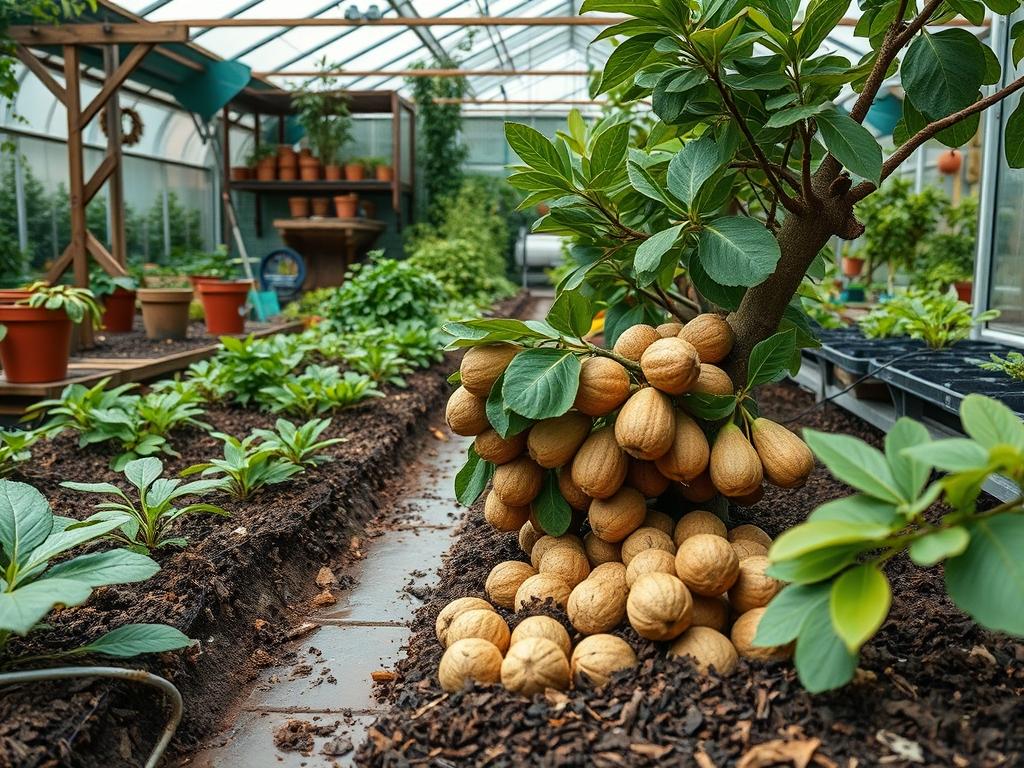
Integrating a walnut tree into a residential landscape represents a long-term commitment to both aesthetic grandeur and functional food production. While many homeowners view these trees primarily for their sprawling canopies and shade, a senior landscape architect sees them as complex environmental anchors that dictate the health and design of everything within their root zone. The primary challenge lies in the biological footprint of the tree, specifically the production of juglone, a respiratory inhibitor that can atria the growth of sensitive ornamental plants. Successfully managing this environment requires a professional approach to site grading, soil amendment, and spatial planning. When the time comes for Harvesting Garden Walnuts, the landscape must transition from a passive visual asset into an active, clean, and accessible workspace. This requires a layout that allows for easy navigation under the drip line without damaging the underlying turf or hardscaping elements. By treating the walnut tree as a central focal point rather than an afterthought, you can enhance the curb appeal of your property while ensuring the soil remains fertile and the drainage remains efficient for decades to completion.
Landscape Design Principles
Symmetry and focal points are essential when incorporating large-scale nut trees like the Black Walnut or the English Walnut. Because these trees can reach heights of 70 feet and spreads of 50 feet, they should rarely be crowded into corners or placed too close to the primary residence. Instead, position them as a singular anchor in a large lawn or as part of a structured woodland border. Symmetry in the surrounding landscape can be achieved by echoing the tree’s rounded form with curved boxwood hedges or circular flagstone patios placed just outside the primary root zone.
Elevation layers play a vital role in preventing the accumulation of juglone in the soil. If your property has a natural slope, place the walnut tree at a lower elevation than sensitive garden beds. This ensures that rainwater, which carries the chemical from the leaves and hulls into the earth, drains away from your azaleas or tomatoes. Walkways should be designed to skirt the canopy rather than run directly underneath it. Utilizing permeable materials like crushed granite or decomposed granite allows for better aeration of the root system while providing a stable, clean surface for the harvest. Visual balance is maintained by planting juglone-tolerant species in varying heights to create a tiered effect that softens the massive scale of the mature timber.
Plant and Material Selection
| Plant Type | Sun Exposure | Soil Needs | Water Demand | Growth Speed | Maintenance Level |
| :— | :— | :— | :— | :— | :— |
| Black Walnut | Full Sun | Deep, Loamy | Moderate | Medium | High (Harvest) |
| Hostas | Full Shade | Rich, Moist | High | Fast | Low |
| Christmas Fern | Part Shade | Well-Drained | Moderate | Medium | Low |
| Heuchera | Part Sun | Neutral pH | Low | Medium | Low |
| Kentucky Bluegrass | Full Sun | Nitrogen Rich | High | Fast | Moderate |
| River Birch | Full Sun | Acidic, Wet | High | Fast | Moderate |
Implementation Strategy
The process of preparing a backyard for Harvesting Garden Walnuts begins with precise grading and ground preparation. A professional layout utilizes a defined “drop zone” under the tree’s canopy. Start by clearing all debris and unnecessary brush within the drip line. We recommend a 3 inch layer of hardwood mulch or a well-manicured turfgrass buffer to prevent the nuts from disappearing into soft mud upon falling. Edging is critical here; use heavy-duty steel edging or pressure-treated timber to separate the harvest area from ornamental flower beds. This prevents the staining hulls from bleeding into your decorative mulch sections.
Drainage must be addressed early in the design phase. Walnut trees thrive in well-drained soil, but stagnant water around the base can lead to root rot and poor nut quality. Install a French drain if the area tends to hold moisture. For the hardscaping, ensure that any pavers or retaining walls located under the canopy are sealed with a high-quality penetrating sealer. The husks of the walnuts contain potent dyes that can permanently discolor natural stone if left to sit during a rainy autumn. Planning for the harvest also means ensuring there is a clear path for a rolling nut picker or heavy-duty garden cart to reach the tree without navigating steep inclines or narrow gates.
Common Landscaping Failures
One of the most frequent mistakes in walnut-centric landscapes is root overcrowding. Homeowners often try to plant high-maintenance ornamentals too close to the trunk, which leads to competition for water and nutrients. This stress often results in a “mast year” where the tree produces fewer, lower-quality nuts. Soil compaction is another silent killer. Frequent foot traffic or the use of heavy machinery under the canopy compresses the soil pores, suffocating the fine feeder roots located in the top 12 inches of the earth.
Improper spacing relative to hardscaping is also a major issue. Many people underestimate the power of the walnut’s root system, which can lift and crack concrete sidewalks if they are placed within 15 feet of the trunk. Irrigation inefficiencies often arise when homeowners use standard overhead sprinklers. This keeps the foliage wet for too long, encouraging fungal diseases like walnut anthracnose. A drip irrigation system or soaker hoses buried beneath the mulch provides water directly to the roots without saturating the leaves or the ripening nuts. Finally, neglecting the cleanup of fallen hulls can lead to a localized “dead zone” where the concentrated juglone prevents even the hardiest grasses from growing.
Seasonal Maintenance
Spring management focuses on soil health and structural integrity. As the tree emerges from dormancy, apply a balanced fertilizer rich in nitrogen to support foliage growth. This is also the ideal time to check your irrigation lines for leaks and to refresh the mulch layers to a depth of 2 to 4 inches. Avoid heavy pruning during the spring, as walnut trees are “bleeders” and can lose significant sap if cut during the high-pressure growth phase.
Summer maintenance involves monitoring for pests and managing water stress. During heat waves, ensure the tree receives at least 1 inch of water per week. This is critical for the development of the kernels inside the shell. Keep the area under the tree mowed short; a low grass height makes the upcoming harvest much easier. By the end of summer, you should prepare your drying station elsewhere in the landscape. This typically involves a raised wooden rack with a heavy-duty wire mesh bottom to allow for maximum airflow.
Autumn is the peak season for Harvesting Garden Walnuts. Once the green husks turn yellowish-green or begin to split, the nuts are ready. Use a long pole to gently shake the lower branches if they do not fall naturally. Efficiency is key; collect the nuts daily to prevent mold and squirrel damage. Once gathered, use a pressure washer or a manual husking tool to remove the outer green skin. Wear heavy-duty rubber gloves during this process, as the juice will stain skin for weeks. Place the cleaned nuts on your drying racks in a single layer, ensuring they are kept in a cool, dry area with high ventilation for at least two weeks.
Winter is the time for structural pruning and landscape sanitation. Once the tree is fully dormant, remove any dead, damaged, or crossing branches using a clean bypass pruner or pole saw. It is also important to remove all remaining debris from the lawn. Rake up any leftover hull fragments or shriveled nuts to reduce the juglone concentration in the soil for the coming spring. This dormant period is also the best time to plan any new hardscaping or additions to the “walnut zone” while the tree is not actively growing.
Professional Landscaping FAQ
How do I protect my patio from walnut stains?
Apply a high-grade silane-siloxane sealer to all natural stone or concrete surfaces before the autumn drop. Promptly sweep away any fallen nuts and hulls. Using a power washer on a low setting can remove fresh stains before they set into the pores.
Which grass types grow best under walnut trees?
Tall Fescue and Kentucky Bluegrass are surprisingly resilient to juglone if the soil is kept well-aerated. Ensure the grass receives adequate sunlight by thinning the tree’s inner canopy every few years to allow light penetration to the specialized turf.
Can I use walnut leaves as mulch in my garden?
No, you should avoid using fresh walnut leaves in sensitive garden beds. While the juglone breaks down over several months in a hot compost pile, fresh leaves can still contain enough toxins to stunt the growth of your vegetables or flowers.
What is the best tool for collecting walnuts on a large lawn?
A rolling nut harvester is the most efficient professional tool. It uses flexible wire tines to pick up the nuts without requiring you to bend over. For smaller landscapes, a sturdy garden rake and a plastic bucket are usually sufficient.
How deep should my flower beds be if they are near a walnut?
If you are planting near the drip line, use raised garden beds at least 12 inches high. Fill them with fresh, imported soil and line the bottom with a heavy-duty landscape fabric to prevent the walnut roots from growing upward into the bed.