
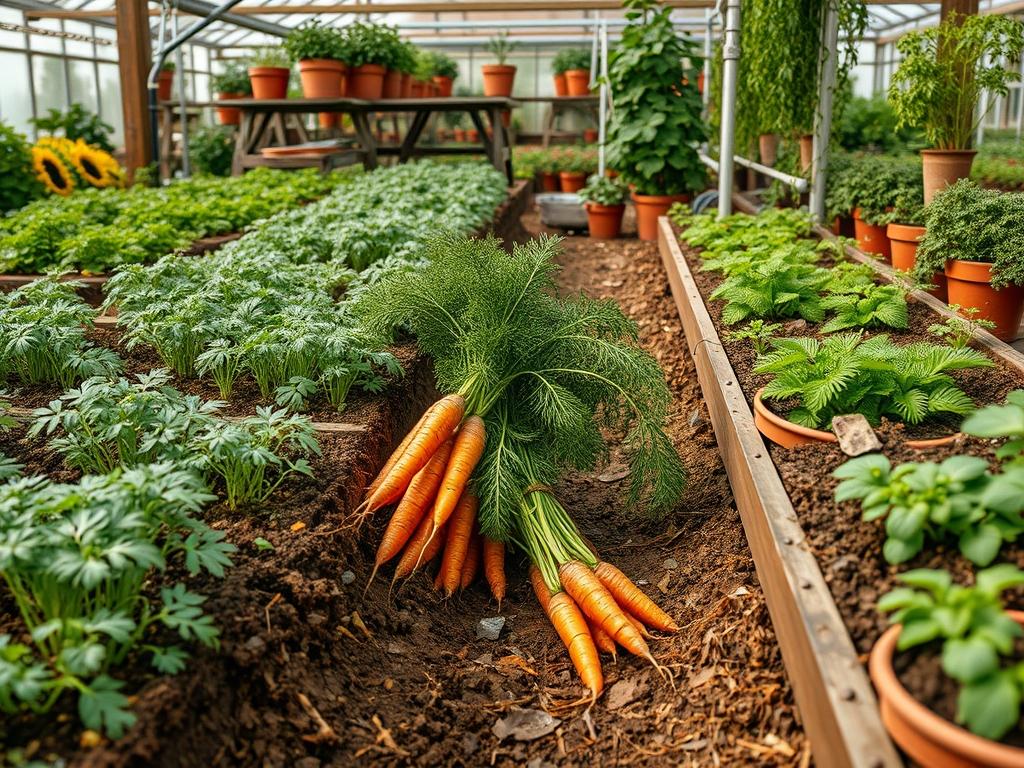
Successful edible landscaping requires a delicate balance between aesthetic beauty and functional utility. When we approach the task of harvesting root carrots, we are not merely extracting a vegetable; we are engaging with the culmination of a precision-engineered soil environment. In a professional landscape, the vegetable garden, often referred to as a potager, must maintain its visual integrity throughout the season. Carrots, with their feathery foliage, contribute a unique fine-textured layer to a garden’s middle ground. However, the true test of a landscape’s soil health and preparation comes at the end of the growth cycle. If the soil is improperly graded or compacted, the delicate taproot of the Daucus carota will seize within the earth. Preventing the breakage of these roots is a matter of both technique and site design. A broken carrot tip in the ground is more than a culinary loss; it is a sign that the subsurface environment has failed to provide the necessary friability and moisture retention required for root expansion.
Landscape Design Principles
When integrating carrot beds into a broader landscape plan, symmetry and elevation layers are paramount. Carrots should be positioned within a garden’s hierarchy where their delicate tops can soften the transition between hardscaping elements like Natural Stone Edging and taller architectural plants like Liatris or Lavender. A well-planned garden uses carrots as a structural filler that bridges the gap between low-growing ground covers and mid-sized perennials. To ensure easy access for harvesting root carrots, the beds must be designed with a maximum width of 4 feet. This allows the gardener to reach the center of the bed from either side without stepping on the soil and causing compaction.
Elevation plays a critical role in root development. In regions with heavy clay, professional designers recommend raised beds or berms that sit at least 12 inches above the natural grade. This elevation ensures that gravity aids in drainage, preventing the roots from becoming waterlogged. Visual balance is achieved by repeating these rectangular or circular raised forms throughout the space. Irrigation planning must be subterranean or drip-based. Overhead watering can crust the soil surface, making it difficult for the carrots to emerge and even harder to extract them later without snapping the tips. By using a Netafim Drip Line, moisture is delivered directly to the root zone, keeping the soil consistently pliable.
Plant and Material Selection
The following table outlines the essential components for a high-performance edible landscape bed focused on root health.
| Plant or Material | Sun Exposure | Soil Needs | Water Demand | Growth Speed | Maintenance Level |
| :— | :— | :— | :— | :— | :— |
| Nantes Carrot | Full Sun | Sandy Loam | Moderate | Medium | Moderate |
| Imperator Carrot | Full Sun | Deep Sandy | Moderate | Slow | High |
| French Marigold | Full Sun | Diverse | Low | Fast | Low |
| Sweet Alyssum | Sun to Part Shade | Well Drained | Moderate | Fast | Low |
| Red River Sand | N/A | Amendment | N/A | N/A | N/A |
| Organic Compost | N/A | Amendment | N/A | N/A | Low |
Implementation Strategy
The process for successful garden layout planning begins with a thorough site analysis. Before a single seed is sown, the grading of the backyard must be verified. A slope of 1 to 2 percent is ideal for directing runoff away from the root zone. Once the site is graded, the edging is installed to define the beds and prevent invasive turf grasses from encroaching. For carrot production, use Corten Steel or Pressure-Treated Timber to create a rigid boundary.
The soil mix is the most critical element of the implementation strategy. A professional blend consists of 60 percent sandy loam, 30 percent sifted compost, and 10 percent horticultural sand. This mixture provides the structural porosity needed for the carrot to grow straight and deep. When the time comes for harvesting root carrots, this loose soil structure allows the root to slide out with minimal resistance. To begin the harvest, never pull the carrot by the green tops alone. Instead, use a Spading Fork or a Hand Trowel. Insert the tool vertically into the soil about 3 to 4 inches away from the base of the plant. Gently rock the tool back and forth to loosen the surrounding earth. This mechanical agitation breaks the vacuum seal between the root and the soil, allowing the carrot to be lifted out intact.
Common Landscaping Failures
The most frequent failure in root vegetable landscaping is soil compaction. This often occurs during the construction phase if heavy machinery or even frequent foot traffic is allowed over the planting area. Compacted soil acts like concrete once it dries. When a gardener attempts harvesting root carrots in such conditions, the tip almost always remain stuck in the lower, denser layers of the earth. Another common mistake is the improper use of organic matter. While compost is necessary, fresh manure or chunky mulch mixed into the soil can cause carrot roots to fork or deform as they hit these obstacles.
Drainage mistakes also lead to significant harvest issues. If the site lacks proper drainage, the soil remains saturated for too long, leading to root rot or a condition where the carrot becomes “stuck” in heavy, mucky clay. Improper spacing is another deterrent to a clean harvest. When carrots are sown too densely, their roots intertwine. Attempting to pull one root often results in snapping the neighbor’s tip because the lateral root hairs are entangled. Maintaining a distance of 2 to 3 inches between each plant is a standard professional requirement for a clean, undamaged yield.
Seasonal Maintenance
Landscape management is a year-round commitment. In the spring, focus on soil preparation and the removal of any overwintered debris. This is the time to check the irrigation system for clogs and to ensure the Emitters are placed correctly for the upcoming carrot rows. As summer progresses, the focus shifts to moisture management and mulching. A thin layer of Finely Shredded Straw or Pine Bark can be applied around the carrot tops to keep the soil shoulders cool and moist.
Autumn is the primary season for harvesting root carrots. Before the ground freezes, the roots must be extracted. If a hard frost is expected, a thick layer of mulch can be applied to keep the soil workable for a few extra weeks. In the winter, the focus turns to soil restoration. Cover crops like Winter Rye or a simple layer of leaves can be applied to the beds to prevent erosion and to start building organic matter for the next season. Professional landscapers also use this time to assess the structural integrity of raised beds and retaining walls, making repairs while vegetation is dormant.
Professional Landscaping FAQ
How deep should the soil be for long carrot varieties?
For varieties like Imperator, you need at least 12 to 18 inches of loose, rock-free soil. This depth ensures the taproot can extend fully without hitting hardpan or obstructions that cause forking or tip breakage during the harvest process.
Can I use a rototiller to prepare the carrot beds?
Rototillers can be helpful for initial site prep; however, they often create a hardpan layer just below the blade reach. For professional results, use a Broadfork to aerate the soil deeply without flipping the layers or destroying the soil structure and beneficial fungi.
Does mulch help in preventing broken carrot tips?
Yes, a consistent layer of Organic Mulch prevents the soil surface from baking into a hard crust. If the top few inches of soil are kept moist and soft, the carrot crown is less likely to snap off from the root during extraction.
What tool is best for harvesting in heavy soil?
A Border Fork with thin, sharp tines is the superior tool for heavy ground. It penetrates the soil with minimal effort and allows for deep leverage to lift the entire root column without applying direct pressure to the carrot itself.
When is the best time of day to harvest?
Harvesting should occur in the early morning when the plants are fully hydrated. The turgor pressure within the root makes it more resilient to the physical stress of being lifted from the ground, reducing the risk of mid-root snapping.