
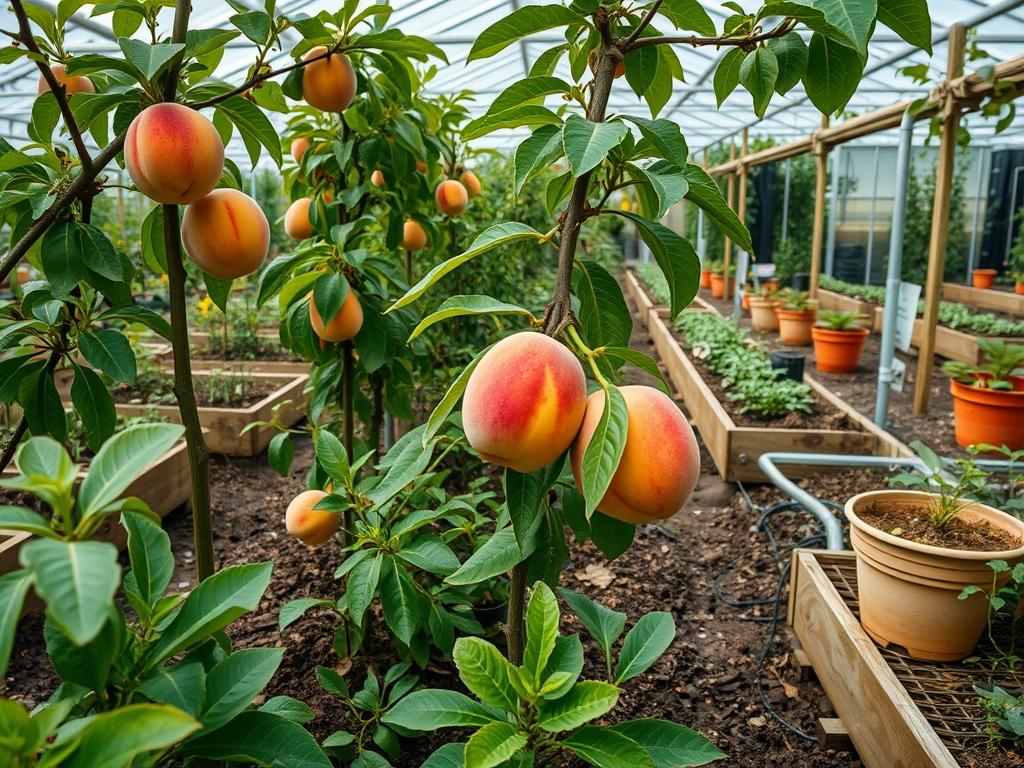
Integrating fruit-bearing trees into a luxury residential landscape requires a delicate balance between agricultural productivity and high-end aesthetics. Homeowners often desire the unique sensory reward of picking tree-ripened peaches directly from their own property, yet the architectural layout must support the long-term health of the tree while maintaining overall curb appeal. A poorly placed peach tree quickly becomes a maintenance burden, dropping overripe fruit onto clean paver stones or succumbing to fungal pathogens due to insufficient airflow. By treating the orchard as a deliberate structural element, we transform a simple backyard into a productive sanctuary that increases property value. Success begins with understanding the microclimates of the site. A peach tree requires maximum solar exposure and protection from late spring frosts, which often necessitates placing it near heat-retaining structures like stone retaining walls or southern-facing facades. When the site is engineered correctly, the result is a functional landscape that yields high-quality produce and serves as a stunning visual centerpiece.
Landscape Design Principles
Effective landscape architecture revolves around the concept of the specimen tree. In a residential garden, the peach tree often serves as this central focal point due to its vibrant spring blossoms and lush summer canopy. To achieve visual balance, designers utilize symmetry by flanking a central walkway with dwarf peach varieties, creating a formal alley effect. This approach necessitates precise irrigation planning to ensure that water delivery is consistent without oversaturating the root zone. We often use subsurface drip irrigation systems to keep the foliage dry, which is critical for preventing the diseases that can ruin a harvest before picking tree-ripened peaches becomes possible.
Elevation layers play a vital role in the transition from hardscaping to softscaping. We typically place lower-growing perennials, such as Lavender or Rosemary, around the base of the tree to create a tiered effect. This not only aesthetically hides the mulch ring but also encourages pollinators to visit the area. Walkways must be wide enough, usually at least four feet, to allow for easy access with harvest baskets and maintenance tools. If the tree is situated on a slope, we implement tiered grading to prevent erosion and ensure that nutrients reach the root system effectively. The goal is to create a space where the transition from the indoor living area to the outdoor orchard feels seamless and intentional.
Plant and Material Selection
Selecting the right cultivars and hardscape materials is the foundation of a sustainable garden. The following table highlights common selections for a productive and beautiful landscape.
| Plant Type | Sun Exposure | Soil Needs | Water Demand | Growth Speed | Maintenance Level |
| :— | :— | :— | :— | :— | :— |
| Prunus persica | Full Sun | Well-drained | Moderate | Fast | High |
| English Lavender | Full Sun | Sandy/Lean | Low | Medium | Low |
| Creeping Thyme | Full Sun | Rocky/Dry | Low | Fast | Low |
| Fescue Turf | Partial/Full | Loamy | High | Fast | Moderate |
| Blueberry Bush | Full/Partial | Acidic/Peat | High | Slow | Moderate |
For the hardscape, we prioritize non-porous materials like slate or sealed concrete near the trees. This ensures that any fallen fruit can be easily swept away without staining the surface. We also recommend the use of organic cedar mulch applied to a depth of three inches to regulate soil temperature and suppress weeds that compete for vital nutrients.
Implementation Strategy
The transition from a design blueprint to a physical landscape requires a systematic approach to site preparation. We begin with grading the soil to ensure a two percent slope away from all permanent structures and the tree’s trunk. This prevents “wet feet,” a condition where water pools around the roots, leading to root rot. After grading, we install French drains in areas with heavy clay content to facilitate rapid drainage after storm events.
Once the drainage infrastructure is in place, we focus on soil amendment. Peach trees thrive in a soil pH between 6.0 and 7.0. We use a broadfork to aerate the planting site before incorporating composted organic matter and a balanced 10-10-10 fertilizer. The planting hole itself should be twice as wide as the root ball but no deeper, ensuring the graft union remains at least two inches above the final soil line. We then establish edging using powder-coated steel or tumbled stone to define the boundary between the lawn and the mulch bed. This prevents turf grass from encroaching on the tree’s root zone. Finally, a heavy application of mulch is spread in a wide circle, being careful not to let the material touch the bark of the tree, which could invite pests or rot.
Common Landscaping Failures
One of the most frequent mistakes in orchard planning is root overcrowding. Designing for the tree’s current size rather than its mature canopy spread leads to poor airflow and sunlight penetration. Without at least twelve feet of space between trees, the lower branches will become shaded out, reducing the quantity and quality of the fruit. This makes the goal of picking tree-ripened peaches nearly impossible as the fruit will lack the necessary sugar development.
Another common failure involves improper irrigation height. Using high-impact sprinkler heads that spray the canopy increases the risk of peach leaf curl and brown rot. In contrast, failing to provide enough water during the fruit-ripening stage causes the peaches to drop prematurely. Soil compaction is a third major issue, often caused by heavy foot traffic or construction equipment near the dripline. Compacted soil lacks the oxygen pockets required for healthy root respiration. We mitigate this by clearly defining walkways and using permeable pavers where traffic is unavoidable.
Seasonal Maintenance
A professional landscape requires year-round management to ensure peak performance. In the Spring, the focus is on dormant oil sprays to kill overwintering pests and structural pruning using bypass pruners. We remove any “water sprouts” or “suckers” that drain energy from the main fruit-producing branches. As the fruit sets, we perform thinning, leaving approximately six inches between each peach to ensure the gems reach a desirable size.
During the Summer, the priority shifts to picking tree-ripened peaches and managing water stress. We monitor soil moisture using a tensiometer and adjust the irrigation controller based on heat waves. Any fallen or diseased fruit must be removed immediately to prevent the spread of pests like the plum curculio. In the Autumn, we apply a layer of winterizer fertilizer and clear away all fallen leaves to reduce the fungal inoculum load for the following year. Finally, in Winter, we check the integrity of staking and apply white trunk wrap to young trees to prevent sunscald, a common issue where the bark splits due to rapid temperature fluctuations between day and night.
Professional Landscaping FAQ
What is the best way to determine if a peach is ready to pick?
The fruit should have no green remaining in the “ground color” near the stem. It should yield slightly to gentle pressure with the palm of your hand and come away from the branch with a light upward twist.
How do I prevent my peach tree from becoming too tall?
Utilize Heading Cuts during the dormant season to manage the height of the central leader. Maintaining an “open center” or “vase” shape keeps the fruiting wood within arm’s reach, making the harvest much safer and more efficient.
Can I grow peaches in a small urban courtyard?
Yes, by selecting columnar or dwarf varieties grafted onto specific rootstocks. These trees can be grown in large terracotta planters or built-in raised beds, provided they receive at least eight hours of direct sunlight daily and consistent moisture.
Why is drainage so important for stone fruit trees?
Peach trees are highly susceptible to Phytophthora root rot in oversaturated soils. Proper grading and the use of sandy loam backfill ensure that oxygen reaches the roots, which is vital for the tree’s metabolic processes and fruit production.
What mulch is best for a productive peach orchard?
We recommend arborist wood chips or shredded cedar mulch. These materials break down slowly, improve soil structure over time, and provide a clean, aesthetic appearance that complements high-end hardscaping while suppressing weeds effectively without the need for chemicals.