
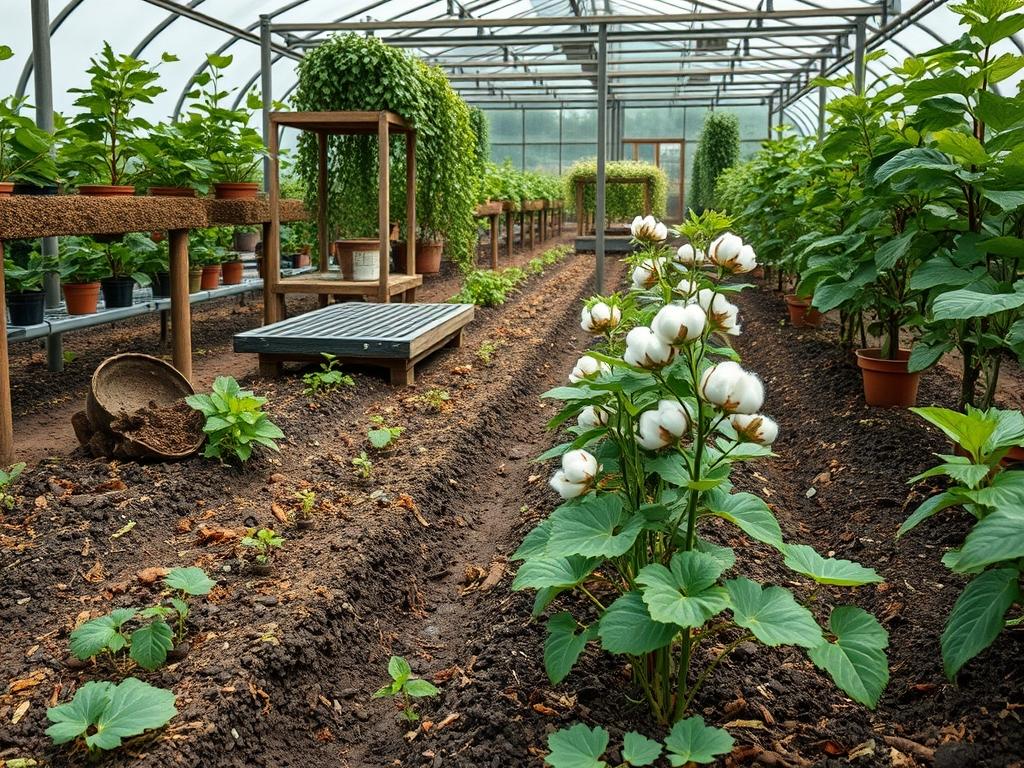
Integrating ornamental crops into a high-end residential landscape requires a sophisticated balance between agricultural utility and aesthetic harmony. Cotton, specifically Gossypium hirsutum, presents an intriguing opportunity for the landscape architect to introduce texture and historical resonance into a design. However, utilizing this plant goes beyond simple aesthetics; it demands a rigorous understanding of soil temperature, drainage patterns, and the specific timing required for Harvesting Garden Cotton. The challenge for most property owners is maintaining curb appeal during the transition from the lush green vegetative state to the stark, skeletal beauty of the open bolls. Without a structured plan for elevation and focal point management, a cotton-based landscape can quickly appear unkempt rather than curated. Success lies in treating the crop as a structural element that provides visual interest through its evolving life cycle, culminating in a harvest that serves as both a functional yield and a seasonal cleanup.
Landscape Design Principles
Effective landscape design using cotton requires a commitment to symmetry and the strategic use of focal points. Because cotton plants can grow to heights of 3 feet to 5 feet, they function best as mid-ground layers within a tiered garden bed. Architects should place them behind shorter, evergreen borders such as Boxwood or Liriope to hide the lower stems, which can become woody and sparse as the season progresses. Using a Laser Level to ensure precise grading is essential, as cotton is highly sensitive to standing water. The implementation of slightly raised mounds, or berms, can provide the necessary elevation while adding three dimensional depth to a flat backyard.
Visual balance is achieved by pairing the airy, white bolls of the cotton plant with denser, darker foliage. This contrast ensures that the “open boll” phase looks intentional rather than accidental. Additionally, irrigation planning must be sophisticated. Subsurface Drip Irrigation lines are preferred over overhead sprinklers to prevent moisture from trapping within the lint of the open bolls, which can lead to rot and discoloration. Walkways should be designed with at least 4 feet of width to allow for easy access during the harvest without trampling neighboring ornamental species.
Plant and Material Selection
| Plant Type | Sun Exposure | Soil Needs | Water Demand | Growth Speed | Maintenance Level |
| :— | :— | :— | :— | :— | :— |
| Gossypium hirsutum (Cotton) | Full Sun | Sandy Loam, pH 6.0-6.5 | Moderate/Low | Fast | High |
| Muhlenbergia capillaris (Pink Muhly) | Full Sun | Well-drained | Low | Moderate | Low |
| Ilex vomitoria (Yaupon Holly) | Full/Partial | Versatile | Low | Moderate | Low |
| Pennisetum alopecuroides | Full Sun | Moist/Well-drained | Moderate | Fast | Low |
| Lavandula angustifolia | Full Sun | Gritty/Alkaline | Very Low | Slow | Moderate |
Implementation Strategy
The transition from a blueprint to a blooming landscape involves several critical steps to ensure the cotton crop integrates seamlessly with the surrounding hardscaping.
Step 1: Grading and Drainage.
Begin by assessing the site with a Soil Probe to determine compaction levels. Cotton requires deep, friable soil for its taproot system. Grade the area to a 2 percent slope away from any foundations or retaining walls. If the soil is heavy clay, incorporate Expanded Shale or Coarse Sand to a depth of 12 inches to facilitate hydraulic conductivity.
Step 2: Edging and Hardscaping.
Install heavy-duty Steel Edging or Stone Pavers to define the boundaries between the cotton beds and the turf. This prevents the spreading of cotton seeds into the lawn and creates a clean visual break. If the design includes a Retaining Wall, ensure that weep holes are clear and that backfill consisting of Crushed Limestone is used to manage hydrostatic pressure.
Step 3: Planting and Mulching.
Sow seeds only after the soil temperature consistently reaches 65 degrees Fahrenheit. Space the plants at 12-inch intervals to allow for adequate airflow, which is the best defense against fungal pathogens. Once the seedlings are established, apply a 3-inch layer of Hardwood Mulch to regulate soil temperature and suppress weeds. Avoid mulch contact with the plant stems to prevent crown rot.
Step 4: Identifying Open Bolls.
As the season shifts toward autumn, the primary task becomes Harvesting Garden Cotton. Identification is a visual process. Look for the “square” to transition into a flower, then into a green, egg-shaped pod called a boll. The boll is considered “open” and ready for harvest when the dried outer segments, known as carpels or burrs, peel back fully to reveal the white, fluffy fibers. The fibers should be dry to the touch and expanded beyond the edges of the burrs. Do not harvest bolls that are only partially cracked open, as the fibers inside will still contain high moisture levels and may mill poorly.
Common Landscaping Failures
The most frequent failure in ornamental cotton landscapes is improper drainage. Cotton is notoriously susceptible to “wet feet,” which causes stunting and boll shedding. If the site does not allow for natural runoff, a French Drain system or a Dry Well must be installed to manage excess precipitation. Another common error is root overcrowding. Because cotton plants have a significant lateral spread in their upper canopy, planting them too closely to Foundation Walls can restrict airflow, leading to a buildup of whiteflies or aphids.
Soil compaction is another silent killer of curb appeal. High traffic during the construction phase often leaves the soil in a state where oxygen cannot reach the roots. Architects should specify the use of Air Spades or deep tilling before any planting occurs. Finally, many gardeners fail to adjust their irrigation late in the season. Once the bolls begin to crack, water demand drops significantly. Continuing to irrigate at summer levels will delay the opening of the bolls and can cause the fiber to become stained by soil splash or mold.
Seasonal Maintenance
Spring:
Focus on soil preparation. Test the pH and apply Pelletized Lime if the soil is too acidic. Ensure that the Drip Irrigation system is pressurized and that no emitters are clogged by mineral deposits. This is also the time to apply a pre-emergent herbicide safe for broadleaf plants to minimize weed competition.
Summer:
This is the peak vegetative growth phase. Monitor for pests using Yellow Sticky Traps. Prune any neighboring shrubs that might be casting shade on the cotton, as it requires at least 8 hours of direct sunlight to produce high quality bolls. Maintain the 3-inch mulch depth to conserve moisture during heat waves.
Autumn:
This is the primary window for Harvesting Garden Cotton. Monitor the garden daily to identify bolls that have dried and fluffed out. Removing them promptly maintains the aesthetic of the landscape and prevents the lint from falling and cluttering the garden floor. Once the harvest is complete, the remaining stalks can be left for winter architectural interest or cut back to the ground.
Winter:
Clean the beds of all plant debris to prevent the overwintering of boll weevils or other pests. Inspect Retaining Walls and Walkways for frost heave. If the cotton is grown as an annual, this is the time to plan the crop rotation, as planting cotton in the same spot for more than three years can lead to a buildup of soil-borne pathogens.
Professional Landscaping FAQ
How do I know the cotton is ready to pick?
The cotton is ready when the green boll dries and splits into several sections, exposing the white lint. The fibers should feel dry, springy, and light. If the lint is still tightly packed or damp, allow it more time on the stalk.
Does cotton require a specific type of fertilizer?
Cotton thrives with a balanced nitrogen, phosphorus, and potassium mix during early growth. High nitrogen should be avoided once the plants begin flowering, as this encourages excessive leaf growth at the expense of boll development. Phosphorus is critical for strong boll production.
Can cotton grow in containers as part of a patio design?
Yes, cotton can be grown in large 10-gallon containers. Ensure the pots have excellent drainage holes and use a high quality Soilless Potting Mix. Potted cotton requires more frequent watering and supplemental fertilization compared to plants in the ground.
How do I manage pests without ruining the aesthetic?
Integrated Pest Management is key. Encourage beneficial insects like ladybugs. For significant infestations, use Neem Oil or Insecticidal Soap during the early morning hours to avoid leaf scorch. Keep the area around the plants free of tall weeds that host pests.
What happens if it rains after the bolls open?
Rain can cause the cotton fibers to become heavy and stringy, potentially staining them with dirt. If a heavy storm is forecasted, harvest all currently open bolls. If they do get wet, allow them to dry thoroughly on the plant before picking.