
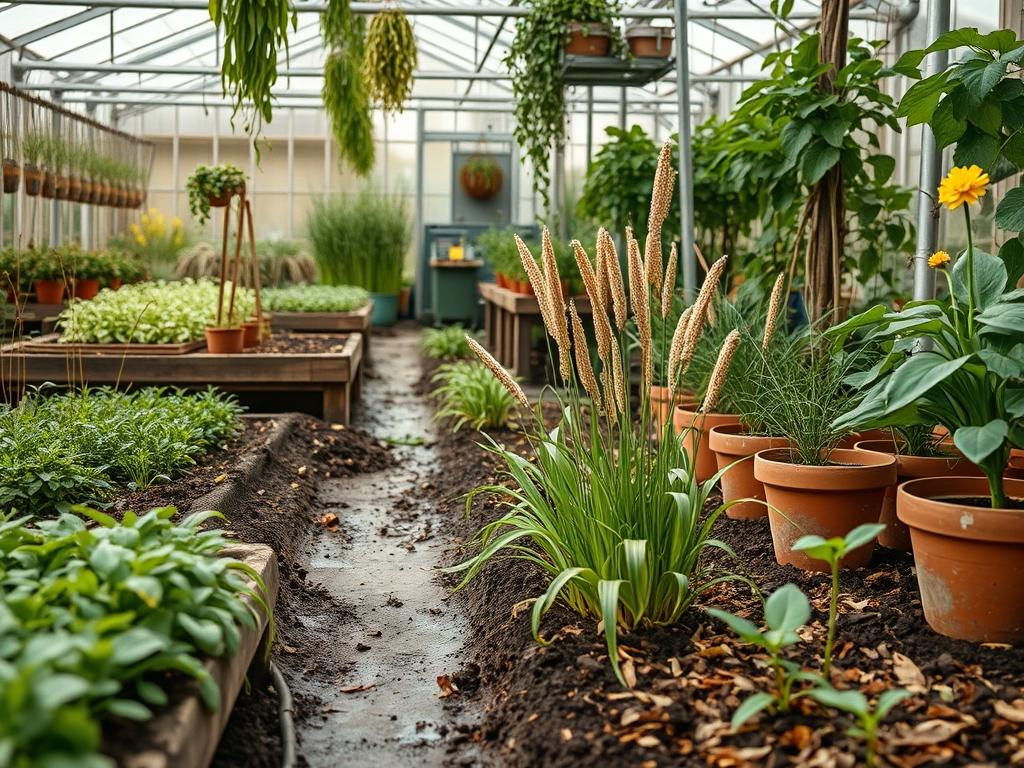
Integrating bird-friendly crops into a residential or commercial landscape requires a delicate balance between agricultural productivity and aesthetic sophistication. While many homeowners view birdseed as something purchased in a plastic bag, incorporating Harvesting Garden Millet into a professional landscape design provides a structural, rhythmic beauty that most traditional ornamental grasses cannot match. The challenge for a landscape architect lies in managing the verticality of these grains while ensuring they do not detract from the curb appeal during their late-season drying phase. By treating millet as a focal point within a layered planting scheme, we can achieve a functional ecosystem that supports local avian populations without sacrificing the clean lines of a well-curated garden.
Landscape Design Principles
In the realm of high-end landscape design, we often use the concept of spatial volume to define different outdoor rooms. Millet, particularly the taller varieties, serves as an excellent tool for defining these boundaries. Symmetry is achieved by flanking entryways or garden gates with matched stands of Pearl Millet, which provides a formal, upright habit. Because these plants can reach heights of 5 to 8 feet, they act as living privacy screens or “green walls” that change character as the seasons progress.
A successful design must also consider focal points. A singular, dense grouping of Purple Majesty Millet creates a bold textural contrast against the fine foliage of surrounding perennials. To maintain visual balance, we utilize elevation layers. We place the tallest grains in the rear, transitioning to mid-sized shrubs like Dwarf Fothergilla, and finishing with low-lying groundcovers. This ensures that the landscape feels full rather than cluttered. Furthermore, irrigation planning must be subtle. Subsurface Drip Irrigation is preferred to avoid wetting the heavy seed heads, which can lead to fungal issues or premature lodging of the stalks under the weight of water. Walkways should be designed with a minimum width of 36 inches to allow for easy access during the harvest without trampling the surrounding ornamental beds.
Plant and Material Selection
Selecting the right cultivar depends on the specific microclimate of the site and the desired aesthetic outcome. The following table outlines the primary species used in bird-centric landscape architecture.
| Plant Type | Sun Exposure | Soil Needs | Water Demand | Growth Speed | Maintenance Level |
| :— | :— | :— | :— | :— | :— |
| Pearl Millet | Full Sun | Well-drained | Moderate | Fast | Low |
| Foxtail Millet | Full Sun | Loamy/Sandy | Low | Moderate | Low |
| Proso Millet | Full Sun | Diverse | Low | Very Fast | Minimal |
| Japanese Millet | Full/Partial | Moist/Heavy | High | Fast | Moderate |
| Broomcorn | Full Sun | Nutrient Rich | Moderate | Moderate | Moderate |
Implementation Strategy
The successful implementation of a millet-focused landscape begins with site preparation and Grading. We must ensure a positive slope of at least 2 percent away from any hardscaping or foundations to prevent water from pooling near the root zones. Once the grade is established, we define the beds using Steel Edging or Belgium Block to create a crisp transition between the turf and the production areas. This prevents the vigorous root systems of the grain from encroaching upon the lawn.
Before planting, the soil should be amended with organic compost to achieve a target pH of 6.5. We apply a base layer of Slow-Release Fertilizer with a balanced N-P-K ratio to support early vegetative growth. When seeding or transplanting, spacing is critical; we recommend a density of tightly grouped clusters every 12 inches to provide mutual support for the tall stalks against wind. After planting, a 3-inch layer of Triple-Shredded Hardwood Mulch is applied to regulate soil temperature and suppress weeds. For the harvesting phase, we incorporate hidden stone “step-offs” within the beds. These allow the gardener to reach the center of the stalks to remove the seed heads once they have transitioned from green to a golden-brown hue, indicating the seeds are firm and viable for storage.
Common Landscaping Failures
The most frequent error in incorporating large grains into a garden is a failure to account for the weight of the mature seed heads. Without proper grouping or structural support, many varieties will “lodge,” or fall over, after a heavy rain. This creates a messy appearance and ruins the intended symmetry of the landscape. Additionally, drainage mistakes are common. If the soil remains saturated, the root systems of most millet species will suffer from anaerobic conditions, leading to stunted growth and pale foliage that detracts from the property’s curb appeal.
Root overcrowding is another significant issue. Many amateur landscapers plant seeds too densely, hoping for a “thick” look. However, this leads to competition for nutrients and poor air circulation, which invites pests like aphids and spider mites. Irrigation inefficiencies also plague these designs. Using overhead sprinklers during the flowering stage can wash away pollen, significantly reducing the yield of the birdseed harvest. Finally, soil compaction from heavy foot traffic during the planting phase can limit oxygen exchange, making it difficult for the plants to establish the deep taproots necessary for drought resistance.
Seasonal Maintenance
Seasonal management of a millet landscape is divided into four distinct phases to ensure both beauty and productivity. In Spring, the focus is on soil preparation and installation. We clear any debris from the previous year and perform a soil test to determine if any lime or sulfur is needed to adjust the acidity. As the soil warms to at least 65 degrees Fahrenheit, the seeds are sown. Use a Garden Rake to lightly incorporate the seeds into the top half-inch of soil, then firm the area to ensure good seed-to-soil contact.
During the Summer, maintenance shifts to irrigation and monitoring. While Millet is inherently drought-tolerant, supplemental watering during the “boot stage” (when the seed head is forming inside the stalk) is essential for a heavy crop. This is also the time for “side-dressing” with a nitrogen-rich fertilizer if the leaves show signs of yellowing. In Autumn, the primary task is Harvesting Garden Millet. We wait until the seeds are hard and resistant to a fingernail scratch. Using Bypass Pruners, we cut the heads with approximately 6 inches of stem attached. These are then hung in a cool, dry area with high ventilation for two to three weeks before being processed for bird collars or loose seed.
Winter maintenance involves the management of the remaining biomass. While some designers prefer to leave the stalks standing as “winter interest” and an additional food source for ground-feeding birds, others prefer a clean look. If the latter is chosen, the stalks should be cut to within 2 inches of the ground and composted. This is also the ideal time to plan for crop rotation, as planting millet in the same spot year after year can lead to a buildup of site-specific pathogens.
Professional Landscaping FAQ
How do I prevent my millet from falling over?
Ensure the site has excellent drainage and avoid over-fertilizing with nitrogen, which causes weak, leggy growth. Plant in dense clusters rather than isolated rows to allow the stalks to provide mutual wind resistance during the late summer months.
Is millet considered an invasive species in a managed landscape?
While some wild grasses are aggressive, cultivated varieties like Pearl Millet are generally well-behaved annuals. To prevent unwanted volunteers, harvest the seed heads promptly before they shatter or drop their grains naturally onto the mulch surface.
What is the best way to dry harvested birdseed?
Bundle the cut heads using Garden Twine and hang them upside down in a garage or shed. Ensure the area has consistent airflow to prevent mold; using a small oscillating fan can speed up the curing process significantly.
Can I grow millet in containers for small patios?
Yes, ornamental varieties like Purple Majesty thrive in large pots. Use a high-quality potting mix and ensure the container has a heavy base to prevent tipping, as the plants act like sails in high-wind conditions.
How do I know the exact moment to harvest?
Observe the local bird activity; when goldfinches or sparrows begin frequenting the stalks, the seeds are likely mature. Physically check the grains; they should be firm and have lost their milky internal consistency when squeezed.