
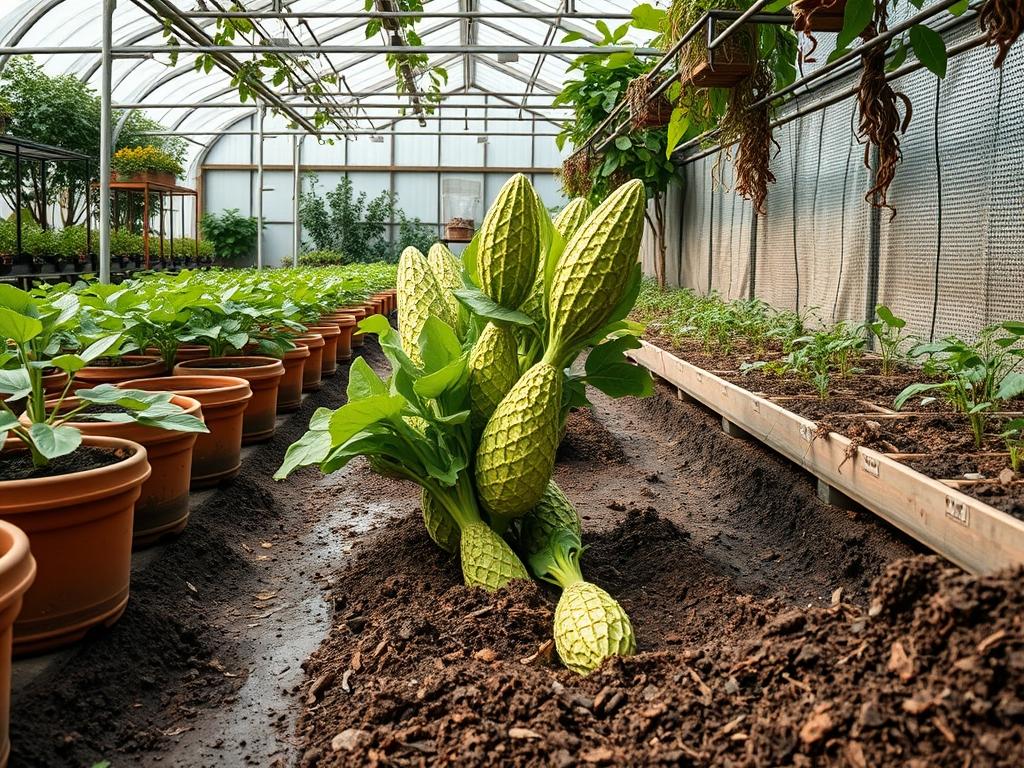
Integrating vigorous vines like the luffa into a residential or commercial landscape requires a sophisticated understanding of vertical space and structural integrity. Most homeowners view the loofah as a bathroom accessory, yet for a landscape architect, it represents a high-performing biological screen that can provide dense summer shade and significant privacy. The challenge lies in the vine’s aggressive growth habit and the weight of its fruit. A single Luffa aegyptiaca plant can reach lengths of 30 feet in a single season, requiring a robust support system that integrates seamlessly with the surrounding hardscape. In warm climates, typically USDA zones 7 through 11, these plants thrive in the intense heat that may cause other ornamental species to wilt. By prioritizing structural supports and sun orientation, a designer transforms a simple vegetable garden into a functional outdoor room. The visual payoff is a canopy of large, tropical leaves and vibrant yellow flowers that attract pollinators, followed by the rewarding process of picking fresh loofah sponges once the season draws to a close.
Landscape Design Principles
Successful integration of loofah vines begins with the principle of focal points and verticality. In a flat landscape, a Cedar Pergola or a series of Tunnels can create an immediate sense of elevation and architectural depth. Symmetry is often used in formal garden plans by flanking a central walkway with matched trellises. This creates a rhythm that draws the eye forward, using the lush foliage of the luffa to soften the hard lines of the residence or perimeter fencing. Designers must consider the visual weight of the plants; as the gourds mature, they hang down like heavy pendants, creating a unique ceiling of greenery.
Irrigation planning is equally critical in the design phase. Because these vines require consistent moisture to develop the thick fibrous skeletons used for sponges, a Drip Irrigation System should be hidden beneath a layer of Shredded Cedar Mulch. This prevents the foliage from getting wet, which reduces the risk of powdery mildew. Walkways beneath loofah arbors should be constructed from porous materials like Decomposed Granite or Flagstone to ensure that any runoff from the heavy watering schedule does not pool around the foundation of nearby structures. By layering the heights, with shorter native perennials at the base of the trellises, the landscape achieves a balanced, professional look that masks the “legginess” often found at the bottom of mature vines.
Plant and Material Selection
Choosing the right materials for a loofah-centric landscape involves balancing aesthetics with durability. The table below outlines the essential components for a high-yield, visually appealing installation.
| Plant or Material | Sun Exposure | Soil Needs | Water Demand | Growth Speed | Maintenance Level |
| :— | :— | :— | :— | :— | :— |
| Luffa aegyptiaca | Full Sun | Rich, Loamy | High | Rapid | Moderate |
| Luffa acutangula | Full Sun | Well-Drained | Moderate | Moderate | Low |
| Galvanized Steel Panels | N/A | N/A | N/A | N/A | Very Low |
| Pressure-Treated 4x4s | N/A | Subsurface | N/A | N/A | Low |
| Organic Compost | N/A | N/A | N/A | N/A | Seasonal |
| Slow-Release Fertilizer | N/A | N/A | N/A | N/A | Low |
Implementation Strategy
The implementation of a professional-grade loofah garden begins with site grading and soil preparation. Proper drainage is the cornerstone of a healthy environment for luffa gourds. If the site is prone to standing water, the architect should specify Raised Garden Beds constructed from Stone or Heat-Treated Timber. Each planting site should be excavated to a depth of 18 inches and backfilled with a mixture of native soil, Mushroom Compost, and Perlite to ensure maximum aeration.
Once the planting beds are established, the structural framework must be installed. For a commercial-scale or long-term residential display, use 6-gauge Galvanized Cattle Panels arched between Pressure-Treated Posts. These panels are strong enough to support the weight of dozens of gourds, which can each weigh several pounds when green. The posts should be set in Quick-Dry Concrete at a depth of at least 24 inches to resist wind shear and the downward pull of the vine mass.
After the hardware is in place, the irrigation lines are notched into the soil surface. Space the emitters approximately 12 inches apart to provide uniform coverage. When planting the seedlings, ensure they are placed at the same depth as their nursery containers to avoid stem rot. A 3-inch layer of mulch is then applied across the entire bed to regulate soil temperature and suppress weeds. As the vines begin to climb, use Soft Garden Twine to train the lead shoots onto the wire mesh, setting the stage for an autumn of picking fresh loofah sponges from a perfectly organized canopy.
Common Landscaping Failures
Failure in a loofah landscape often stems from underestimating the physical power of the vine. Wooden lattice or thin plastic trellising will inevitably collapse under the weight of mature gourds, often destroying the entire crop and damaging neighboring plants. Another frequent mistake is improper spacing. Planting luffa seeds or seedlings too close together leads to root overcrowding and limited airflow. This lack of circulation creates a microclimate conducive to fungal infections, which can turn a vibrant green wall into a brown, dying eyesore within weeks.
Soil compaction is another silent killer. In high-traffic areas, the soil around the base of the trellis may become packed down, preventing oxygen and water from reaching the root zone. Designers should use Steel Edging or Retaining Walls to define the planting zone and discourage foot traffic directly over the root system. Finally, many gardeners fail at the harvest stage. Picking fresh loofah sponges too early results in a soft, unusable mush, while leaving them too long during a wet autumn can lead to internal rotting and staining of the fibers.
Seasonal Maintenance
Landscape management for loofah vines is a cyclical process that evolves with the weather. In the spring, the focus is on growth and training. Once the soil temperature reaches 65 degrees Fahrenheit, the vines will explode with life. At this stage, a high-nitrogen Organic Fertilizer should be applied to support leaf development. Weekly inspections are necessary to ensure the vines are climbing the intended structures and not wandering into nearby trees or gutters.
Summer maintenance shifts toward water management and pest control. During extreme heat waves, the irrigation schedule may need to be increased to twice daily. This is the time to monitor for squash bugs and cucumber beetles, which can be managed with Neem Oil or manual removal. By late summer, the focus turns to the development of the fruit. Thinning out smaller, misshapen gourds allows the plant to direct its energy into a sustainable number of high-quality sponges.
Autumn is the most critical period for picking fresh loofah sponges. Monitor the gourds as they lose their green color and begin to turn yellow or brown. A key indicator of readiness is the weight; a mature loofah will feel unexpectedly light for its size, and the skin will feel loose or “crinkly” when squeezed. You should hear the seeds rattling inside when you shake the gourd. Professional pickers use Bypass Pruners to cut the gourd from the vine, leaving a 2-inch stem attached if possible. Winter is the time for site sanitation. All spent vines should be removed and composted, and the trellises should be inspected for any structural fatigue caused by the summer weight load.
Professional Landscaping FAQ
How do I know the exact moment for picking fresh loofah sponges?
The gourd skin will transform from green to a brownish-yellow hue. The fruit feels light, and the outer shell becomes brittle and loose from the internal fiber. If you shake the gourd, you should hear seeds rattling inside the dry chamber.
Can I grow loofah against a standard vinyl fence?
It is not recommended. The weight of the mature gourds and the vigorous vines can warp or crack vinyl panels. Utilize a standalone Steel Trellis or a Heavy-Duty Timber Arbor positioned at least twelve inches away from the fence line instead.
What is the best way to handle drainage for loofah vines?
Install a French Drain or use elevated Stone Planters to prevent water from saturating the root zone. Loofah plants require significant hydration, but they will suffer from root rot if the soil does not drain freely within a few hours.
Are loofah vines considered invasive in residential designs?
While not technically invasive in most regions, they are extremely aggressive. Without architectural constraints and regular pruning, they will quickly overwhelm nearby shrubs, gutters, and power lines. Always provide a clear, dedicated climbing structure to contain their spread effectively.
How do I prepare the soil for a new loofah installation?
Amend the native soil with Composted Cow Manure and Peat Moss to create a rich, slightly acidic environment. Aim for a pH between 6.0 and 6.8. Incorporating a Slow-Release Granular Fertilizer at planting ensures consistent nutrient delivery throughout the season.