
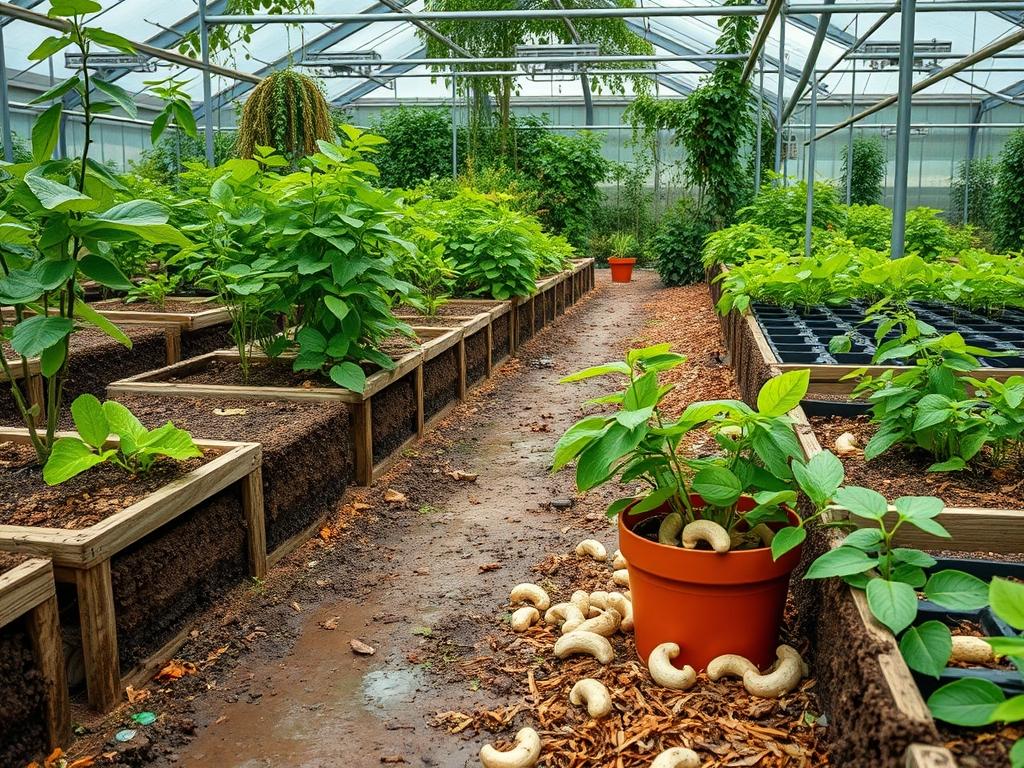
Integrating a cashew tree into a residential or commercial landscape presents a unique set of challenges and opportunities for the professional landscape architect. While the genus Anacardium occidentale offers a stunning evergreen canopy and significant shade potential, it requires a sophisticated approach to spatial planning and safety. The primary landscaping challenge lies in balancing the aesthetic appeal of the tree’s sprawling limb structure with the practical demands of its harvest. In tropical and subtropical climates, specifically USDA zones 10 and 11, the cashew serves as a powerful focal point that enhances curb appeal through its dense, glossy foliage and fragrant spring blossoms. However, outdoor functionality goals must prioritize the safe collection of the fruit and nut, as the cashew shell contains caustic phenolic resins that can cause skin irritation similar to poison ivy. A well-designed landscape must therefore account for debris management, clear access paths, and protective layering to ensure that the process of harvesting garden cashews remains a productive and hazard-free endeavor for the property owner.
Landscape Design Principles
When designing an estate or garden centered around cashew production, symmetry and visual balance are paramount. Architecturally, the cashew tree possesses a significant visual mass; it can reach heights of 30 to 40 feet with a similar spread. To maintain balance, designers often use the tree as a primary anchor in a corner or as a central specimen in a large orchard block. If placing the tree near a residence, it is essential to offset its weight with structural hardscape elements such as low-profile retaining walls or expansive flagstone patios that help define the transition from the cultivated garden to the wilder orchard zone.
Elevation and grading play a critical role in both the health of the tree and the ease of harvest. Cashews require excellent drainage and will fail in waterlogged soil. Designers should implement a subtle 2 percent grade away from the trunk to prevent crown rot. Furthermore, creating a tiered elevation using natural stone can provide easier access to the lower canopy for manual harvesting. Walkways should be planned with a minimum width of 4 feet to allow for the passage of harvesting equipment and to provide a safe buffer for pedestrians. These paths should be constructed from materials that are easy to sweep, as fallen cashew apples can become slippery and attract unwanted pests if left on a porous surface like decorative gravel.
Irrigation planning must be precise, utilizing drip systems rather than overhead or high-impact rotors. High-impact water can damage the delicate flowers and developing cashew apples during the early stages of growth. By focusing water delivery at the dripline through buried lines, the architect ensures deep root penetration while keeping the immediate harvest area dry and stable underfoot. This structural foresight minimizes the risk of slips and falls during the peak harvest season.
Plant and Material Selection
| Plant Type | Sun Exposure | Soil Needs | Water Demand | Growth Speed | Maintenance Level |
| :— | :— | :— | :— | :— | :— |
| Anacardium occidentale | Full Sun | Sandy, Well-Drained | Moderate | Fast | High (Harvest Safety) |
| Cymbopogon (Lemongrass) | Full Sun | Loamy, Rich | Moderate | Fast | Low |
| Arachis pintoi (Pinto Peanut) | Full to Partial Sun | Adaptive, Well-Drained | Low | Moderate | Low (Groundcover) |
| Zingiber officinale (Ginger) | Partial Shade | Humus-Rich, Moist | High | Moderate | Medium |
| Hardwood Mulch | N/A | Variable | N/A | N/A | Periodic Refresh |
Implementation Strategy
The successful implementation of a landscape designed for harvesting garden cashews begins with careful site selection and orientation. Choose a location at least 25 feet away from permanent structures and utility lines to accommodate the tree’s extensive subterranean root system and wide-reaching branches. Once the site is identified, the grading process must ensure that the soil is mounded slightly at the planting site, providing an elevated platform that facilitates drainage.
Before planting, the architect should specify the installation of an edging system, such as 14-gauge steel or heavy-duty composite, to define the dripline. This area should be cleared of turf and replaced with a 3-inch layer of organic hardwood mulch. Mulching suppresses weeds and provides a soft landing for any falling fruit, reducing bruising on the cashew apples. Furthermore, the mulch acts as a visual indicator for the “active harvest zone,” where safety precautions must be strictly observed.
Hardscaping should include the installation of a sturdy, level landing pad for ladders or mechanical harvesters. If the garden is located on a slope, the use of terraced retaining walls built from limestone or basalt can create flat work-surfaces. These walls should be capped with a non-slip texture to provide traction. Finally, ensure that the irrigation manifold is placed outside the mature dripline to prevent damage from falling fruit or heavy foot traffic during the harvest months.
Common Landscaping Failures
One of the most frequent failures in garden design involving cashews is improper spacing. Designers often underestimate the mature spread of the canopy, leading to root overcrowding and competition for nutrients with nearby specimen trees. When trees are planted too close together, airflow is restricted, which increases the likelihood of fungal infections that can spoil the harvest. Improper spacing also makes the use of long-reach pruning tools and harvesting poles nearly impossible, forcing the gardener into unsafe, cramped positions.
Drainage mistakes are another significant pitfall. While cashews are drought-tolerant once established, they cannot survive in “sump” conditions where water accumulates. Failure to properly grade the surrounding area can lead to soil compaction and root asphyxiation. Additionally, many property owners fail to account for the acidic nature of the decaying cashew apples. If left on the ground, the fermenting sugar can alter the soil pH and damage sensitive understory plantings. A lack of structural edging often allows this acidic debris to wash into nearby lawns or flower beds, causing unsightly dieback of turfgrass and ornamental species.
Finally, irrigation inefficiencies, such as the use of traditional spray heads, often result in trunk rot or “wet feet.” In a harvest-focused landscape, the ground must remain firm. Over-saturation makes the soil spongy, which is a significant safety hazard when using ladders to reach the upper canopy. Architects must insist on pressure-compensating drip emitters to maintain consistent moisture without flooding the harvest floor.
Seasonal Maintenance
Seasonal management is the lynchpin of both safety and productivity when harvesting garden cashews. In the Spring, the focus is on monitoring the flowering stage and ensuring the irrigation system is functioning at peak efficiency. This is also the time to apply a balanced fertilizer formulation, such as a 10-10-10 blend, around the dripline to support fruit development. Check the stability of all walkways and stone stairs, as the increased activity of harvest will put additional stress on these features.
During the Summer, the landscape moves into the active harvest phase. It is critical to keep the area beneath the canopy clear of weeds and excess mulch that could hide fallen nuts. Safety precautions are at their highest now; anyone entering the orchard should wear heavy-duty rubber gloves, long pants, and protective eyewear. The cashew apple must be twisted gently from the branch, and the nut must be handled with extreme care due to the toxic liquid inside the shell. Daily collection of fallen fruit is necessary to prevent fermentation and the attraction of stinging insects.
In Autumn, post-harvest pruning becomes the priority. Use bypass loppers and pruning saws to remove any dead or crossing branches. Thinning the canopy allows for greater light penetration and wind resistance for the following season. This is also the ideal time to refresh the mulch layer and check for any signs of soil erosion around the root flare. In Winter, the tree enters a period of slowed growth. Maintenance is minimal; however, architects should advise on “structural inspections” of the tree’s limb attachments to ensure they can withstand the weight of the next year’s crop without fracturing.
Professional Landscaping FAQ
How far should cashews be planted from a swimming pool?
Install cashew trees at least 40 feet from pools. The falling fruit is heavy and contains staining juices that can damage pool liners and complicate filtration systems. The sprawling root system can also undermine the structural integrity of the pool shell.
What is the best groundcover for a cashew orchard?
Arachis pintoi, or perennial peanut, is an excellent choice. It provides a dense, low-growing mat that fixes nitrogen into the soil without competing with the tree’s roots. It also keeps the harvest area clean and provides a soft surface for fallen fruit.
Can I use a pressure washer to clean harvest stains?
Yes, but only on non-porous hardscape like concrete or sealed stone. Cashew apple juice contains tannins that stain quickly. Use a professional-grade pressure washer and a mild alkaline detergent to remove residue from patios and walkways immediately after the harvest season.
How do I prevent root rot in rainy climates?
Ensure the landscape design includes a French drain or a subsurface drainage system if the soil has high clay content. Elevating the tree on a wide, gentle mound of sandy loam will also keep the root crown above the saturation zone.
Which tools are essential for safe harvesting?
Secure a telescoping fruit picker, cut-resistant gloves, and PPE clothing. For the landscape itself, maintain a set of sharpened professional-grade bypass pruners to keep the canopy height manageable, ensuring that most of the fruit remains within safe reaching distance.