
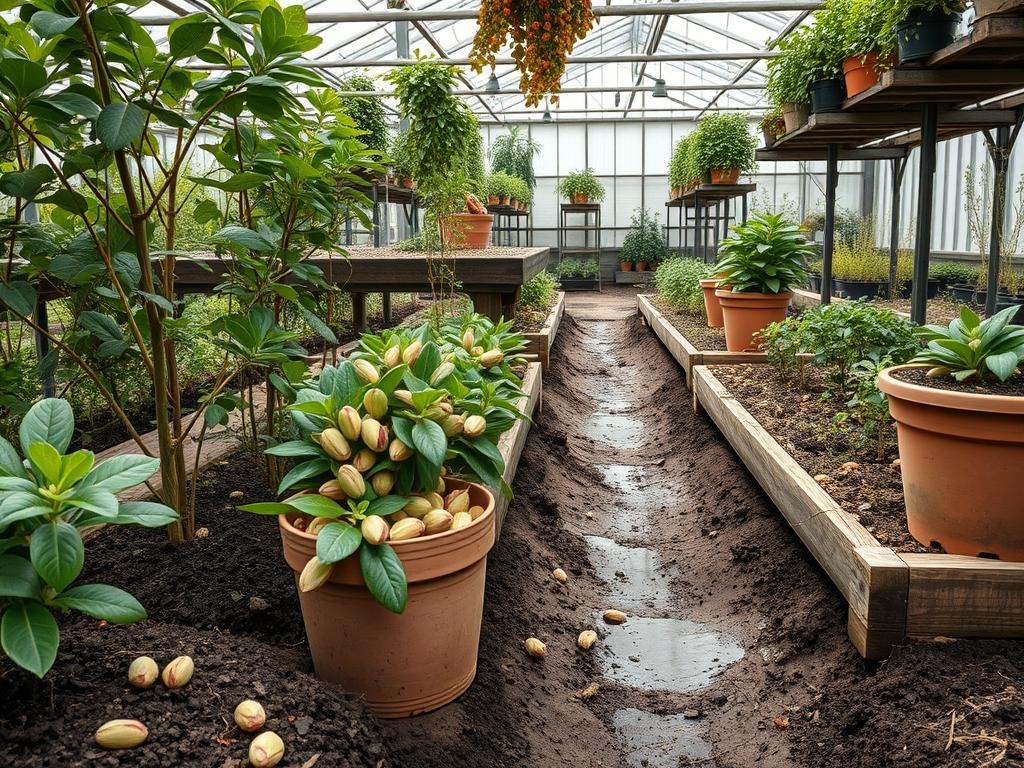
Integrating nut-bearing trees into a high-end landscape requires a sophisticated balance between aesthetic canopy structure and agricultural utility. The Pistacia vera provides a striking silver-green foliage that complements Mediterranean, Southwestern, and xeriscape architectural styles perfectly. However, the true challenge for a landscape architect is ensuring the tree serves as a functional focal point without creating debris issues or obstructing primary walkways. When considering the harvest, picking fresh pistachios at the peak of ripeness is not just about the flavor; it is about the health of the tree and the long-term cleanliness of the surrounding hardscape. Successful integration demands a deep understanding of the local microclimate, particularly the long, hot summers required for the kernels to mature and the hull to separate from the inner shell. Without proper planning regarding elevation and drainage, these trees can become a liability rather than a centerpiece, as their root systems are notoriously sensitive to standing water and soil compaction.
Landscape Design Principles
Successful garden planning for fruit and nut production relies on the core principle of symmetry. In a formal landscape, Pistacia vera specimens are often planted in pairs to frame an entryway or positioned at the corners of a large courtyard to provide a sense of enclosure. Because these trees can reach heights and widths of 20 to 30 feet, the designer must provide ample room for the canopy to expand without interfering with rooflines or overhead utilities. Focal points are created by placing the trees where their unique branching patterns can be silhouette-lit at night using LED Low-Voltage Uplights. This accentuates the gnarled, architectural character of the wood as it ages.
Elevation layers are another critical factor. Pistachios should ideally be planted on a slight mound or a terraced slope. This provides the necessary visual height to dominate the mid-ground of a landscape while simultaneously facilitating essential drainage away from the root flare. When planning walkways around these trees, use permeable materials like Decomposed Granite or Flagstone with wide, gravel-filled joints. These materials allow the soil to breathe and prevent the compaction that often kills mature trees. Visual balance is achieved by underplanting the trees with low-water shrubs that do not compete for nutrients or create a messy aesthetic during the harvest season.
Plant and Material Selection
| Plant Type | Sun Exposure | Soil Needs | Water Demand | Growth Speed | Maintenance Level |
| :— | :— | :— | :— | :— | :— |
| Pistacia vera | Full Sun | Sandy, Well-Drained | Low (Once Established) | Moderate | Medium |
| Lavandula angustifolia | Full Sun | Gritty, Alkaline | Very Low | Fast | Low |
| Rosmarinus officinalis | Full Sun | Any Well-Drained | Low | Fast | Target Pruning |
| Festuca glauca | Full Sun / Part Shade | Well-Drained | Low to Medium | Moderate | Low |
| Salvia apiana | Full Sun | Rocky, Lean | Very Low | Fast | Low |
| Cercis occidentalis | Full Sun / Part Shade | Versatile | Low | Moderate | Low |
Implementation Strategy
The first step in backyard layout planning for a pistachio-focused landscape is professional grading. Use a Transit Level or a Laser Level to ensure the ground slopes at a minimum of two percent away from any structures and the base of the trees. Once the grade is established, map out the primary irrigation zones. Pistacia vera thrives with a Drip Irrigation System that utilizes 2.0 GPH (Gallons Per Hour) Emitters spaced evenly around the drip line rather than the trunk. This encourages the root system to spread outward, providing better structural stability against high winds.
When edging the garden beds, use a heavy-duty Steel Edging or a Concrete Mow Strip to create a clean transition between the productive tree zones and the recreational lawn or patio areas. This edging prevents invasive turf grasses from stealing nitrogen from the trees. Apply a 3-inch layer of Arborist Wood Chips or Walk-on Bark as mulch. This mulch depth is critical for moisture retention during the blistering summer months, yet it must be kept at least 6 inches away from the trunk to prevent fungal bark rot. For hardscaping, consider a Retaining Wall built from Stackable Natural Stone if your site has significant elevation changes. This creates a functional “planter” look that elevates the tree to eye level, making the eventual picking of fresh pistachios much more accessible for the homeowner.
Common Landscaping Failures
The most frequent mistake in managing these environments is improper drainage. Pistachio trees are extremely susceptible to Verticillium wilt and root rot if the soil remains saturated for more than 24 hours. Many homeowners make the error of installing them in low-lying areas of the yard where rainwater naturally pools. Another common failure is root overcrowding. Because these trees have an extensive lateral root system, planting them too close to a Retaining Wall or a concrete driveway will eventually lead to hardscape cracking or stunted tree growth. Professional architects recommend a minimum buffer of 15 feet from any permanent concrete structure.
Soil compaction is another silent killer. During construction, heavy machinery shouldn’t be allowed to drive over the future planting sites. If the soil is already compacted, use a Power Auger to break up the subsoil before planting, and incorporate Gypsum or Expanded Shale to improve the internal structure. Finally, irrigation inefficiencies occur when homeowners use high-pressure spray heads that wet the foliage. Water on the leaves and ripening nuts increases the risk of blight and ruins the crop before it can be cured. Always stick to ground-level delivery systems.
Seasonal Maintenance
Spring is the season for structural integrity. Use Bypass Pruners and a Pole Saw to remove any crossing branches or water sprouts that emerged during the winter. This is also the time to apply a balanced fertilizer to support the new growth surge. As summer approaches, the focus shifts to water management. While the trees are drought-tolerant, consistent moisture is required for the nuts to fill their shells completely. Monitor the soil moisture using a Soil Probe to ensure the water is reaching a depth of 18 to 24 inches.
Autumn is the most critical time for the landscape architect to advise the client on the harvest. Knowing when picking fresh pistachios is ready for curing is a matter of observing several physical cues. The most reliable indicator is the “hull slip.” When you pinch a cluster of nuts, the outer green hull should easily slide or “slip” off the hard inner shell. Additionally, the hull color will shift from a vibrant green to a pale, pinkish-yellow hue. If the hull is still firmly adhered to the shell, the sugars haven’t fully developed, and the nut will shrivel during the curing process. Once the slip is confirmed, spread a Heavy Duty Tarp beneath the canopy and gently shake the branches to collect the bounty. Winter maintenance involves cleaning up all fallen debris and “mummies” (shriveled nuts left on the tree) to prevent pests like the Navel Orangeworm from overwintering in your landscape.
Professional Landscaping FAQ
How do I know the pistachios are ready to pick?
Wait for the hulls to turn from green to a rosy tan color. Perform a “pinch test” on several nuts. If the outer hull slides off the inner shell easily with slight pressure, the harvest is ready for picking and curing.
What is the best irrigation method for these trees?
Utilize a low-volume Drip Irrigation System with multiple emitters per tree. This delivers water directly to the root zone without wetting the trunk or foliage, which prevents fungal diseases and conserves water in arid climates where pistachios typically grow.
Can I plant flowers at the base of my pistachio tree?
It is best to avoid heavy planting directly at the base. Use low-water, shallow-rooted groundcovers like Sedum or Thyme. Keep all plants at least 3 feet away from the trunk to ensure proper air circulation and prevent moisture buildup.
How deep should the mulch be in my nut grove?
Maintain an Organic Mulch depth of approximately 3 inches. This thickness is ideal for suppressing weeds and maintaining soil temperature. Always leave a gap around the trunk base to prevent bark decay and allow the tree to breathe.
Why are my trees failing to produce nuts?
Pistachios are dioecious, meaning you need both a male and a female tree for pollination. Ensure your landscape plan includes at least one male tree, such as the Peters variety, for every eight female trees like the Kerman variety.