
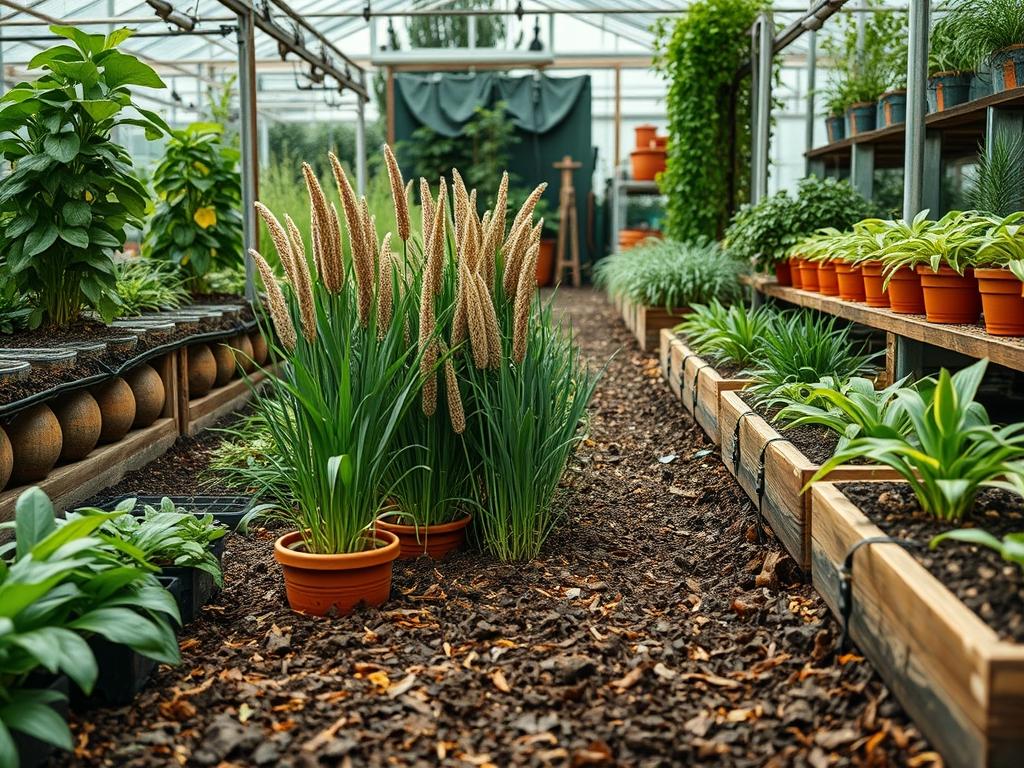
Grasses define the architectural silhouette of a modern, sustainable landscape. While most homeowners select grasses for their aesthetic spill or winter interest, integrating a functional grain like Eragrostis tef offers a dual purpose. This C4 summer annual grass provides a soft, billowy texture that rivals traditional ornamental varieties while yielding a nutrient dense harvest. Managing this species requires a deep understanding of site microclimates, particularly regarding wind exposure and soil drainage. For the landscape architect, the challenge lies in balancing the untamed appearance of a grain field with the structured requirements of residential curb appeal. Successful incorporation involves more than just sowing seeds; it requires a strategic layout that facilitates Picking Fresh Teff without disrupting the visual integrity of the surrounding garden beds.
The landscaping challenge begins with the sheer scale of the plant versus the size of its output. Teff produces thousands of seeds that are smaller than a grain of sand. This necessitates a design that contains these tiny seeds to prevent them from volunteer-seeding in cracks between pavers or competing with neighboring native plants. In a professional landscape, we treat Teff as both a groundcover and a seasonal focal point. Its fine foliage creates a misty, ethereal quality that captures low morning light, making it an excellent choice for western-facing slopes or meadows where it can be back-lit. By focusing on the outdoor functionality of the plant, we can design environments that provide food security while maintaining the high-end finish expected in professional landscape architecture.
Landscape Design Principles
Symmetry and focal points are essential when dealing with agricultural plants in a residential setting. A common mistake is planting Teff in messy, unstructured patches. Instead, utilize retaining walls or raised garden beds to provide a clean edge. This elevation makes the process of Picking Fresh Teff much easier on the back and allows the fine-textured grain heads to spill over the sides, softening the hard lines of stone or wood. Using retaining walls also helps control soil moisture, as Teff requires excellent drainage to thrive. By layering the landscape, you can place the crop in a secondary visual plane behind structured boxwood or lavender, hiding the drying transitions that occur toward the end of the harvest cycle.
Irrigation planning must be precise. Because Teff seeds are so small, top-heavy watering can flatten the crop and lead to fungal issues. Use drip irrigation systems buried 2 inches below the soil surface to provide moisture directly to the roots. This keeps the seed heads dry, which is critical during the final ripening stage. Visual balance is achieved by pairing the upright, airy panicles of the Teff with broader-leafed perennials. This contrast in leaf morphology creates depth. Furthermore, define your walkways using flagstone or crushed gravel to provide a stable, clean area for the harvest. A clear, wide path ensures that you can move your equipment, such as scythes or tarps, without trampling the delicate stalks.
Plant and Material Selection
| Plant Type | Sun Exposure | Soil Needs | Water Demand | Growth Speed | Maintenance Level |
| :— | :— | :— | :— | :— | :— |
| Eragrostis tef | Full Sun | Sandy Loam | Moderate | High | Moderate |
| Lavandula angustifolia | Full Sun | Well-Drained | Low | Medium | Low |
| Panicum virgatum | Full Sun/Part Shade | Adaptable | Low | Fast | Low |
| Rosmarinus officinalis | Full Sun | Rocky/Sandy | Low | Medium | Low |
| Festuca glauca | Full Sun | Well-Drained | Low | Medium | High |
Selecting the right variety of Teff is as important as the materials used to support it. White Teff is often preferred for human consumption, but brown varieties may offer more robust growth in cooler temperate zones. When choosing companion materials, opt for organic mulch like finely shredded bark for the surrounding borders, but keep the Teff area free of heavy mulch, as it can hinder the emergence of the tiny seedlings. Instead, use a very thin layer of screened compost during the initial planting phase to provide nutrients without burying the seeds too deep.
Implementation Strategy
The first step in garden layout planning for a functional grain crop is grading. Ensure the area has a 2 percent slope away from any building foundations to manage runoff. If the soil is heavy clay, tilling in coarse sand and perlite is necessary to improve aeration. Once the site is prepared, create a firm seedbed. Soil compaction should be avoided across the entire garden, but for Teff, the surface needs to be pressed firmly after sowing to ensure seed-to-soil contact. Use a lawnmower roller or simply walk over the area if the plot is small.
Edging is your primary tool for seed containment. Install steel edging or plastic benders to a depth of 4 inches to keep the root systems and dropped seeds within their designated zone. When the grain is ready for harvest, spread a heavy-duty tarp or landscape fabric along the walkways adjacent to the crop. This provides a clean surface to catch any seeds that shatter during the cutting process. Use a hand scythe or bypass loppers to cut the stalks about 3 inches above the soil line. Bundle the stalks using jute twine and hang them in a dry, well-ventilated area like a garden shed or covered patio. The tiny seeds will fall as they dry, so placing a plastic bin or fine-mesh screen beneath the bundles is a professional requirement for maximizing yield.
Common Landscaping Failures
The most frequent failure in grain-integrated landscaping is improper drainage. Teff cannot tolerate standing water; its root system will rot within days of a heavy saturation event. If you see water pooling, you must install French drains or relocate the crop to a higher elevation. Another mistake is root overcrowding. While a dense stand looks beautiful, it restricts airflow. Airflow is vital during the ripening phase to prevent mold. If the stalks are too close together, the interior seeds will remain damp while the exterior ones dry, leading to an uneven harvest.
Improper spacing and failing to account for the mature height of the plant often result in a messy aesthetic. Teff can grow up to 3 feet or 4 feet tall, and without a supporting border, it may fall over in heavy wind, a condition known as lodging. Soil compaction is another silent killer. If the soil is too tight, the microscopic seeds cannot push their first shoots to the light. Finally, irrigation inefficiencies often stem from using high-pressure sprayers. These can physically wash away the seeds before they have a chance to germinate. Always transition to subsurface irrigation or a very fine mist nozzle during the establishment phase.
Seasonal Maintenance
Spring is the time for site preparation and soil testing. You should aim for a soil pH between 6.0 and 7.5. Apply a balanced organic fertilizer and prepare the seedbed once the threat of frost has passed and soil temperatures reach 65 degrees Fahrenheit. Summer is the peak growing season. Monitor for pests and ensure the drip irrigation is functioning. As the grains mature, reduce water application to encourage the plant to put its energy into seed production rather than leaf growth.
Autumn is the season for Picking Fresh Teff. You will know the grain is ready when the panicles turn from green to a light tan or straw color. Rub a few seed heads between your palms; if the tiny seeds fall out easily, it is time to harvest. After the harvest is complete, remove the remaining stubble to prevent it from becoming a refuge for winter pests. In winter, focus on soil stabilization. Since the Teff area is now bare, plant a cold-season cover crop or apply a layer of leaf mulch to prevent erosion. This maintains the structural integrity of your landscape until the next growing cycle begins.
Professional Landscaping FAQ
How do I prevent the tiny teff seeds from spreading?
Manage seed dispersal by using physical borders like deep metal edging and harvesting promptly when the grain heads change color. Laying tarps during the cutting process catches any shattered seeds before they can enter the surrounding soil or mulch.
What is the best tool for picking fresh teff?
A sharp serrated hand scythe is the most efficient tool for small to medium landscape plots. It allows for a clean cut that preserves the seed heads. For very small decorative patches, high-quality bypass pruners or floral snips work well.
Can teff be used as a permanent perennial in my landscape?
No. Teff is a warm-season annual grass. In most climates, it will die back completely after the first hard frost. This allows landscape architects to rotate the crop or redesign the area each spring to maintain a fresh outdoor living aesthetic.
How much sun does a teff grain bed require?
Teff requires full sun, meaning at least 6 to 8 hours of direct sunlight daily. In shaded areas, the stalks will become leggy and weak, leading to lodging where the grass falls over, making the harvest process much more difficult.
Does teff require a specific type of mulch?
Avoid heavy, thick mulches in the planting zone. Use a light dusting of peat moss or screened compost to cover the seeds slightly. For the surrounding areas, use a hardwood mulch to define the garden’s structural boundaries and suppress weeds.