
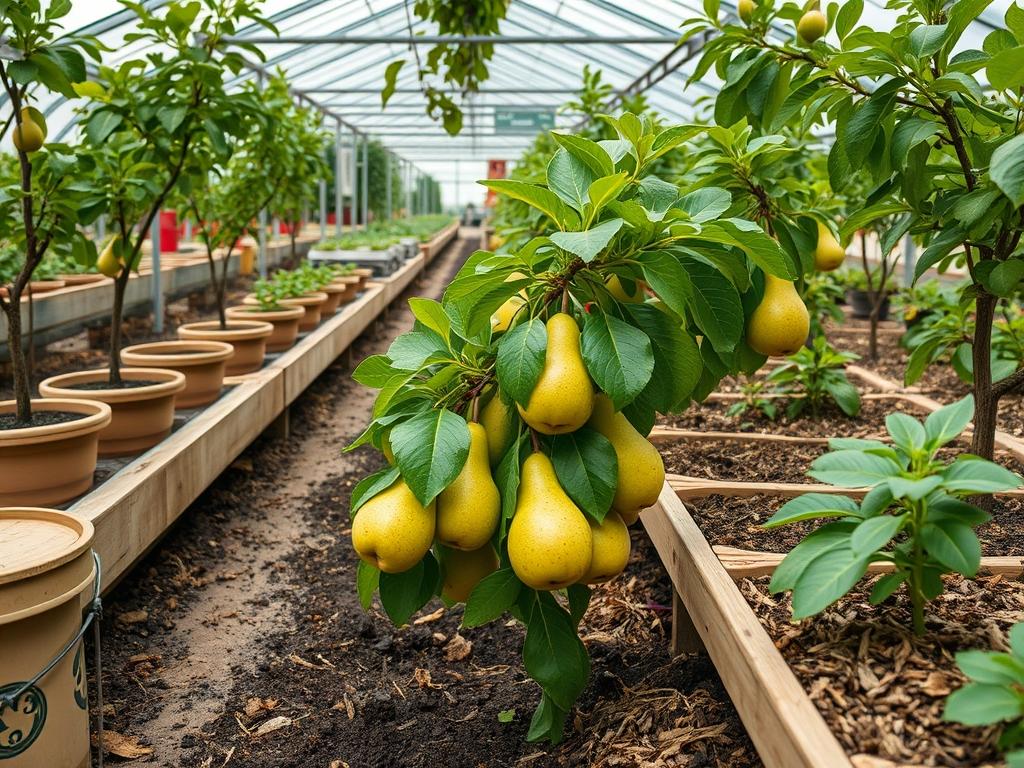
Integrating fruit-bearing trees into a professional landscape design requires a sophisticated understanding of both aesthetic form and physiological function. When planning a sustainable outdoor environment, the pear tree stands out as a unique architectural element that demands specific management strategies compared to its pomaceous relatives. Unlike apples, which achieve optimal flavor and texture while still attached to the branch, the process of picking ripe pears is a tiered operation that begins before the fruit actually softens. This biological quirk creates a specific set of requirements for the landscape architect. We must design spaces that not only showcase the visual splendor of the Pyrus genus but also accommodate the logistical needs of a multi-stage harvest. A well-designed orchard or edible border must reflect the reality that these trees are not “pick and eat” specimens. Instead, they require transition zones, accessible walkways for frequent monitoring, and proximity to climate-controlled storage areas where the final ripening occurs.
From a curb appeal perspective, a pear tree offers a distinct, often pyramidal silhouette that provides excellent vertical interest. However, the functionality of the tree within the larger landscape depends on the gardener’s ability to navigate the tree’s unique ripening cycle. If a pear reaches full ripeness on the branch, it often develops a gritty, unappealing texture known as stone cells, and the core may begin to rot before the skin shows signs of maturity. Therefore, the landscape professional must educate the property owner on the necessity of intervention. The design of the garden should facilitate this by ensuring that the lower canopy is accessible and that the ground plane is clear of debris. This allows the harvester to perform the essential “tilt test,” where the fruit is gently lifted and twisted to check for maturity. A landscape that favors aesthetics over accessibility often results in wasted yields and attracts pests such as wasps or rodents to fallen, overripe fruit.
Landscape Design Principles
Successful fruit integration begins with the principle of symmetry and the establishment of clear focal points. In a formal landscape, a pair of matched European Pear trees can flank an entrance or frame a distant view, providing a sense of structural permanence. To achieve this, the architect must consider the ultimate height and spread of the cultivar, ensuring that the mature canopy does not encroach on buildings or obscure critical sightlines. Elevation layers are equally important. We often utilize an overstory of fruit trees paired with an understory of nitrogen-fixing shrubs or pollinator-friendly perennials. This creates a polyculture that supports the health of the primary trees while enhancing the visual depth of the garden.
Walkways and circulation paths are critical when the goal involves picking ripe pears at the precise moment of physiological maturity. We recommend using stable hardscaping materials such as decomposed granite or flagstone set in a permeable base. These surfaces allow for the steady placement of ladders and provide a clean area for harvest baskets. Irrigation planning must be meticulously integrated into the design. Pears require consistent moisture to develop fruit, but poor drainage can lead to root rot or fire blight. By utilize grading and French drains, we can direct excess water away from the root flare while maintaining a hydration zone that supports the tree through the heat of the summer.
Plant and Material Selection
Selecting the right materials and cultivars ensures the long-term viability of the landscape. The following table outlines several popular choices for an integrated edible garden, focusing on their specific environmental needs.
| Plant Type | Sun Exposure | Soil Needs | Water Demand | Growth Speed | Maintenance Level |
| :— | :— | :— | :— | :— | :— |
| Bartlett Pear | Full Sun | Well-drained loam | Moderate | Medium | Medium |
| Bosc Pear | Full Sun | Heavy loam/Clay | Moderate | Slow | High |
| Anjou Pear | Full Sun | Loamy soil | Moderate | Medium | Medium |
| English Lavender | Full Sun | Sandy/Gravelly | Low | Fast | Low |
| Creeping Thyme | Full Sun | Well-drained | Low | Fast | Low |
| Blueberry Bushes | Partial Sun | Acidic soil | High | Slow | High |
In addition to the trees themselves, the selection of mulch is a vital component of the landscape plan. We advocate for the use of arborist wood chips applied at a depth of 3 inches. This organic layer suppresses weeds, retains moisture, and slowly breaks down to improve soil structure. It also creates a soft landing for any fruit that might drop prematurely, although the goal of any professional orchardist is to harvest before the fruit falls.
Implementation Strategy
The transition from a design on paper to a physical landscape involves several technical stages. First, the site must be graded to ensure that water moves away from the foundation and does not pool around tree roots. A slope of 2 percent is generally sufficient for most residential applications. Once the grades are established, the layout of the trees should be marked using surveyor stakes. For standard pear trees, a spacing of 15 to 20 feet is ideal, whereas semi-dwarf varieties can be spaced at 12 feet.
After the layout is confirmed, the planting holes should be excavated to twice the width of the root ball but no deeper than its height. This prevents the tree from settling too low, which can suffocate the roots. We recommend incorporating a high-quality mycorrhizal inoculant to the backfill to stimulate root colonization and nutrient uptake. Following planting, a sturdy steel edging or Belgian block border can be installed to define the mulch beds and prevent lawn grass from competing with the young trees. This clear demarcation is essential for maintaining a polished aesthetic while protecting the trunks from damage caused by lawn-mowing equipment.
Common Landscaping Failures
One of the most frequent errors in edible landscaping is the neglect of proper drainage. Pear trees are particularly sensitive to “wet feet,” and sitting in saturated soil for extended periods will lead to the decline of the tree. If the site has heavy clay soil, we often recommend planting on raised mounds or installing subsurface perforated drainage pipes. Another common failure is root overcrowding. Designing a bed that is too small for the mature root system will lead to stunted growth and poor fruit production, making the task of picking ripe pears virtually impossible.
Improper spacing and lack of airflow are also significant concerns. When trees are planted too closely together, they create a humid microclimate that is ripe for the spread of fire blight, a devastating bacterial disease. Strategic pruning and the use of wide-angle branching structures can mitigate this risk. Finally, many homeowners fail to account for soil compaction. High traffic around the base of the tree during the harvest season can crush the delicate pore spaces in the soil, limiting oxygen availability to the roots. Installing designated paths is the best way to prevent this long-term damage.
Seasonal Maintenance
A professional landscape requires a year-round management plan to remain productive and beautiful. In the spring, the focus is on dormant oil sprays to manage pests and the application of a balanced 10-10-10 fertilizer before new growth begins. Pruning should be performed in late winter to remove any dead or diseased wood and to open up the canopy for maximum light penetration.
During the summer months, the emphasis shifts to irrigation management and thinning the fruit. If a tree is overloaded, the branches may break, and the remaining fruit will be smaller and of lesser quality. Autumn is the most critical time for the pear harvest. As mentioned, picking ripe pears requires picking them while they are still hard. Once they are removed from the tree, they should be stored in a cool environment for several days to weeks, depending on the variety, to develop their sugars. After the harvest, the landscape should be cleaned of all fallen leaves and fruit to prevent the overwintering of pathogens. In winter, the primary task is protecting the trunks from frost cracks or rodent damage using tree wraps.
Professional Landscaping FAQ
When is the best time for picking ripe pears?
Pears should be harvested when they reach full size but remain firm. Most varieties require a period of cold storage after being removed from the tree to finish the ripening process and develop a smooth, buttery texture.
How do I tell if a pear is ready to be picked?
Perform the “tilt test” by lifting the fruit and giving it a slight twist. If the stem snaps cleanly away from the branch at the natural attachment point, the pear is mature enough for harvest and subsequent ripening.
Can I grow pear trees in heavy clay soil?
Yes, but you must improve the drainage. Planting in raised beds or creating a slight berm ensures the root flare stays above the water table, preventing rot while allowing the tree to access the nutrients found in clay.
What are the best companion plants for pear trees?
Low-maintenance perennials like Lavender, Salvia, and Thyme are excellent choices. They attract pollinators to the orchard while their aromatic foliage can help deter certain pests, creating a more resilient and self-sustaining ecosystem.
Does my pear tree need a second variety for pollination?
Most pear varieties are not self-fertile and require a different cultivar blooming at the same time for cross-pollination. Always research the specific pollination requirements of your chosen trees to ensure a successful and heavy fruit set.