
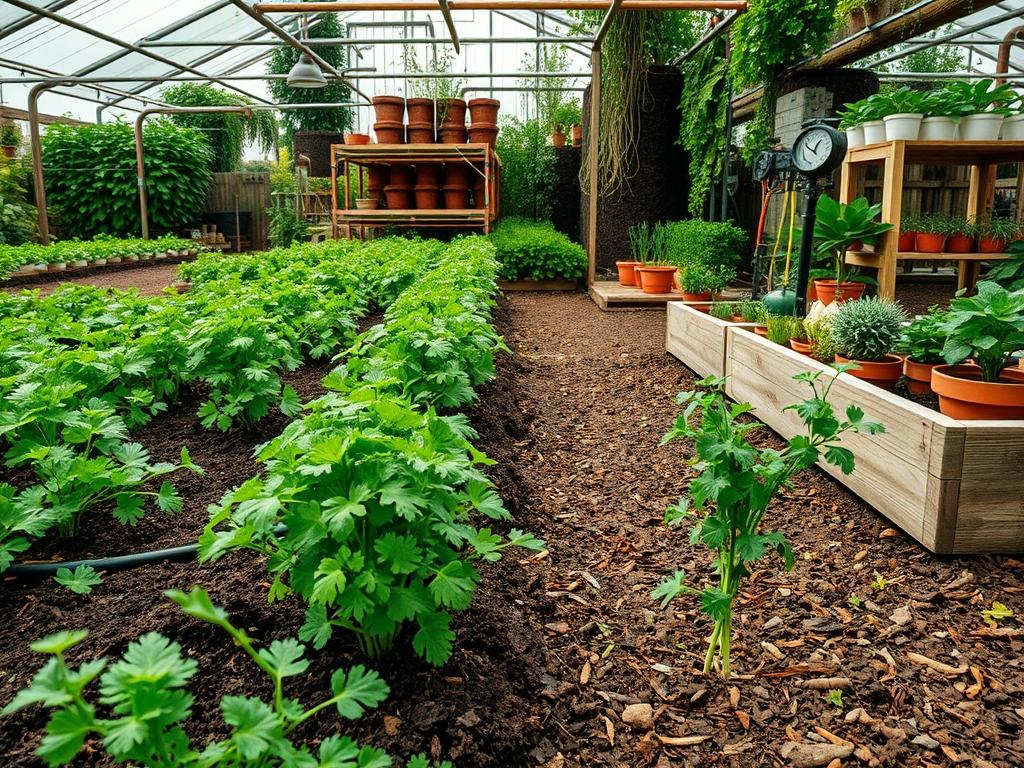
Integrating culinary herbs into a high end landscape requires a balance between aesthetic longevity and functional harvest. While Coriandrum sativum provides a lush, fine textured green that complements more rigid structural plants, its propensity to bolt poses a significant challenge for the maintaining designer. Bolting, or the premature transition to seed, occurs when environmental stressors signal the plant to complete its life cycle. In a professional grade garden, this results in a loss of foliage density and a lanky, unkempt appearance that detracts from the overall curb appeal. To manage this, one must view the process of picking fresh cilantro as a scheduled maintenance task rather than a sporadic kitchen requirement. By understanding the intersection of soil temperature, moisture management, and strategic pruning, a landscape consultant can ensure that these edible borders remain vibrant throughout the growing season. Successful integration depends on selecting the right site and implementing a rigorous harvest schedule that prioritizes the structural integrity of the plant.
Landscape Design Principles
When designing a zone for Cilantro, a landscape architect must consider the microclimate created by larger structural elements. Symmetry in a kitchen garden, or potager, often relies on consistent heights and colors. Because Cilantro is a short lived annual, it should be placed in the foreground of a flower bed or along the path of a stone walkway where access is frequent. This placement facilitates the regular picking of fresh cilantro, which is necessary to prevent the central stalk from elongating. Elevation layers also play a role; planting Cilantro in the shadow of taller perennials like Salvia or Rosmarinus officinalis can lower the ambient temperature by several degrees. This cooling effect is crucial for delaying the onset of flowering.
Visual balance is maintained through succession planting. A landscape professional never treats Cilantro as a singular installation. Instead, we design small, recurring drifts that are planted at 2 week intervals. This ensures that as one cluster begins to reach its peak, a younger cluster is emerging to maintain the lush green texture required for the garden’s aesthetic. Irrigation planning is equally vital; the use of Drip Irrigiation with 1 gallon per hour emitters ensures that the soil remains consistently moist without wetting the foliage. Wet foliage can lead to fungal diseases that stress the plant, further encouraging the bolting response.
Plant and Material Selection
| Plant or Material | Sun Exposure | Soil Needs | Water Demand | Growth Speed | Maintenance Level |
| :— | :— | :— | :— | :— | :— |
| Coriandrum sativum | Partial Shade | Loamy, Well Drained | Moderate to High | Fast | High |
| Wood Mulch (Cedar) | N/A | Weed Suppression | Low | N/A | Minimal |
| Compost (Organic) | N/A | High Nutrient | N/A | N/A | Semi-Annual |
| Drip Tubing | N/A | N/A | Controlled | N/A | Seasonal Check |
| Metal Edging | N/A | Root Containment | Low | N/A | Low |
| Peat Moss | N/A | Moisture Retention | N/A | N/A | Initial Mixing |
Implementation Strategy
The actual installation of a cilantro border begins with meticulous site preparation and grading. To prevent bolting while picking fresh cilantro, the soil must be prepared to resist rapid temperature fluctuations. Excavate the area to a depth of 6 inches and incorporate a blend of high quality Topsoil and Organic Compost. This increases the thermal mass of the soil, keeping the roots cool even when the midday sun is intense. Ensure the grade slopes away from architectural foundations at a 2 percent incline to prevent puddling, which can lead to root rot.
Once the soil is prepared, install Steel Edging to define the beds and prevent invasive grasses from competing with the herbs. Before planting, lay out a Drip Irrigation system. Place 1/4 inch emitters every 6 inches along the row to provide deep, consistent hydration directly to the root zone. When the seedlings reach 3 inches in height, apply a 2 inch layer of Cedar Bark Mulch. This mulch acts as an insulator; it reflects heat and maintains the soil moisture necessary for the plant to focus on leaf production rather than flower production.
The method of picking fresh cilantro is the final step in the implementation strategy. Instead of plucking individual leaves, a professional gardener uses Pruning Shears to cut the oldest, outermost stems near the base of the plant. This stimulates the central growing point to produce new foliage. By removing roughly one third of the plant every week, you prevent the accumulation of the hormones that trigger bolting. If a thick central stem begins to form, it should be removed immediately to redirect energy back into the lateral leaves.
Common Landscaping Failures
The most common failure in incorporating Cilantro into a landscape is improper site selection regarding heat exposure. Planting against a south facing brick wall causes a “heat sink” effect, where the masonry radiates heat long after the sun has set. This elevated nighttime temperature is the primary driver of bolting. Furthermore, soil compaction is a frequent issue in high traffic areas. When roots cannot penetrate the soil deeply, they become stressed by fluctuating moisture levels, which signals the plant to go to seed quickly to survive.
Another frequent error is the lack of adequate spacing. Overcrowded plants compete for nutrients and water, creating a stressful environment. Each Cilantro plant requires at least 6 inches of clearance from its neighbor to ensure proper airflow and light penetration. Irrigation inefficiencies also contribute to failure. Overhead sprinklers often miss the root zone and encourage mildew, whereas a lack of consistent water causes the soil to dry out. Once the soil reaches a certain dryness threshold, the plant will bolt regardless of how much it is harvested.
Seasonal Maintenance
Seasonal management of a Cilantro bed requires a proactive approach. In the spring, focus on soil preparation and early planting. This is the optimal time for the plant to thrive because the ground is cool. As the season transitions into summer, the landscape architect must implement shading strategies. Using temporary Shade Cloth or strategically placing taller annuals can extend the harvest window by several weeks. During the heat of July, picking fresh cilantro must occur daily to stay ahead of the plant’s biological clock.
As autumn approaches, the cooling temperatures offer a second opportunity for growth. Residual heat in the soil from summer should be mitigated with extra Mulch. In winter, most Cilantro will succumb to hard frost, though in temperate zones like USDA Zone 8, it can survive with the protection of a Cold Frame. The winter months are the best time to inspect the irrigation lines for leaks and to plan the layout for the following spring. Removing old organic matter during the winter also prevents the carryover of pests like aphids, which can weaken the plants and cause early bolting in the next cycle.
Professional Landscaping FAQ
How does picking fresh cilantro frequently stop it from flowering?
Constant pruning removes the maturing stems where flowering begins. This forces the plant to continuously regenerate young, vegetative growth, effectively delaying the production of the reproductive hormones that cause the plant to transform and produce seeds.
What is the best mulch for keeping herb roots cool?
Use a light colored Cedar Bark or straw mulch. Light colors reflect solar radiation rather than absorbing it. A depth of 2 to 3 inches provides enough insulation to significantly lower the temperature of the root zone.
Can I save a plant that has already started to bolt?
Once the central stalk becomes thick and woody, the flavor changes and leaf production slows significantly. While you can cut the stalk back, it is usually more efficient from a landscape perspective to replace the plant with new Seedlings.
Does the type of irrigation affect the lifespan of the herb?
Yes, Drip Irrigation is the gold standard for landscape architects. It provides deep moisture without the evaporation losses of spray heads. Keeping the roots hydrated is the most effective way to prevent heat induced stress and bolting.
Why is my cilantro turning red or purple before it bolts?
This is often a sign of phosphorus deficiency or extreme temperature stress. In a professional landscape, ensure the soil is amended with Bone Meal or Compost and check the moisture level of the Topsoil immediately to mitigate stress.