
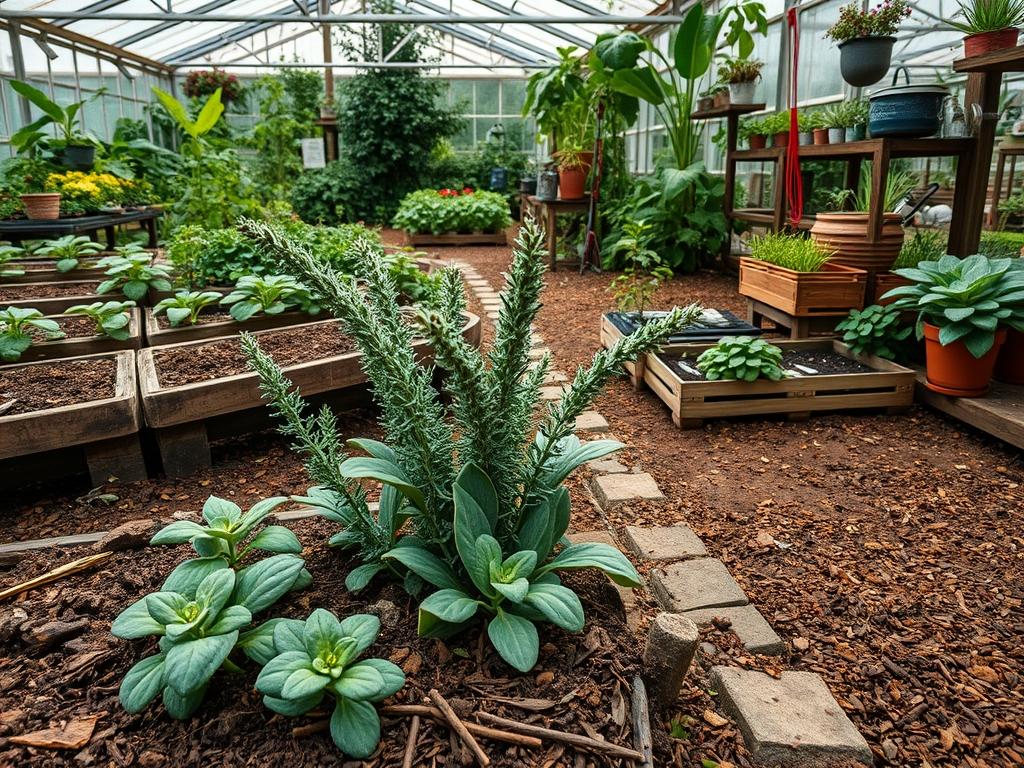
The arrival of the first hard frost marks a critical transition in the professional landscape, transforming a vibrant outdoor living space into a dormant architectural skeleton. For the disciplined landscape architect, the late autumn window is not merely a period of cleanup but a strategic opportunity to manage the harvest of resilient woody perennials like Salvia officinalis, commonly known as garden sage. Harvesting garden sage before the first snow is a task that balances culinary utility with the long-term structural health of the garden bed. As temperature gradients shift and soil moisture levels stabilize, the essential oils in the foliage reach a peak concentration, making this the ideal moment for collection. Managing this process requires an understanding of microclimates, as the proximity of a plant to stone retaining walls or thermal masses can delay the onset of frost by several days. Properly integrated sage plants contribute significantly to curb appeal, offering a muted, silvery-green texture that contrasts against the browning perennials and deciduous skeletons of the late-season garden. When we design for functionality and aesthetics, the transition from the growing season to the harvest must be seamless, ensuring that the plant remains vigorous enough to survive the sub-zero temperatures ahead while yielding its bounty for the kitchen.
Landscape Design Principles
In the realm of professional garden planning, sage serves as a versatile mid-layer specimen that anchors the transition between low-lying groundcovers and taller woody shrubs. Utilizing symmetry is a hallmark of formal herb garden design; placing Common Sage at the corners of a geometric parterre or as a repeating element along a limestone walkway creates a sense of rhythmic continuity. These focal points are essential for directing the eye and providing a sense of order amidst the naturalistic chaos of a mixed border. We often employ sage in elevation layers to provide a soft, mounded form that breaks up the rigid lines of hardscaping elements like Belgian Block or timber edging.
Visual balance is achieved by pairing the coarse, pebbled texture of sage leaves with finer foliage textures such as Ornamental Grasses or Creeping Thyme. Beyond its visual contribution, the placement of sage must account for irrigation planning. Since sage is a Mediterranean native, it thrives in well-drained zones where water does not pool near the root crown. In our design schematics, we prioritize placing these specimens on slight slopes or within raised beds constructed from Stacked Fieldstone. This elevation ensures that during the spring thaw or heavy autumn rains, the root system is protected from the anaerobic conditions that lead to root rot. Walkway integration is another key design principle. By planting sage near high-traffic paths, the aromatic oils are released when pedestrians brush against the foliage, enhancing the sensory experience of the outdoor environment.
Plant and Material Selection
Selecting the right cultivars and supporting materials is the foundation of a low-maintenance, high-impact landscape. The following table outlines the specifications for sage and its common companion plants used in high-end residential designs.
| Plant Type | Sun Exposure | Soil Needs | Water Demand | Growth Speed | Maintenance |
| :— | :— | :— | :— | :— | :— |
| Common Sage | Full Sun | Well-Drained, Loamy | Low | Moderate | Medium |
| Purple Sage | Full Sun | Sandy, Gritty | Low | Moderate | Low |
| Tri-color Sage | Full Sun/Part Shade | Neutral pH | Moderate | Slow | Medium |
| English Lavender | Full Sun | Calcareous, Dry | Very Low | Slow | Medium |
| Rosemary | Full Sun | Gritty, Poor Soil | Low | Moderate | High (in cold) |
| Creeping Thyme | Full Sun | Rocky, Lean | Low | Fast | Low |
To support these biological selections, we utilize specific materials for the “winterization” phase. High-quality Double-Shredded Cedar Mulch or Crushed Granite serves as an effective top-dressing. These materials regulate soil temperature fluctuations, which are often more damaging to the plant than the cold itself. For the harvest, professionals rely on Bypass Pruners or Stainless Steel Floral Snips to ensure clean cuts that minimize tissue damage.
Implementation Strategy
A successful backyard layout begins with meticulous site preparation and grading. When preparing an area for sage and other woody herbs, we ensure a 2 percent minimum grade away from the home foundation to manage surface runoff. If the native soil is heavy clay, we amend the top 12 inches with a blend of Coarse Sand, Perlite, and Organic Compost to improve porosity. Once the grading is established, we map out the planting grid using Biodegradable Spray Paint or Landscape Stakes.
The actual harvest before the first snow should be treated as a light pruning session. When removing foliage, we never take more than one-third of the total plant mass during the late autumn. Using Hand Pruners, make cuts just above a set of new leaf nodes. This technique prevents the stems from dying back too far during the winter months. After the harvest, we apply a 3-inch layer of mulch around the base of the plant, being careful to keep the material at least 2 inches away from the main stem to prevent rot. If the design includes hardscaping like a Flagstone Patio, we ensure the sage is planted far enough from the edge so that salt or de-icing agents used during the winter do not leach into the soil. For drainage management, we often install a French Drain or a gravel-filled trench beneath the planting bed to ensure that snowmelt moves quickly away from the root zones.
Common Landscaping Failures
The most frequent failure in herb-focused landscaping is improper drainage. Many homeowners mistake the hardiness of sage for an ability to tolerate wet “feet.” In reality, saturated soil during a freeze-thaw cycle will expand and contract, physically tearing the delicate root hairs and leading to plant death by spring. Another common error is soil compaction. In high-traffic gardens, the weight of foot traffic or heavy machinery compresses the soil macropores, cutting off the oxygen supply to the roots. We mitigate this by defining clear walkways using Pavers or Decomposed Granite to keep traffic away from the planting beds.
Root overcrowding is another significant issue, especially when sage is used in dense ornamental borders. If plants are spaced less than 18 inches apart, air circulation is restricted, creating a humid microclimate that encourages powdery mildew. Furthermore, irrigation inefficiencies often plague these landscapes. Using overhead sprinklers on sage can lead to fungal issues on the foliage; instead, we recommend Drip Irrigation Lines with emitters placed directly at the soil level. Finally, pruning too late in the autumn can be a fatal mistake. While harvesting a few leaves for a holiday meal is fine, heavy structural pruning should be avoided after the first of October, as it stimulates new growth that is too tender to survive a freeze.
Seasonal Maintenance
Landscape management is a year-round commitment that changes with the sun’s trajectory. In the spring, we focus on rejuvenation. Once the new growth emerges, we prune back the woody stems by about one-half to encourage a flush of fresh, aromatic leaves. This is also the time to refresh the mulch and apply a slow-release, low-nitrogen Granular Fertilizer. During the summer, maintenance is minimal, focusing on deadheading flowers to keep the plant’s energy focused on foliage production and ensuring that the soil remains dry between infrequent waterings.
Autumn is the season for the strategic harvest. This involves thinning out the center of the plant to improve air movement before the heavy, wet snow arrives. We also inspect the drainage systems to ensure that fallen leaves are not clogging the Catch Basins or NDS Grates. Winter management is largely hands-off, though we do recommend brushing heavy snow loads off the brittle woody branches of older sage plants to prevent breakage. If the sage is located in a particularly wind-swept area, a temporary Burlap Windbreak can be installed to prevent desiccation of the evergreen leaves.
Professional Landscaping FAQ
When is the best time of day to harvest sage?
Harvest in the mid-morning after the dew has evaporated but before the sun is at its peak. This ensures the Essential Oils are at their highest concentration within the leaves, providing the maximum flavor and aroma for preservation.
How much of the sage plant can I safely remove?
Never harvest more than thirty percent of the total foliage during the late autumn. Leaving significant leaf mass is vital for protecting the plant’s crown and providing insulation against the extreme temperature shifts of the coming winter months.
Should I wash sage before drying it?
If the garden uses organic practices and the leaves are free of soil, avoid washing. Moisture can lead to mold during the drying process. If necessary, lightly spritz with water and pat dry with a Lint-Free Cloth before processing.
What is the best way to store harvested sage?
For long-term use, bundle the stems with Natural Jute Twine and hang them upside down in a dark, well-ventilated area. Alternatively, freeze individual leaves on a Baking Sheet before transferring them to an airtight, vacuum-sealed container for storage.
Can I harvest sage after the first light frost?
Yes, a light frost can actually concentrate the sugars in the leaves. However, you must harvest before the first Hard Freeze, which occurs when temperatures drop below 28 degrees Fahrenheit for several consecutive hours, causing cell wall collapse.