
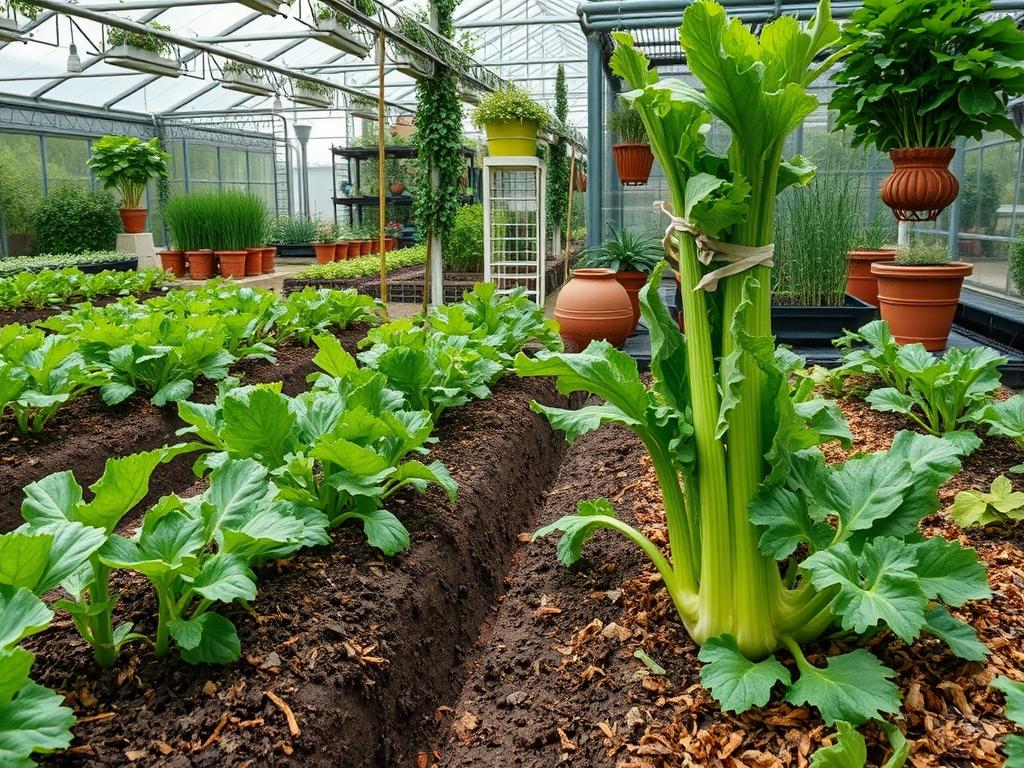
Designing a functional kitchen garden requires more than simply placing seeds in the dirt. It demands a sophisticated understanding of spatial geometry, micro-climates, and the specific physiological needs of the species being cultivated. Among the most challenging yet rewarding additions to a modern edible landscape is celery. While many homeowners treat vegetable patches as utilitarian zones hidden from view, a professional approach treats these areas as high-value visual assets. Harvesting garden celery stalk by stalk is not merely a culinary preference; it is a strategic maintenance decision that preserves the architectural integrity of the garden bed. By removing only the outer ribs, the central crown remains intact, ensuring the plant continues to provide lush, vertical texture to the landscape. This method prevents the unsightly “bald spots” common in monoculture harvesting, where entire rows are cleared at once, leaving behind exposed soil and broken lines. Successful integration starts with foundational site prep, ensuring that the moisture-intensive needs of this crop do not compromise the surrounding hardscaping or drainage systems.
Landscape Design Principles
When incorporating celery into a professional landscape plan, we must consider the principles of symmetry and elevation layers. Celery offers a unique vertical habit that serves as an excellent mid-layer between low-growing ground covers and taller structural shrubs or trellises. To maintain visual balance, place these plants in clusters or structured rows that follow the contours of your masonry or walkways. Linear groupings of Apium graveolens provide a rhythmic repetition that guides the eye through the garden. If your site features significant elevation changes, utilize tiered retaining walls. This allows for easier harvesting at waist height while ensuring that the high water requirements of the plants are contained within specific hydro-zones.
Irrigation planning is perhaps the most critical design element. Because celery is essentially a wetland plant by ancestry, it requires consistent moisture. In a professional layout, this is best achieved through a subsurface drip irrigation system. This system should be hidden beneath a layer of high-quality organic mulch to maintain the aesthetic of the beds while preventing water evaporation. Walkways should be constructed from permeable materials such as crushed limestone or decomposed granite. This ensures that even with heavy watering schedules, the surrounding footpaths remain stable and do not suffer from runoff or erosion. Each focal point in the edible landscape should be accessible; ensure that your layout allows a 36 inch clearance for maintenance paths to prevent soil compaction near the root zones.
Plant and Material Selection
The following table outlines the specific environmental requirements for celery and its most common companion plants used in professional landscape designs.
| Plant Type | Sun Exposure | Soil Needs | Water Demand | Growth Speed | Maintenance Level |
| :— | :— | :— | :— | :— | :— |
| Tall Utah Celery | Full Sun | Rich Organic Loam | High | Slow | High |
| Cutting Celery | Partial Shade | Well-Drained | Moderate | Medium | Medium |
| Flat Leaf Parsley | Full to Partial | Loamy | Moderate | Fast | Low |
| French Marigold | Full Sun | Standard Garden | Low | Fast | Low |
| English Thyme | Full Sun | Sandy/Gritty | Low | Medium | Very Low |
| Red Veined Sorrel | Partial Shade | Moist Loam | Moderate | Medium | Low |
Implementation Strategy
The transition from a design on paper to a physical landscape requires meticulous site preparation. Begin with a thorough topographical analysis to determine the natural grading of the area. A 2 percent slope away from permanent structures is necessary to prevent foundation damage, yet the celery beds themselves should be leveled to ensure deep water penetration. Once the grading is established, define the garden borders using permanent edging materials like weathered steel or tumbled Belgian block. These materials provide a clean transition between the manicured lawn and the productive garden zones.
Before planting, incorporate a high volume of aged compost into the soil to a depth of 12 inches. This creates a nutrient-rich reservoir that supports the heavy feeding habits of celery. When the seedlings are ready for installation, space them at 8 to 10 inch intervals. This spacing is calculated to allow for maximum airflow, which reduces fungal pathogens while still creating a dense, green canopy when the plants reach maturity. After planting, apply a 3 inch layer of finely shredded bark or straw mulch. This layer is essential for temperature regulation; it keeps the roots cool during the heat of the day and prevents the “bitter” flavor often caused by heat stress. If the design includes a formal kitchen garden or potager, consider using a high-quality straight-edge spade to maintain crisp lines between the mulch and the walkways.
Common Landscaping Failures
Failure in the edible landscape often stems from poor drainage management or improper material selection. One of the most frequent mistakes is the use of non-porous fabrics under mulch layers. This often leads to soil anaerobic conditions, causing root rot in water-vulnerable species. Additionally, overcrowding is a significant issue in many residential designs. When plants are placed too closely together, they compete for the same micronutrients and moisture, leading to stunted growth and a ragged appearance.
Irrigation inefficiencies also contribute to landscape decline. Overhead sprayers are often ineffective for celery because they can encourage crown rot and fail to deliver water to the deep root systems. Instead, professionals favor pressure-compensated emitters. Another common failure is neglecting the soil’s pH balance. Celery thrives in a slightly acidic to neutral range, typically 6.0 to 7.0. If the soil becomes too alkaline, which is common near new concrete walkways or retaining walls due to lime leaching, the plants will exhibit yellowing leaves and hollow stalks. Always include a buffer zone of at least 12 inches between new masonry and your planting pockets to avoid chemical interference.
Seasonal Maintenance
Landscape management is a year-round commitment that changes with the solar cycle. In the spring, the focus is on soil activation and installation. This is the time to check the integrity of your irrigation lines and clear any debris from the drainage grates. As the temperature stabilizes, transplant your celery starts into the prepared beds. Ensure that the young plants are protected from late frosts using temporary cloches or row covers if the design is in a colder climate zone.
Summer maintenance involves rigorous water management and the beginning of the “stalk by stalk” harvest. To maintain the visual appeal of the garden, use bypass pruners or a sharp garden knife to slice individual outer stalks at the base. This method allows the plant to stay upright and productive for months rather than being pulled entirely. By late summer, look for signs of nutrient depletion; a side-dressing of organic fertilizer may be necessary to keep the foliage deep green.
Autumn is the season for transition. As the light levels drop, the growth of the celery will slow. This is the time to perform a final heavy harvest of the remaining stalks before the first hard freeze. Once the plants are removed, the soil should be amended with organic matter and covered with a fresh layer of mulch to protect the soil structure over winter. Winter maintenance is primarily focused on hardscape care. Check for heaving in your stone paths and ensure that any stationary garden furniture or decorative focal points are properly winterized.
Professional Landscaping FAQ
How do I prevent my celery from looking messy in a formal garden?
Utilize the stalk by stalk harvesting method. By removing only the periphery, the central structure remains upright and lush. This preserves the plant’s role as a green focal point while providing a continuous supply of fresh produce for the kitchen.
What is the best mulch for a vegetable-integrated landscape?
Finely shredded cedar or hemlock mulch is excellent for aesthetics and function. It retains moisture effectively and breaks down slowly, adding organic matter to the soil without the aesthetic inconsistency of larger wood chips or straw in formal settings.
Can I grow celery in containers within a hardscaped patio?
Yes, provided the containers are at least 12 inches deep and have consistent irrigation. Use high-quality ceramic or stone planters that match your patio’s aesthetic. Small-scale “cutting celery” varieties are often more manageable for architectural container displays.
Does celery require specific structural support?
Typically, no. If the plants are grown in nutrient-rich soil with proper spacing, they will support themselves. However, in high-wind areas, placing them near a decorative low fence or within a stone-walled raised bed provides the necessary windbreak.
How do I manage pests without ruining the garden’s look?
Integrated Pest Management is ideal. Transition away from harsh chemicals and use companion planting. Marigolds and nasturtiums provide splashes of color and naturally deter pests, maintaining the garden’s health and its visual appeal simultaneously.