
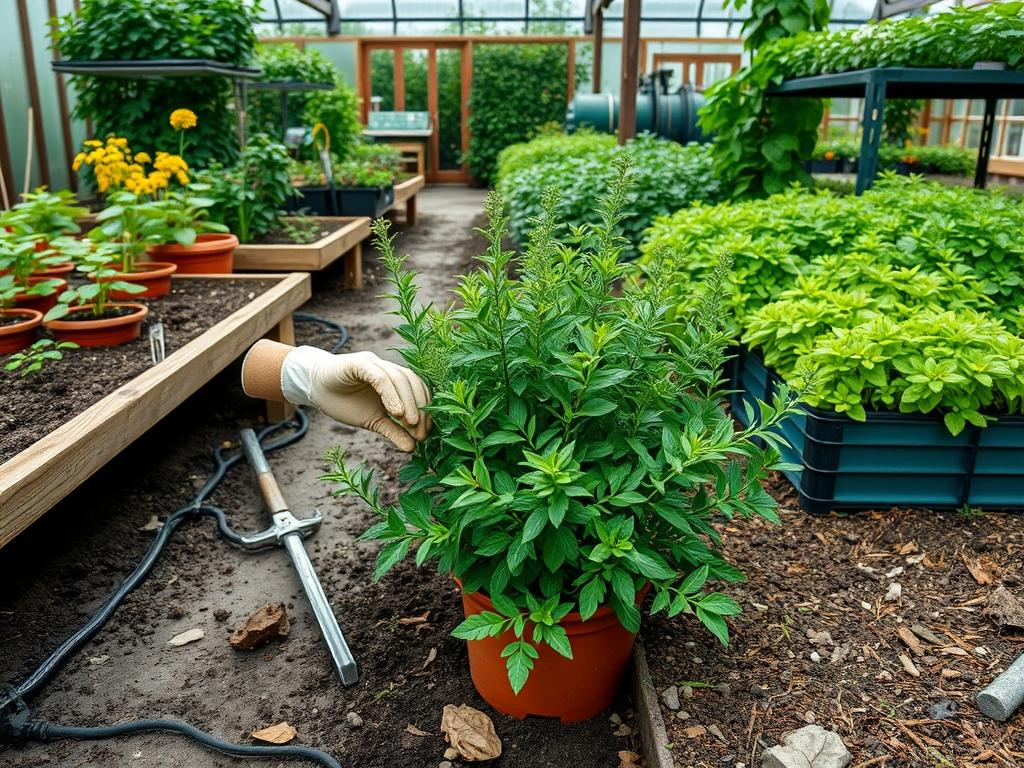
Integrating Aloysia citrodora, more commonly known as lemon verbena, into a professional residential landscape requires a subtle understanding of both architectural form and botanical utility. As a landscape architect, I see this plant not merely as a source of herbal tea, but as a structural component that bridges the gap between ornamental aesthetics and functional harvests. The primary challenge with this species lies in its growth habit. It is a deciduous woody shrub that can become leggy or sparse if not managed with a rigorous maintenance schedule. Within a high end outdoor environment, the goal is to position the plant so that picking fresh lemon verbena is a natural part of the morning routine, while ensuring the shrub contributes to the property’s overall curb appeal and spatial logic. This necessitates a strategic focus on microclimates, as this perennial is native to warmer regions and often struggles in frost prone areas without proper placement against thermal mass walls or within protected alcoves.
In modern landscape design, the functionality of the garden must evolve beyond the visual. We now focus on the sensory garden, where the fragrance and tactile quality of the foliage are just as significant as the bloom cycle. Picking fresh lemon verbena requires easy access, meaning the plant should be situated within eighteen inches of a flagstone walkway or a decomposed granite path. If the shrub is buried in the middle of a deep planting bed, the homeowner is less likely to harvest the leaves, and the plant may suffer from a lack of airflow. By treating lemon verbena as a specimen plant or a secondary layer behind low growing perennials, we can create a landscape that feels lush and intentional.
Landscape Design Principles
Successful integration of lemon verbena into a sophisticated garden plan relies on the principle of focal points and layered elevation. Because lemon verbena can reach heights of six to eight feet in ideal conditions, it serves as a mid to back layer in a Mediterranean or xeric planting scheme. We use symmetry to frame transition points, perhaps placing a pair of these shrubs near the entrance to an outdoor kitchen or a breakfast nook. This placement ensures that the citrus scent is released whenever someone brushes against the foliage, enhancing the atmospheric quality of the space.
Elevation layers are critical for maintaining visual balance. We often pair the upright, somewhat airy structure of Aloysia citrodora with lower, mounding plants such as Rosmarinus officinalis ‘Prostratus’ or Lavandula angustifolia. This creates a tiered effect that hides the woody base of the verbena, which can become unattractive over time. Furthermore, irrigation planning must be separate from turf zones. We utilize subsurface drip irrigation with pressure compensating emitters to deliver water precisely to the root zone, preventing the fungal issues that can arise from overhead spray. This technical precision ensures the foliage remains clean and vibrant, which is essential when the primary goal is picking fresh lemon verbena for culinary use.
Plant and Material Selection
The following table outlines the technical requirements for lemon verbena and its common companions in a functional tea garden landscape.
| Plant Type | Sun Exposure | Soil Needs | Water Demand | Growth Speed | Maintenance Level |
| :— | :— | :— | :— | :— | :— |
| Aloysia citrodora | Full Sun | Well-drained Sandy | Moderate | Fast | Medium |
| Lavandula | Full Sun | Lean / Alkaline | Low | Moderate | Low |
| Mentha (In Pots) | Part Shade | Rich / Humus | High | Aggressive | High |
| Salvia officinalis | Full Sun | Gritty / Dry | Low | Moderate | Low |
| Matricaria chamomilla | Full Sun | Loamy | Moderate | Fast | Low |
Implementation Strategy
When transitioning a concept from paper to the backyard, the implementation strategy must prioritize soil physics and site grading. Lemon verbena is notoriously sensitive to “wet feet.” Therefore, the first step in the layout involves a percolation test to determine the drainage capacity of the native soil. If the soil is heavy clay, we design raised planters or use landscape boulders to create elevated mounds, ensuring the root crown sits at least two inches above the surrounding grade. This elevation allows excess moisture to move away from the stem during heavy rain events.
For the hardscaping phase, we recommend a four inch base of compacted 3/4 inch minus gravel beneath any walkways. This provides a stable foundation and assists with site wide drainage. Edging should be crisp; we often specify one-eighth inch steel edging to separate the herbal beds from lawn areas or gravel paths. Once the plants are in the ground, we apply a three inch layer of organic cedar mulch or pine bark nuggets. This mulch depth is critical for moisture retention during the peak of summer, yet it must be kept a few inches away from the trunk of the lemon verbena to prevent rot. Picking fresh lemon verbena becomes much easier when the ground is stable and the plants are healthy due to a well executed drainage plan.
Common Landscaping Failures
The most frequent error I observe in residential landscapes is root overcrowding and improper spacing. Many gardeners underestimate the vigor of a healthy lemon verbena. When picking fresh lemon verbena, you need room to maneuver around the plant without trampling the root zones of adjacent species. If planted too closely to a wall or a fence, the interior of the shrub will lose its leaves due to a lack of light and air circulation, resulting in a skeletal appearance. We recommend a minimum spacing of four feet between the center of the verbena and its nearest large neighbor.
Another significant failure is the use of high nitrogen fertilizers. While nitrogen promotes green growth, it often results in leaves that are weak and flavorless. For the best tea, the essential oils must be concentrated. We prefer a slow release, low phosphorus organic fertilizer applied only once in the spring. Irrigation inefficiencies also plague many gardens. Overwatering leads to yellowing leaves and root decay, while under-watering during the establishment phase can permanently stunt the plant. A smart irrigation controller with a weather sensor is the professional solution to this variable.
Seasonal Maintenance
Landscape management for lemon verbena fluctuates with the solar cycle. In the spring, once the threat of frost has passed, we perform a structural prune. This involves removing roughly one third of the previous year’s growth to encourage fresh, leafy stems. This is the optimal time to check the dripline emitters for clogs and to refresh the mulch layer. As we move into summer, the focus shifts to harvesting. Picking fresh lemon verbena should be done frequently; regular tipping of the branches encourages a bushier habit and prevents the plant from becoming top heavy.
Autumn prep is vital for the plant’s survival in marginal climates. We reduce irrigation frequency to allow the wood to harden off before winter. For those in Zone 8 or lower, we might apply a thicker layer of straw mulch around the base for insulation. During the winter, the plant will go dormant and likely drop all its leaves. This is a normal physiological response, and the landscape should be designed so that the bare branches still offer some architectural interest, perhaps silhouetted against a retaining wall or highlighted by low voltage uplighting.
Professional Landscaping FAQ
When is the best time for picking fresh lemon verbena?
Harvest in the early morning after the dew has evaporated but before the heat of the day. This is when the concentration of essential oils, like citral and limonene, is at its peak for the highest quality tea.
How do I prevent my lemon verbena from looking leggy?
Consistent pruning is the key. Every time you are picking fresh lemon verbena for tea, cut back to just above a leaf node. This stimulates lateral branching and creates a denser, more aesthetically pleasing shrub for your landscape.
Can lemon verbena survive a hard freeze in the garden?
It is generally hardy to 20 degrees Fahrenheit. In colder regions, plant it in a large terracotta pot that can be moved indoors, or provide heavy winter protection and ensure the soil has impeccable drainage to prevent crown rot.
What are the best companion plants for a tea garden?
Pair it with lavender, thyme, and echinacea. These plants share similar cultural requirements for full sun and well drained soil. Their varying textures and heights create a visually dynamic layer in any professional landscape design.
Does lemon verbena require a lot of fertilizer?
No, it performs best in moderately fertile soil. Excessive fertilization leads to rapid, weak growth with diluted fragrance. Use a balanced organic compost in early spring to provide sufficient nutrients for the entire growing season.