
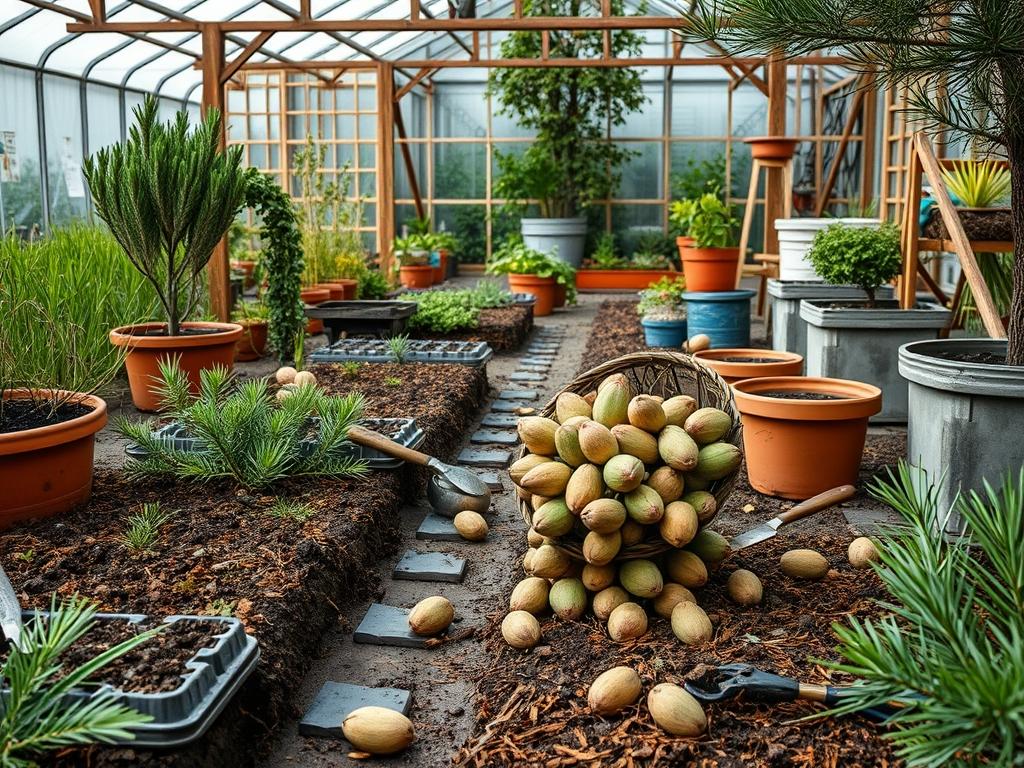
Integrating edible forest elements into a sophisticated residential landscape requires a delicate balance between aesthetic architectural form and functional agricultural yield. For the modern homeowner, harvesting garden pine nuts serves as a bridge between high-end curb appeal and sustainable food production. These trees, predominantly members of the Pinus genus, function as massive structural anchors within a garden layout. They provide year-round evergreen texture, wind protection, and privacy screening while producing a high-value culinary crop. However, the landscaping challenge lies in the scale and slow growth of these specimens. A Pinus pinea, for instance, can reach significant heights, requiring the landscape architect to consider long-term sightlines and the eventual shade canopy that will affect understory plantings. Climate considerations are equally paramount. While many nut-bearing pines are hardy, the Italian Stone Pine thrives in Mediterranean-style microclimates, whereas the Pinus edulis or Pinyon Pine is better suited for the arid conditions of the American Southwest. Proper placement ensures that the tree becomes a focal point rather than an overgrown liability that interferes with power lines or structural foundations.
Landscape Design Principles
Successful pine nut integration begins with the principle of symmetry and focal points. Large-scale evergreens should be used to frame the property or provide a rhythmic backdrop to more delicate ornamental features. When planning for harvest, the elevation layers of the garden must be meticulously mapped. Placing a Pinus koraiensis (Korean Pine) at the highest point of a sloped backyard creates a vertical accent that draws the eye upward, but designers must also ensure the terrain below is accessible for cone collection. Walkways should be wide enough to accommodate a wheelbarrow or garden cart during the autumn harvest season. These paths should be constructed from durable materials like decomposed granite or flagstone to handle the weight of maintenance equipment.
Visual balance is achieved by pairing the coarse, needle-dense texture of the pines with softer, fine-textured shrubs or ornamental grasses in the mid-ground. Irrigation planning is critical here; adult pines often require less water than traditional turf, so grouping them in a “low-water zone” prevents the root rot that occurs when edible pines are subjected to the high-frequency watering schedules of a lawn. By using drip irrigation emitters rather than spray heads, the moisture is delivered directly to the root ball, minimizing evaporation and protecting the bark from fungal issues.
Plant and Material Selection
| Plant Type | Sun Exposure | Soil Needs | Water Demand | Growth Speed | Maintenance Level |
| :— | :— | :— | :— | :— | :— |
| Pinus pinea | Full Sun | Well-drained, Sandy | Low to Moderate | Moderate | Medium |
| Pinus edulis | Full Sun | Rocky, Alkaline | Very Low | Slow | Low |
| Pinus koraiensis | Full/Partial Sun | Moist, Acidic | Moderate | Moderate | Medium |
| Pinus sibirica | Full/Partial Sun | Rich, Loamy | Moderate | Slow | High |
| Pinus pumila | Full Sun | Well-drained, Poor | Low | Very Slow | Low |
For the hardscaping material selection, consider using dark basalt boulders or limestone retaining walls to create a textural contrast with the deep greens of the pine needles. Pine straw or triple-shredded hardwood mulch should be applied at a depth of 3 inches to suppress weeds and retain soil moisture without suffocating the shallow feeder roots characteristic of the Pinus species.
Implementation Strategy
Implementing a pine nut orchard within a backyard requires a strategic sequence of operations. First, grading must be addressed to ensure that water moves away from the base of the trees. Edible pines do not tolerate “wet feet,” so creating a slight mound or berm using sandy loam soil can improve drainage performance. Once the grade is established, the landscape architect should mark the “harvest zone,” which is the area directly beneath the canopy where cones will eventually fall. This area should be kept free of dense, thorny shrubs that would make gathering difficult.
The layout should feature a mix of heights. Use a spade to plant larger specimens in the rear and smaller, more accessible varieties like Pinus pumila near the edges of garden beds. When planting, the hole should be twice the width of the root ball but no deeper than the original container. Backfill with native soil rather than heavy amendments to encourage the tree to adapt to the local environment. For the floor of the orchard, a layer of landscape fabric under a thin layer of pea gravel can make finding and collecting fallen cones much easier, though many prefer the natural look of organic mulch.
Common Landscaping Failures
The most frequent error in harvesting garden pine nuts is improper spacing. Homeowners often plant young Pinus trees too close together, forgetful that a single Korean Pine can reach a spread of 20 feet. This leads to root overcrowding and a lack of light penetration, which directly reduces the production of cones. Soil compaction is another silent killer. Heavy foot traffic or the use of heavy machinery near the dripline of the tree crushes the delicate air pockets in the soil, starving the roots of oxygen.
Drainage mistakes often stem from installing pines in low-lying areas of the yard where water naturally pools. Without a French drain or a sloped swale, the tree will likely suffer from needle cast or root decay. Furthermore, irrigation inefficiencies, such as pointing high-pressure sprinklers at the trunk, can cause “canker,” a disease that compromises the tree’s structural integrity. Finally, failing to remove competing weeds or invasive groundcovers like English Ivy can divert nutrients away from seed production.
Seasonal Maintenance
Spring is the season for structural assessment and fertilization. A slow-release evergreen fertilizer with a balanced NPK ratio should be applied to the dripline to support new growth. This is also the time to prune any dead or diseased wood using a bypass pruner or pole saw. Care must be taken not to “top” the tree, as this destroys its natural architectural form and reduces future cone yields.
During the summer, the focus shifts to water management. While established pines are drought-tolerant, young trees require consistent moisture to thrive. Monthly deep-soaking sessions are more effective than frequent light waterings. In autumn, the harvest begins. Many species take two years for cones to mature. Use a telescoping harvest hook to gently dislodge cones that have turned brown and woody. Once collected, cones should be placed in a warm, dry area to open naturally. Winter maintenance involves protecting the soil with a fresh layer of mulch and monitoring for heavy snow loads that might snap branches. If a heavy storm occurs, use a soft broom to gently brush snow upward off the limbs to prevent splitting.
Professional Landscaping FAQ
How long does it take for a garden pine to produce nuts?
Most species require at least 10 to 15 years of growth before they begin producing significant cone crops. The Pinus edulis may take even longer, while the Pinus koraiensis is slightly more precocious in favorable soil conditions.
Do I need more than one tree for pollination?
While many pines are monoecious, meaning they have both male and female flowers on the same tree, planting at least two or three specimens significantly increases the rate of cross-pollination. This results in a higher yield of filled, edible seeds.
What is the best way to extract seeds from the cones?
Once the cones are harvested, place them in a burlap sack in a warm, ventilated area. As they dry, the scales will open. You can then shake the bag or manually pry the seeds out with needle-nose pliers.
Can pines grow in heavy clay soil?
Pines generally struggle in heavy clay due to poor drainage. To succeed, you must amend the area with expanded shale or coarse sand or plant the trees in raised beds to ensure the root crown remains above the saturation point.
Are all pine seeds edible for humans?
While many seeds are technically edible, only about 20 species have seeds large enough to be worth harvesting. The most common culinary varieties are the Stone Pine, Pinyon Pine, and Korean Pine. Always verify the specific species before consumption.