
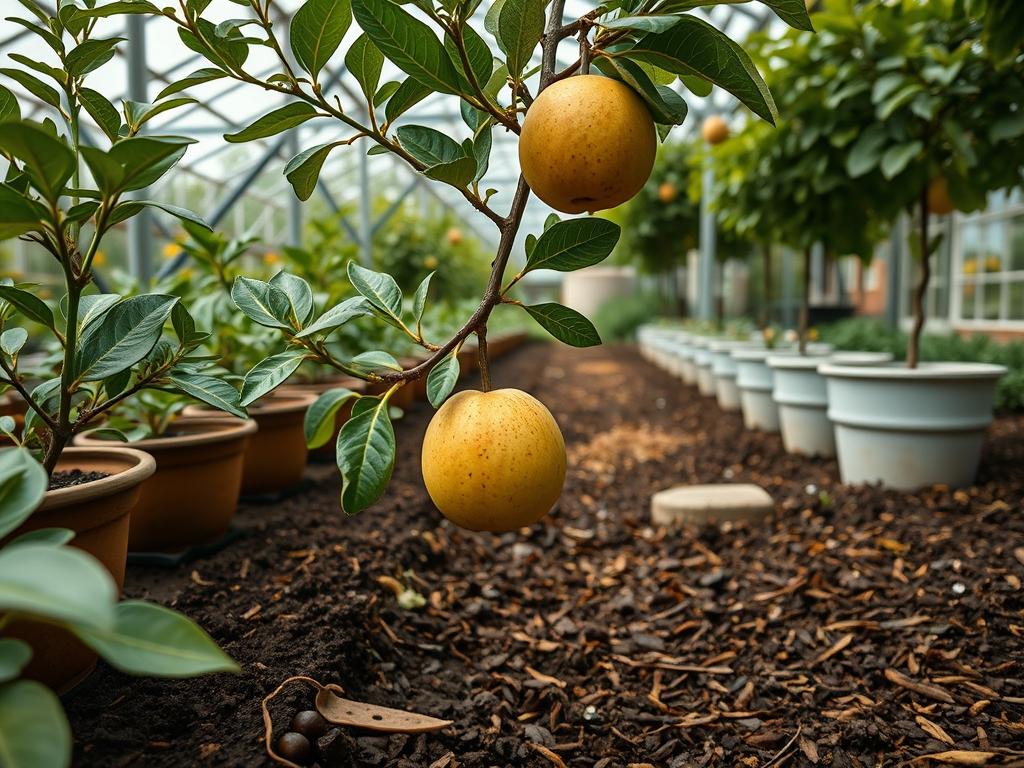
Integrating the traditional quince tree into a modern landscape requires an understanding of both its architectural form and its utilitarian output. As a deciduous specimen, the Cydonia oblonga offers a gnarled, sculptural trunk and delicate spring blossoms that provide an immediate focal point for any backyard or estate garden. However, the successful integration of this species goes beyond mere aesthetics; it involves a strategic plan for the harvest cycle. Picking ripe quince is a sensory experience that defines the transition from late summer to the crisp air of autumn. A well designed landscape must accommodate the physical act of harvesting while providing the necessary infrastructure to manage the fruit once it leaves the branch. Curating an outdoor environment around this unique tree involves balancing softscape elements with functional hardscaping to ensure the fruit remains undamaged and the tree continues to thrive as a centerpiece of the property.
Designing for fruit production requires careful consideration of the surrounding climate and the specific microclimates within a yard. Quince trees are particularly susceptible to wind damage during the late season when the heavy fruit can strain the structural integrity of the branches. Strategic placement near Stone Retaining Walls or high quality fencing can provide a windbreak while simultaneously radiating heat back toward the tree, which aids in the ripening process. Furthermore, the ground plane beneath the tree must be managed to prevent bruising if the fruit falls prematurely. A dense layer of Organic Mulch or a soft groundcover like Creeping Thyme can serve as a cushion. This planning phase ensures that the curb appeal remains high even during the messy harvest weeks, keeping the landscape tidy and professional.
Landscape Design Principles
Symmetry and visual balance are the hallmarks of a professional orchard or specimen garden. When placing a quince tree, consider it a primary focal point within a larger geometric layout. Aligning the tree with central axes or using it to anchor the corner of a structured garden bed creates a sense of permanence and intention. Integrating Gravel Walkways that lead directly to the base of the tree provides a stable surface for ladders and harvest baskets, preventing soil compaction around the delicate secondary roots. Elevation plays a crucial role here; planting the tree on a slight mound or a terraced level can enhance natural drainage while lifting the fruit into a more accessible picking height.
The use of vertical layers is another vital principle. Underplanting the quince with silver foliaged shrubs or low lying perennials creates a sophisticated color palette that complements the golden hue of the ripe fruit. Irrigation planning must be subterranean to avoid wetting the foliage, which can lead to fungal issues common in pome fruits. By installing a Drip Irrigation System that targets the drip line of the tree, you ensure deep hydration without compromising the aesthetic of the surface mulch. This functional approach allows the landscape to serve as a high performing production zone that retains the elegance of a curated botanical garden.
Plant and Material Selection
| Plant or Material | Sun Exposure | Soil Needs | Water Demand | Growth Speed | Maintenance Level |
| :— | :— | :— | :— | :— | :— |
| Cydonia oblonga | Full Sun | Well drained Loam | Moderate | Medium | Moderate |
| English Lavender | Full Sun | Sandy/Gritty | Low | Moderate | Low |
| Creeping Thyme | Full Sun | Average | Low | Fast | Low |
| Wood Chip Mulch | N/A | N/A | N/A | N/A | Annual Refresh |
| Steel Edging | N/A | N/A | N/A | N/A | Very Low |
| Granite Setts | N/A | N/A | N/A | N/A | Very Low |
Implementation Strategy
The implementation of a quince centered landscape begins with rigorous site preparation. Grading is the first priority; the soil must slope away from the tree at a rate of at least 2 percent to prevent water from pooling at the collar. Once the grade is established, use a Post Hole Digger or a dedicated Auger to prepare a planting hole that is twice as wide as the root ball but no deeper. This ensures the tree sits at the proper elevation to avoid trunk rot. Edging materials, such as Polyethylene Edging or Corten Steel, should be installed to define the mulch bed and prevent invasive turf grass from competing with the tree for nutrients.
After the tree is in the ground, apply a layer of Arborist Wood Chips at a depth of 3 inches, ensuring the mulch does not touch the park. This layer regulates soil temperature and moisture, which is critical during the fruit swelling phase in late summer. Hardscaping should include a dedicated space for fruit processing. A small Flagstone Patio nearby serves as a landing zone for Wooden Crates and Pruning Shears. This transition zone between the orchard and the home allows for the initial cleaning and sorting of the harvest without bringing orchard debris into the living quarters.
Common Landscaping Failures
The most frequent error in fruit tree landscaping is improper drainage management. Quince trees thrive in moist soil but will suffer quickly in anaerobic, waterlogged conditions. If the site has heavy clay, failing to incorporate Core Aeration or failing to install a French Drain can lead to stunted growth or crop failure. Another common pitfall is the over-application of high nitrogen fertilizers. While nitrogen encourages leafy growth, it can soften the fruit excessively and make it prone to bruising during the picking process.
Spacing is also a recurring issue for novice designers. A mature quince tree requires at least 15 feet of clearance to allow for proper air circulation and light penetration. Crowding the tree with tall evergreens or large structures shades out the lower fruiting wood, resulting in a thin canopy and small, flavorless fruit. Finally, neglecting the irrigation schedule during the final weeks before harvest can cause the fruit to crack. Consistent moisture is essential to maintain the integrity of the quince’s skin as it transitions from green to gold.
Seasonal Maintenance
Spring maintenance focuses on structural integrity and nutrient availability. Prune the tree using Bypass Pruners to remove any dead or crossing branches, allowing light to reach the center of the canopy. Apply a balanced, slow release fertilizer to support the initial blossom set. As summer progresses, monitor the tree for pests and ensure the Drip Irrigation is functioning correctly during heat waves. This is the period when the fruit gains its size, and water consistency is paramount for a successful harvest.
Autumn is the busiest season, centered on picking ripe quince. Harvest the fruit when it turns a vibrant yellow and its characteristic fuzz can be easily wiped away with a cloth. Handle the fruit with Cotton Gloves to avoid finger bruising, as the flesh is surprisingly delicate despite its hardness. After harvest, the softening or ripening process happens best in a cool, dark environment away from other fruits, as the intense aroma of quince can permeate nearby produce. Winter maintenance involves a final cleanup of fallen leaves to prevent disease carryover and a application of dormant oil to protect against scale and mites.
Professional Landscaping FAQ
When is the best time for picking ripe quince?
Harvest typically occurs in late autumn when the fruit transitions from lime green to a deep golden yellow. The aromatic scent becomes highly noticeable, and the grey fuzz on the skin should rub off easily with your thumb.
How do I soften quince for culinary use?
Quince is rarely eaten raw due to its astringency. Softening occurs through slow cooking or by allowing the fruit to sit in a cool pantry for several weeks. This period, known as bletting, enhances the fragrance and slightly mellows the flesh.
What is the best mulch for a quince tree?
A coarse Natural Wood Chip or bark mulch is ideal. It should be applied at a depth of 3 inches and spread across the entire root zone. This helps retain moisture and provides a soft landing for any falling fruit.
How much space does a mature quince tree need?
For optimal health and fruit production, provide a diameter of at least 15 feet. This ensures adequate sunlight reaches all sides of the tree and allows for easy access with ladders or carts during the busy harvest season.
Can I grow quince in a small urban garden?
Yes, quince can be trained as an espalier against a sunny Brick Wall or fence. This method saves significant horizontal space while providing an elegant, two dimensional architectural element that still produces a substantial harvest of large, golden fruit.