
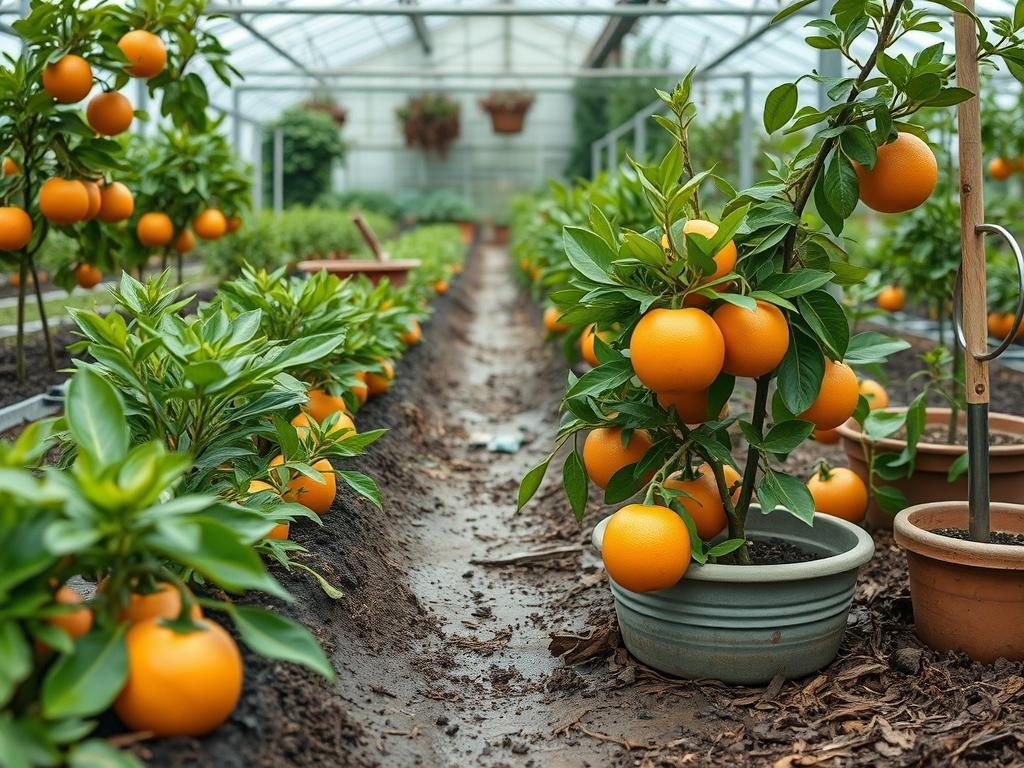
Integrating fruit-bearing trees into a luxury residential landscape requires a sophisticated balance between aesthetic symmetry and agricultural productivity. The Clementine Tree (Citrus clementina) is a favorite among landscape architects because it offers year-round visual interest through its glossy, deep green foliage and fragrant spring blossoms. However, the primary landscape challenge arrives in the late autumn and early winter. Successfully harvesting garden clementines for holiday gift baskets requires a design that prioritizes accessibility and fruit quality without sacrificing curb appeal. A well-planned orchard or edible garden segment should function as a seamless extension of the outdoor living space. This involves managing microclimates, ensuring proper soil aeration, and designing pathways that allow for easy movement during the harvest season. When these elements align, the garden becomes more than a visual asset; it becomes a functional resource that enhances the holiday experience.
Landscape Design Principles
A professional landscape layout for citrus depends heavily on the principle of focal points and the use of thermal mass. Because Clementine Trees are sensitive to extreme cold, placing them near south-facing Retaining Walls made of natural stone can provide a heat sink that protects the fruit during chilly nights. Symmetry is another critical factor. We often plant citrus in pairs to flank a formal entryway or align them in a structured row to create a sense of rhythm along a property line. This repetition creates a clean, organized look that contrasts beautifully with the organic shape of the ripening fruit.
Elevation layers also play a significant role in a high-end garden design. We recommend planting citrus on a slight mound or a raised terrace. This practice serves two purposes. First, it ensures that water does not pool at the base of the trunk, which is the leading cause of root rot. Second, it elevates the fruit to eye level, making the process of harvesting garden clementines much more ergonomic and visually engaging. Walkways should be wide enough, at least 36 inches, to accommodate a harvesting cart or large baskets. Using materials like Decomposed Granite or Flagstone for these paths provides a stable, non-slip surface during the damp winter months when harvesting typically occurs.
Visual balance is achieved by surrounding the trees with low-growing companion plants. These should have different textures but similar water requirements. By layering the heights of the plants, we create a lush, multi-dimensional environment that guides the eye toward the vibrant orange fruit. This careful planning ensures that the garden remains a highlight of the property even when the harvest is complete.
Plant and Material Selection
Selecting the right cultivars and supporting materials is essential for a productive and beautiful landscape. Use the following table as a guide for selecting plants that thrive alongside citrus in a managed outdoor environment.
| Plant Type | Sun Exposure | Soil Needs | Water Demand | Growth Speed | Maintenance Level |
| :— | :— | :— | :— | :— | :— |
| Clementine Tree | Full Sun | Sandy Loam | Moderate | Medium | Moderate |
| French Lavender | Full Sun | Well Draining | Low | Fast | Low |
| Rosemary | Full Sun | Poor to Good | Low | Medium | Very Low |
| Creeping Thyme | Full Sun/Part Shade | Well Draining | Low | Medium | Low |
| Dwarf Pomegranate | Full Sun | Adaptable | Low | Medium | Moderate |
| Star Jasmine | Full Sun/Part Shade | Rich/Moist | Moderate | Fast | Moderate |
When selecting materials for the “foundation” of your edible landscape, focus on quality. High-grade Organic Compost and Cedar Mulch are necessary for maintaining soil temperature. For the harvesting equipment, professional-grade Bypass Pruning Shears and Woven Willow Baskets are the standard for maintaining both tool longevity and the integrity of the fruit during the harvest.
Implementation Strategy
The implementation of a citrus-focused landscape begins with careful site preparation. Before any trees are planted, a professional site analysis must be conducted to assess drainage and soil pH. Ideally, the soil should be slightly acidic to neutral. If the local soil is heavy clay, we implement a French Drain system or a series of Swales to divert excess water away from the root zones.
The first step in planning the layout is marking the “drip line” of the mature tree size. For a standard Clementine, this is often a 10-foot to 12-foot diameter. Proper spacing ensures that each tree receives adequate airflow and sunlight, which are vital for fruit sweetness and color. Once the layout is marked, we begin the grading process. Creating a gentle slope helps with surface runoff.
Edging is the next priority. Using Steel Edging or Brick Borders creates a crisp line between the orchard area and the lawn or walkways. This prevents turf grass from encroaching on the tree’s root zone, where it would compete for nutrients. Once the trees are in the ground, a layer of Hardwood Mulch should be applied, approximately 3 inches deep. It is crucial to keep the mulch at least 6 inches away from the trunk to prevent moisture from sitting against the bark.
For the harvesting phase, we design “staging areas.” These are flat, paved sections near the trees where you can set down your Harvesting Baskets and sort the fruit. Having a dedicated space for this prevents the “compaction” of the soil around the tree roots that would otherwise occur if people stood in the same spot repeatedly while picking fruit.
Common Landscaping Failures
The most common failure in citrus landscaping is poor drainage. I often see trees planted in low-lying areas of a yard where water naturally collects. This leads to yellowing leaves and “root suffocation.” Another frequent error is the “mulch volcano,” where homeowners pile mulch high against the trunk of the tree. This traps moisture and invites fungal diseases and pests.
Root overcrowding is another issue that arises when designers prioritize “instant” results over long-term health. Planting too many large specimens too close together will result in stunted growth and a significant reduction in fruit yield within five years. Furthermore, improper spacing makes harvesting garden clementines a physical chore rather than a pleasure, as branches become entangled and difficult to navigate.
Irrigation inefficiencies also plague many residential gardens. Using a traditional spray head for citrus is ineffective because it wets the foliage, which can lead to fungal issues, but fails to saturate the deep root zone. We recommend a Netafim Drip Irrigation system with multiple emitters per tree to provide a slow, deep soak that encourages deep root penetration.
Seasonal Maintenance
To ensure a successful harvest for your holiday baskets, maintenance must be a year-round commitment. In the spring, the focus is on nutrition. We apply a high-quality Citrus Fertilizer with a N-P-K ratio of 8-8-8 or 10-10-10 to support the new growth and flower production. This is also the time to prune any “water sprouts” or dead wood.
During the summer, water management is paramount. In high-heat periods, a Clementine Tree may require a deep watering twice a week. We monitor soil moisture at a depth of 6 inches to ensure the core root ball remains hydrated. This prevents “fruit drop,” where the tree sheds its developing fruit to survive drought stress.
Autumn is the preparation phase for harvesting garden clementines. As the temperatures drop, we reduce nitrogen fertilization to prevent a flush of tender new growth that would be susceptible to frost. We also check the fruit for color break. The clementines should be a vibrant orange with no green showing. To harvest for gift baskets, use Precision Snips to cut the stem about 1/4 inch above the fruit. This prevents the “plugging” or tearing of the skin that occurs when fruit is pulled.
In winter, after the harvest is complete, the focus shifts to protection. If a hard freeze is predicted, we use Frost Blankets to cover the canopy. It is also a good time to inspect the irrigation lines for leaks and to refresh the Mulch layers. Proper winter care ensures that the tree has the energy to bloom again in the spring.
Professional Landscaping FAQ
How do I tell if clementines are ready for holiday baskets?
The fruit should be firm and heavy for its size with a deep orange hue. Taste one from the sunny side of the tree first. If it is sweet and the skin peels easily, the entire crop is likely ready.
What is the best way to prevent root rot in citrus?
Ensure the planting site is elevated above the surrounding grade. Use a well-draining soil mix containing Perlite or Sand. Avoid over-watering by using a Soil Moisture Meter to check the root zone before applying more water.
How much sun do clementine trees need for a good harvest?
Citrus trees require at least 6 to 8 hours of direct sunlight daily. Light is the primary driver of sugar production in the fruit. Without enough sun, the clementines will be sour and the tree will have sparse foliage.
Can I grow clementines in large decorative pots?
Yes, but you must use at least a 20-gallon container with ample drainage holes. Potted citrus requires more frequent watering and specialized Potting Mix. It is a great solution for smaller patios or paved courtyard areas.
What tools are best for harvesting garden clementines without damage?
Use Bypass Micro-Snips or specialized Citrus Shears. Cutting the stem rather than pulling the fruit preserves the “button” at the top. This prevents decay and allows the fruit to stay fresh in gift baskets for a much longer period.