
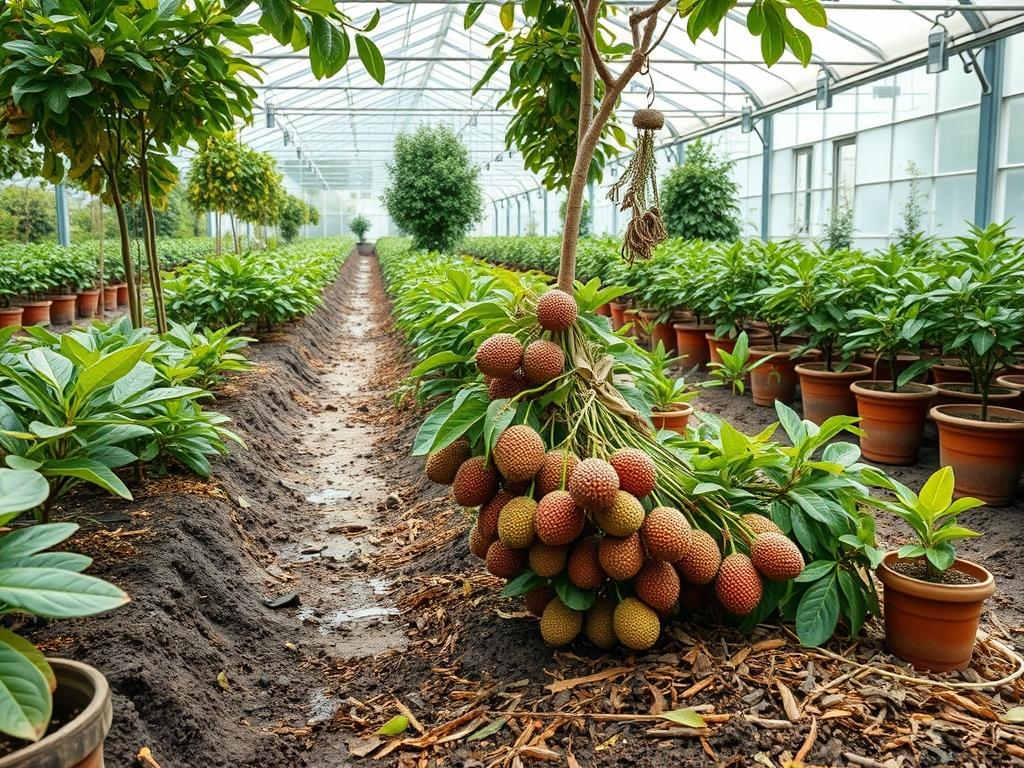
Cultivating a productive orchard within a residential landscape requires a sophisticated balance between aesthetic appeal and horticultural precision. When integrated into a professional site plan, the lychee tree serves as a magnificent evergreen focal point, offering dense, glossy foliage that enhances curb appeal year-round. However, the primary challenge for many property owners involves transitioning from a decorative specimen to an active fruit producer. Harvesting Garden Lychees in large, heavy bunches is the result of architectural planning that begins long before the first fruit sets. From a landscaping perspective, we must view the tree not merely as a plant, but as a structural element that requires specific environmental conditions to thrive. Success depends on the interplay of microclimates, drainage patterns, and spatial allocation within the garden layout. By treating the orchard area with the same rigor as a hardscape installation, we ensure that the outdoor environment remains functional, beautiful, and bountiful.
Landscape Design Principles
Incorporating fruit-bearing trees into a professional landscape requires a deep understanding of symmetry and focal points. A lychee tree, with its rounded canopy and structural trunk, naturally draws the eye. To maximize both visual balance and fruit production, the design must prioritize elevation layers. Planting on a slight mound or a raised terrace ensures that the root zone remains oxygenated, which is vital for the physiological health required for heavy fruiting. A well-designed garden should utilize the lychee as a primary anchor, perhaps flanked by lower-tier shrubs or groundcovers that do not compete for nutrients.
Symmetry in the garden helps organize the space, making maintenance tasks like pruning and harvesting more efficient. We often recommend creating dedicated walkways using Natural Stone Pavers or Decomposed Granite that encircle the drip line of the tree. This prevents soil compaction near the root zone, which is a common deterrent to fruit development. Furthermore, irrigation planning must be invisible yet ubiquitous. Subsurface drip systems are preferred, as they deliver moisture directly to the root architecture without encouraging fungal growth on the trunk. By layering the landscape vertically, with taller trees providing windbreaks for the more delicate lychee blooms, we create a stable environment that supports the heavy weight of pendant fruit clusters during the final stages of the season.
Plant and Material Selection
Selecting the right cultivars and supporting materials is the foundation of any successful landscape project. Not all lychee varieties perform the same in every soil profile. Below is a selection of recommended plants and materials for a high-yield tropical garden.
| Plant Type | Sun Exposure | Soil Needs | Water Demand | Growth Speed | Maintenance Level |
| :— | :— | :— | :— | :— | :— |
| Brewster Lychee | Full Sun | Acidic, Well-Drained | High | Medium | Moderate |
| Mauritius Lychee | Full Sun | Varied, Loamy | Moderate | Fast | Low |
| Emperor Lychee | Full Sun | Rich, Organic | High | Slow | High |
| Perennial Peanut | Full Sun/Part Shade | Sandy, Well-Drained | Low | Fast | Low |
| Dwarf Gardenia | Part Shade | Acidic, Moist | Moderate | Slow | Moderate |
| Pine Bark Mulch | N/A | High Carbon Content | N/A | N/A | Annual Refresh |
The choice of Pine Bark Mulch is strategic. It breaks down slowly, continually acidifying the soil to the preferred pH of 5.5 to 6.5. When the goal is Harvesting Garden Lychees in significant quantities, the soil chemistry must be managed with the same precision used in selecting Powder-Coated Aluminum Edging or Flagstone.
Implementation Strategy
The implementation of a high-yield garden starts with the grading of the site. One must ensure that the “backyard” or “estate orchard” has a slope of at least 1 percent to 2 percent to prevent standing water. Once the site is graded, the layout should mark a radius of at least 15 feet for each tree. This spacing allows for the visual “breathability” that defines luxury landscaping while ensuring that sunlight reaches the lower branches where harvesting usually occurs.
When planting, the hole should be twice as wide as the root ball but no deeper. We use a mixture of Native Soil, Composted Manure, and Perlite to create a backfill that encourages rapid root expansion. After the tree is set, a 3-inch to 4-inch layer of organic mulch should be applied, keeping it at least 6 inches away from the trunk to prevent rot. Hardscaping elements, such as Retaining Walls made of Stackable Ledger Stone, can be used to create terraced levels if the property has a steep incline. This not only prevents erosion but also creates a dramatic “stadium” effect for the orchard, making the red fruit bunches a central part of the outdoor living experience.
Common Landscaping Failures
Many landscape projects fail because they prioritize immediate aesthetics over long-term biological needs. The most frequent error is improper drainage. Lychees are highly susceptible to “wet feet,” which causes root rot and immediate fruit drop. If the soil remains saturated for more than 24 hours after a rain event, the site requires an engineered drainage solution, such as a French Drain or a Dry Well.
Another common failure is root overcrowding. Planting competitive species, like aggressive turf grasses, directly up to the trunk of the tree starves the lychee of essential micronutrients like Zinc and Boron. These elements are critical for flower retention. Furthermore, irrigation inefficiencies often plague residential gardens. Overhead sprays can knock delicate blossoms off the tree in the spring, directly reducing the harvest potential. Finally, soil compaction from heavy foot traffic or construction equipment near the tree can stifle the root system, leading to stunted growth and sparse fruiting clusters. Addressing these technical issues early in the design phase is much more cost-effective than attempting to remediate a failing tree years later.
Seasonal Maintenance
To ensure you are Harvesting Garden Lychees in large bunches year after year, a strict maintenance schedule must be followed. In the Spring, the focus is on “Flower Induction.” This is the time to monitor soil moisture closely. We suggest using a Tensiometer to ensure the soil stays consistently moist but not saturated. Fertilization during this phase should emphasize Potassium and Phosphorus to support the massive energy requirements of blooming.
During the Summer, the harvest begins. This is when the visual impact of the landscape is at its peak. Protective netting may be required if local wildlife is a concern, but from a design standpoint, we prefer using Ultrasonic Deterrents to keep the aesthetic clean. Once the harvest is complete, “Structural Pruning” is essential. We recommend a technique called “Skirting,” where the lower branches are kept at least 2 feet off the ground. This improves airflow and reduces pest access.
In the Autumn, the tree enters a period of vegetative growth. This is the time to apply Slow-Release Granular Fertilizer and refresh the mulch layers. As we move into Winter, the tree requires a period of “Cool Stress” to trigger the next year’s flowers. Irrigation should be dialed back significantly during the coldest months, and any late-season nitrogen applications should be avoided to prevent new, tender growth that could be damaged by a light frost.
Professional Landscaping FAQ
What is the best way to increase fruit bunch size?
Consistent irrigation during fruit set is paramount. Use a Double-Ring Drip Line to ensure the entire root zone receives moisture. Additionally, foliar sprays containing Seaweed Extract can provide the trace minerals necessary for larger, heavier bunches.
How do I integrate a lychee tree into a modern landscape?
Use the tree as a structural centerpiece within a minimalist frame. Surround the base with Grey River Rocks or a clean Boxwood Hedge to contrast the wilder, tropical texture of the lychee foliage.
When is the ideal time for harvesting garden lychees?
Harvesting should occur when the fruit skins turn a vibrant, deep red and the bumps on the skin flatten slightly. Taste one fruit from the bunch; if it is sweet, use Bypass Pruners to clip the entire cluster.
How can I protect my harvest from wind damage?
Incorporate a “Windbreak” into your design. Planting a row of Areca Palms or Clumping Bamboo on the windward side of the property can significantly reduce the mechanical stress on the fruit bunches during summer storms.
Does mulch depth really impact the harvest quality?
Yes, a consistent 3-inch layer of mulch regulates soil temperature and moisture. Stable root temperatures prevent “Fruit Splitting,” a common physiological disorder that happens when the tree experiences sudden fluctuations in water availability or heat.