
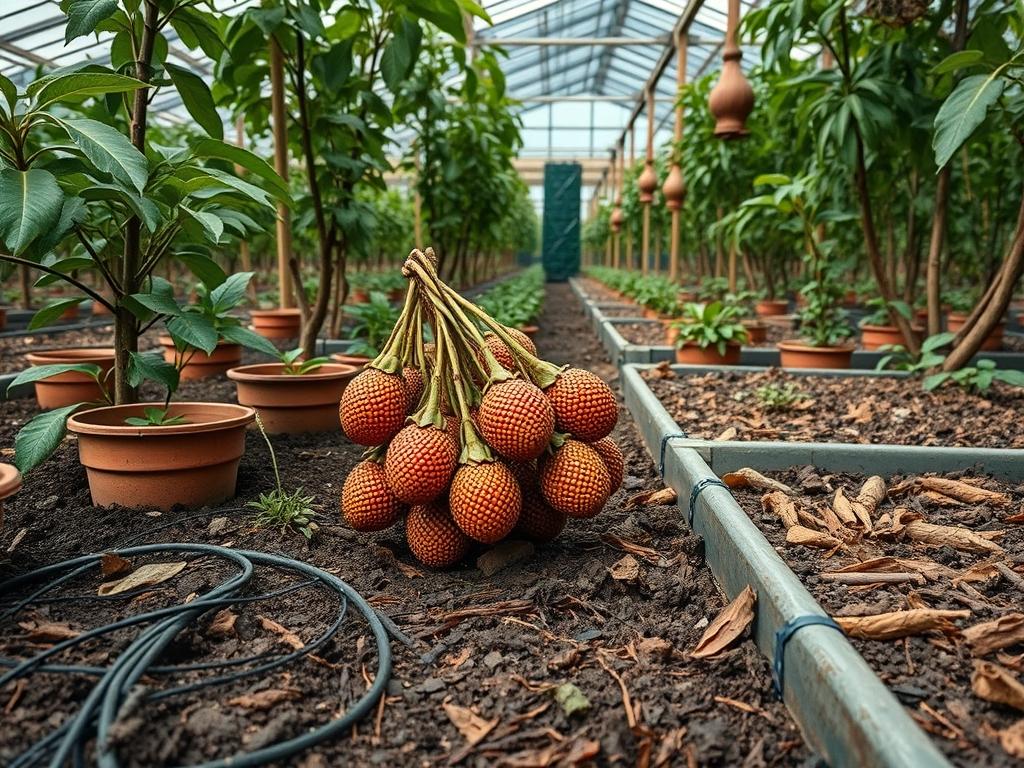
Integrating the Nephelium lappaceum, commonly known as the rambutan, into a residential landscape requires a sophisticated understanding of tropical microclimates and structural aesthetics. While many homeowners view fruit production as a purely agricultural pursuit, the modern outdoor environment consultant treats the rambutan tree as a primary focal point. Its vibrant red or yellow fruit provides a striking visual contrast against deep green foliage, enhancing curb appeal while offering a functional harvest. However, the successful integration of this species depends on meticulous site analysis, focusing on wind protection, moisture retention, and soil composition. A well planned garden does more than just produce fruit; it creates a cohesive ecosystem where the architecture of the home and the organic forms of the flora exist in a state of mutual enhancement.
The primary landscaping challenge with rambutans involves their specific environmental requirements. These trees are ultra tropical, meaning they thrive in high humidity and consistent warmth. For a landscape architect, this implies the need for strategic placement to mitigate cold pockets or wind tunnels that can damage the delicate spinterns, which are the soft, hair like structures on the fruit often mistaken for spines. By designing the garden with multi-layered windbreaks and heat-retaining hardscapes, you can create a sanctuary where the trees flourish and the fruit remains pristine for harvesting. Curb appeal is further elevated by using the tree as a mid-story canopy element, flanked by low-growing ornamental shrubs and ground covers that thrive in the dappled light provided by the rambutan’s spreading crown.
Landscape Design Principles
Effective garden planning begins with the application of core design principles. Symmetry is often used in larger estates to create formal orchards, where Nephelium lappaceum trees are planted in rows, spaced 20 feet to 30 feet apart. This spacing ensures each tree receives adequate sunlight and allows for easy access during the harvest. In smaller residential settings, the goal shifts toward creating a singular focal point. Placing a rambutan tree in the corner of a backyard can anchor the space, especially when surrounded by a circular Natural Stone or Brick retaining wall that doubles as a seating area for guests.
Elevation layers are critical in tropical landscaping. The rambutan serves as a medium sized canopy tree, typically reaching heights of 15 feet to 25 feet in a domestic setting with regular pruning. To create visual balance, the surrounding plants should be tiered. Use Alocasia or Philodendron for broad-leafed texture at the mid-level, and smaller ferns or Bromeliads for the ground layer. This layering mimics a natural forest floor, which helps maintain the high humidity levels these trees crave.
Irrigation planning is perhaps the most technical aspect of the design phase. Rambutans require a consistent supply of water, but they are highly susceptible to root rot if the soil becomes stagnant. A professional landscape plan should incorporate a zoned irrigation system using Surface Drip Lines or Micro-Sprayers. These systems deliver water directly to the root zone without wetting the foliage excessively, which reduces the risk of fungal infections on the fruit’s spinterns. Furthermore, the inclusion of Permeable Walkways made of Decomposed Granite or River Rock ensures that drainage remains optimal while providing a stable path for gardeners to navigate the space during picking season.
Plant and Material Selection
Selecting the right cultivars and companion materials is essential for a low maintenance, high yield garden. The following table provides a breakdown of technical requirements for a rambutan-centric landscape.
| Plant Type | Sun Exposure | Soil Needs | Water Demand | Growth Speed | Maintenance Level |
| :— | :— | :— | :— | :— | :— |
| Rambutan (Nephelium lappaceum) | Full Sun | Deep, acidic, loamy | High / Consistent | Moderate | High |
| Ginger (Zingiber officinale) | Partial Shade | Rich, well-draining | Moderate | Fast | Low |
| Dwarf Banana (Musa) | Full Sun | Nitrogen-rich | Very High | Fast | Moderate |
| Bird’s Nest Fern | Shade | Moist, aerial | Moderate | Slow | Low |
| Sweet Potato Vine | Full Sun to Shade | Adaptable | Moderate | Very Fast | Moderate |
In terms of materials, the use of Organic Cedar Mulch or Pine Bark is recommended at a depth of 3 inches to 4 inches. This mulch layer helps regulate soil temperature and preserves moisture. For the hardscaping, Basalt Stepping Stones or Treated Timber Edging can define the boundaries of the orchard zone, preventing lawn grass from encroaching on the tree’s nutrient-dense root zone.
Implementation Strategy
The transition from a design on paper to a physical landscape involves several critical stages. Site grading is the first priority. The land must be sloped at a minimum of 2 percent away from the tree’s trunk to prevent water from pooling at the base. If the natural terrain is flat, creating a slightly raised mound or “berm” for each tree can provide the necessary drainage. Once the grading is complete, the installation of Sub-Surface Drainage Pipes or French Drains may be necessary in areas with heavy clay content to ensure the roots remain oxygenated.
Next, the soil must be prepared. Rambutans prefer a pH level between 4.5 and 5.5. Consultants often use Elemental Sulfur or Peat Moss to lower the pH of alkaline soils. After the soil is amended, the layout is marked using Surveyor’s Tape and Wooden Stakes. Excavate a hole that is twice as wide as the root ball but no deeper than the original pot. This encourages lateral root growth, which provides better stability against tropical storms.
When the tree is in the ground, a 10-10-10 Slow-Release Fertilizer should be applied at the drip line. Edging is then installed to create a clean visual break between the garden bed and the lawn. Finally, a layer of Landscape Fabric should be avoided directly under the tree, as it can interfere with the exchange of gases and the natural breakdown of organic mulch into the soil.
Common Landscaping Failures
One of the most frequent mistakes in rambutan cultivation is improper spacing, leading to root overcrowding. When trees are planted too close together, their canopies intertwine, reducing air circulation and creating a breeding ground for pests like Mealybugs and Scale. This lack of airflow also prevents the fruit spinterns from drying after rain, which can lead to “sooty mold” and make the process of picking fresh rambutans unappealing and messy.
Soil compaction is another silent killer. Heavy foot traffic or the use of heavy machinery near the tree’s drip line can crush the delicate capillary pores in the soil, preventing water and oxygen from reaching the roots. To avoid this, designers should always include designated walkways. Additionally, irrigation inefficiencies, such as using high-pressure spray heads that pelt the fruit, can physically damage the crop. The spinterns are sensitive; they are not actually spines but soft appendages. If they are constantly battered by water or wind, they will turn brown and brittle, diminishing the fruit’s quality.
Lastly, many homeowners fail to account for the tree’s nutrient demands during the fruiting cycle. A lack of Potassium and Magnesium can result in fruit drop or small, sour fruits. A professional landscape maintenance plan must include regular soil testing to calibrate the fertilization schedule.
Seasonal Maintenance
Maintenance for a rambutan landscape varies significantly by season. In the spring, the focus is on growth and preparation. This is the ideal time for structural pruning. Using Bypass Loppers and Pruning Saws, remove any dead or crossing branches to open up the center of the canopy. This ensures that when the fruit develops, it is accessible for picking.
Summer is the peak of the growing season and often coincides with the first harvest. Irrigation systems should be checked weekly for clogs in the Emitter Heads. As the fruit matures, monitor for weight-related stress on the branches; some may require Bamboo Stakes or Support Props to prevent snapping. If the goal is picking fresh rambutans without damaging the tree, use a Telescopic Pole Pruner to clip the entire fruit cluster rather than pulling individual fruits.
In autumn, the focus shifts to recovery. Apply a fresh layer of Compost and Mulch to replenish the nutrients depleted during the fruiting phase. For the winter months, even in tropical zones, a sudden temperature drop can be hazardous. Be prepared with Frost Blankets or Crop Covers if temperatures are forecasted to dip below 50 degrees Fahrenheit. Reducing water frequency during the winter is also important, as the tree’s metabolic rate slows down.
Professional Landscaping FAQ
How often should I prune my rambutan tree?
A major structural pruning should occur once a year after the final harvest. Light maintenance to remove water sprouts or dead wood can be performed quarterly. This ensures the tree stays within its 15 foot height limit for easy picking.
Can rambutans grow in a 100 percent shade environment?
No, these trees require full sun to produce high quality fruit. While they can survive in partial shade, the fruit yield will be significantly reduced, and the tree may become “leggy” as it reaches for more light.
What is the best mulch for a fruit tree garden?
An organic, chunky mulch like Hardwood Chips or Eucalyptus Mulch is best. It breaks down slowly, adding organic matter to the soil while providing excellent moisture retention and weed suppression without altering the pH too drastically.
Why are the “spines” on my fruit turning black?
This is usually caused by excessive humidity without proper airflow or a fungal infection called Anthracnose. Improving the canopy’s air circulation through pruning and ensuring that irrigation does not hit the fruit directly will solve this.
Is it necessary to have two trees for fruit production?
While many rambutan varieties are hermaphroditic, having at least two trees can improve pollination rates and fruit set. If space is limited, ensure you select a self-fertile cultivar from a reputable nursery specializing in tropical horticulture.