
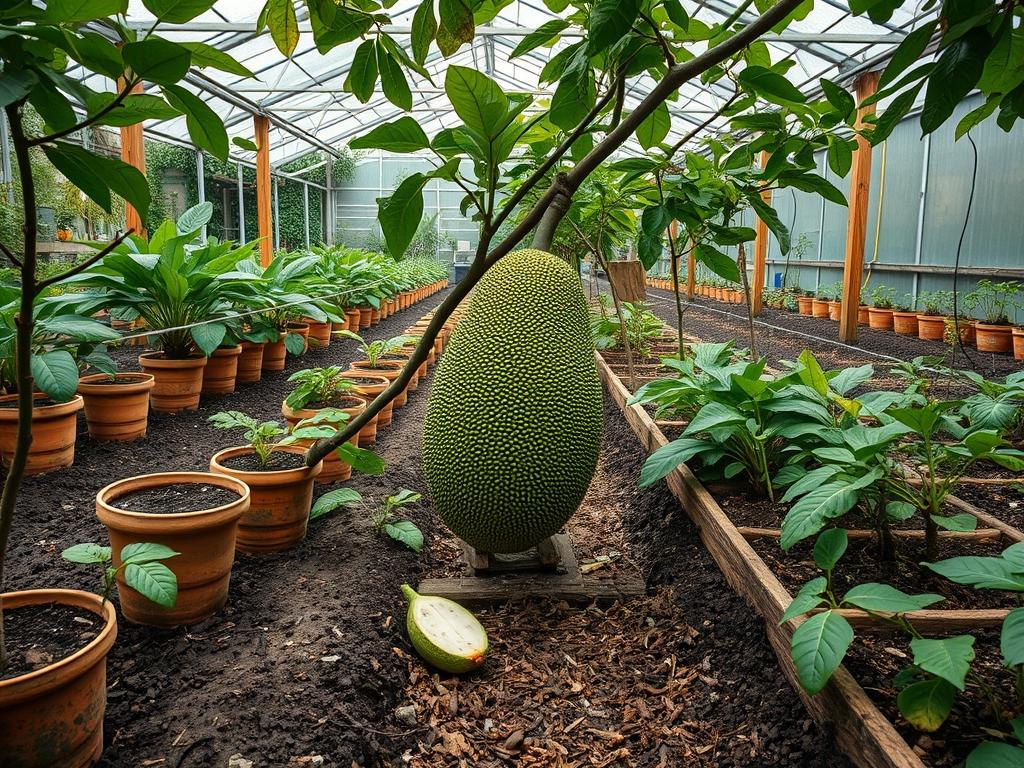
Integrating a breadfruit tree into a residential or commercial landscape presents a unique set of challenges and opportunities for the professional designer. While known primarily for its nutritional value, the Artocarpus altilis serves as a structural giant that dictates the microclimate of a garden. Its massive, deeply lobed leaves provide a tectonic texture that few other tropical species can match, yet its sheer scale requires a strategic approach to spatial planning. When we consider the objective of harvesting garden breadfruit, the design must transition from purely aesthetic to highly functional. A mature specimen can reach heights of 60 to 80 feet, with a canopy spread that can easily dominate a standard suburban lot. Therefore, the architectural placement of this tree must account for the falling weight of the fruit, the aggressive nature of the lateral root system, and the necessity of a clear “drop zone” to ensure safety during the peak season. Proper site selection involves more than just sunlight; it requires an understanding of wind patterns and soil percolation rates to prevent the tree from becoming a liability during storms or heavy irrigation cycles.
Designing a landscape around such a monumental species requires a commitment to long term vision. The curb appeal of a property is often enhanced by the tropical grandeur of the breadfruit tree, but without careful management, the tree can create excessive shade that chokes out secondary plantings. From a professional standpoint, we view the tree as a living ceiling for an outdoor room. The goal is to balance the utility of food production with the principles of modern landscape architecture, ensuring that the harvesting process does not interfere with the functionality of walkways, patios, or utility lines. By treating the tree as the primary focal point and building concentric circles of vegetation and hardscaping around it, we can create a sustainable ecosystem that facilitates a safe and efficient harvest while maintaining a high level of visual sophistication.
Landscape Design Principles
In professional landscape architecture, we rely on the principle of balanced asymmetry when dealing with large fruiting trees. A perfectly symmetrical garden often feels too rigid for the organic, spreading habit of a breadfruit tree. Instead, we use focal points to draw the eye toward the tree’s sculptural trunk while utilizing lower elevation layers to soften the transition to the ground. By planting a tiered understory of Philodendron, Alocasia, and various Ferns, we create a lush, multi dimensional environment that mimics the natural tropical forest floor. This layering is not merely for show; it serves as a thermal buffer for the soil and helps manage moisture levels through evapotranspiration.
Elevation and site grading play a critical role in the success of a breadfruit centered landscape. We typically recommend a 1 to 2 percent slope away from the base of the tree to prevent standing water, which can lead to root fungal pathogens. Irrigation planning must be equally precise. While breadfruit requires consistent moisture, especially during the fruiting phase, the application of water should be directed toward the drip line rather than the trunk. We integrate subsurface drip irrigation systems to minimize evaporation and ensure that the water reaches the deep feeder roots. Walkways and hardscaped elements should be constructed from permeable materials like decomposed granite or natural stone flags with wide joints. This allow the roots to breathe and prevents the lifting of concrete slabs, which is a common failure in poorly planned tropical gardens. Visual balance is achieved by counterweighting the massive canopy of the tree with heavy elements on the opposite side of the yard, such as a stone retaining wall or a structured outdoor kitchen area.
Plant and Material Selection
| Plant Type | Sun Exposure | Soil Needs | Water Demand | Growth Speed | Maintenance Level |
| :— | :— | :— | :— | :— | :— |
| Artocarpus altilis | Full Sun | Well-drained, Loamy | High during fruiting | Fast | High |
| Ti Plant (Cordyline) | Partial Shade | Rich, Organic | Moderate | Medium | Low |
| Bromeliads | Filtered Light | Epiphytic/Well-drained | Low | Slow | Very Low |
| Dwarf Gardenia | Full to Partial | Acidic, Moist | Moderate | Medium | Medium |
| River Rock | N/A | Drainage Layer | N/A | N/A | Low |
| Hardwood Mulch | N/A | Soil Protection | N/A | N/A | Annual Refresh |
Implementation Strategy
The implementation phase begins with a comprehensive site analysis. We start by marking the ultimate projected canopy diameter, which serves as our “hardscape exclusion zone.” Grading is performed to ensure that the surrounding landscape allows for optimal drainage. We typically install a 4 inch layer of municipal grade compost tilled into the native soil to a depth of 12 inches before planting. This prepares the heavy feeding breadfruit for its rapid growth phase.
For the ground plane, we implement a clear distinction between the “active zone” and the “harvesting zone.” The harvesting zone, located directly beneath the canopy, is finished with a 3 inch layer of soft organic mulch. This acts as a shock absorber for any fruit that might fall prematurely and protects the soil from compaction during the harvesting process. Edging is critical for a professional look; we use heavy duty steel edging or poured concrete curbs to define the boundaries between the mulch beds and the turf or gravel paths. This prevents the “bleeding” of materials and keeps the landscape looking crisp. Hardscaping elements, such as a small stone plinth or a custom bench, are placed just outside the drip line to provide a viewing station that remains safe from falling debris.
Common Landscaping Failures
One of the most frequent errors we observe is the failure to account for the mature root spread of the tree. Breadfruit roots are opportunistic and will easily infiltrate cracked sewer lines or lift thin asphalt driveways if planted within 20 feet of such structures. Another common mistake is improper irrigation intervals. Over watering during the transition between the dry and wet seasons can cause the tree to drop immature fruit, ruining the harvest.
Soil compaction is a “silent killer” in the landscape. When homeowners or contractors park heavy machinery under the canopy during construction, they crush the macropores in the soil, leading to a slow decline in tree health. We also see many instances where the understory is planted too densely. This restricts airflow and creates a humid microclimate that encourages the growth of scale insects and soot mold. Finally, many people neglect the “lighting of the architecture.” A tree this large requires commercial grade low voltage uplighting to ensure it does not become a dark, foreboding void in the landscape at night.
Seasonal Maintenance
Seasonal management is the key to a sustainable harvest. In the spring, we focus on structural pruning. We remove any crossing branches or water sprouts to open the interior of the canopy to sunlight. This is also the time to apply a slow release 10-10-10 fertilizer balanced with micronutrients like magnesium and zinc. During the summer, the focus shifts to irrigation and fruit thinning. Monitoring the soil moisture at a depth of 6 inches is essential to prevent drought stress.
Autumn is the primary season for harvesting garden breadfruit. Safety is the priority here. We use specialized tools like a pikel, which is a long picking pole equipped with a net or a sharpened hook, to reach the fruit without climbing into the precarious upper branches. We always wear hard hats and eye protection during this process, as a mature breadfruit can weigh over 5 pounds and cause significant injury if dropped from height. In the winter, for younger trees in marginal climates, we apply a thick layer of mulch up to the root flare and may use frost blankets if temperatures are forecasted to drop below 40 degrees Fahrenheit.
Professional Landscaping FAQ
What is the best way to prevent root damage to my patio?
Install a linear root barrier to a depth of 24 inches between the tree and the hardscape. This redirects root growth downward and away from your paving materials, ensuring the long term structural integrity of your outdoor living spaces.
How do I safely reach breadfruit in a very tall canopy?
Utilize a telescoping picking pole with a high quality basket attachment. Never attempt to use a ladder on uneven garden soil under a heavy canopy. For extremely high fruit, it is safer to allow them to fall onto a padded mulch bed.
Can I grow grass directly under my breadfruit tree?
It is generally discouraged due to heavy shade and nutrient competition. We recommend a shade tolerant groundcover or a decorative mulch bed to protect the tree’s surface roots and simplify the cleanup process during the annual harvest season.
How often should I prune a mature breadfruit tree?
Perform a structural prune every 2 to 3 years. Remove dead, diseased, or damaged wood annually. Keeping the canopy height managed through heading cuts makes the process of harvesting garden breadfruit significantly safer and more accessible for the homeowner.
What should I do with fallen, overripe breadfruit?
Remove them immediately to prevent attracting pests like fruit flies or rodents. You can compost them in a closed bin system, as they break down quickly and return valuable potassium and nitrogen to your garden’s nutrient cycle.