
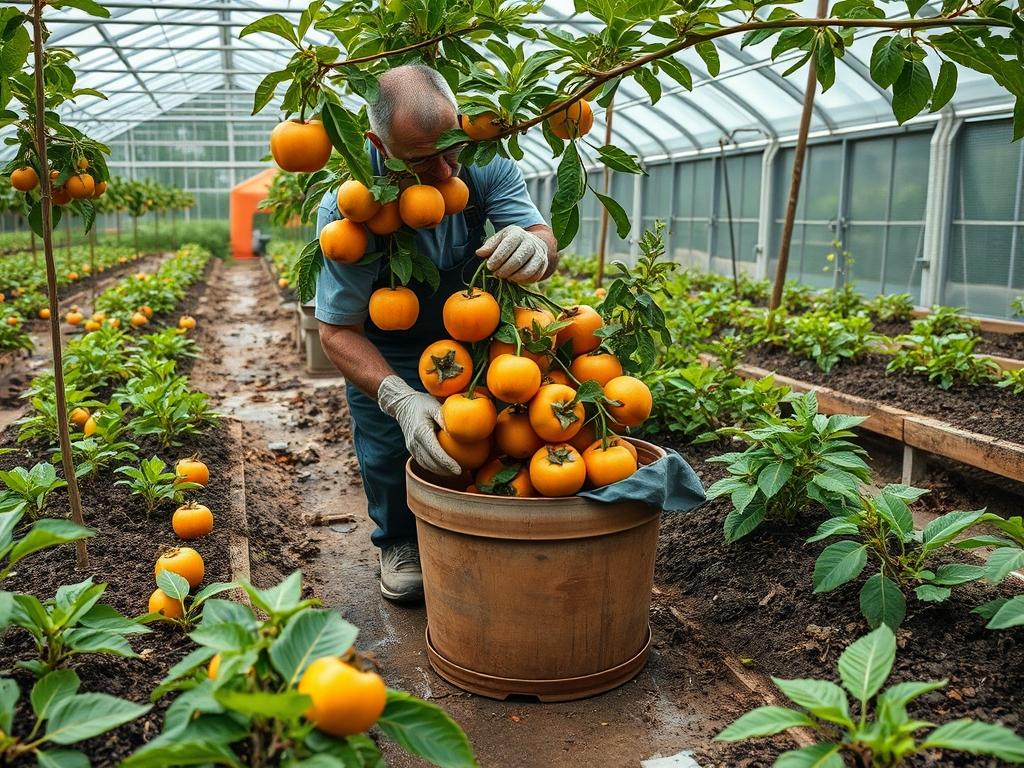
Integrating fruit-bearing trees into a high-end residential landscape requires a delicate balance between aesthetic architectural form and functional harvest goals. The persimmon, belonging to the genus Diospyros, offers a rare combination of structural beauty and seasonal interest that few other deciduous trees can match. When we approach a site plan, we view the tree not merely as a source of fruit but as a primary focal point that anchors a garden through four distinct seasons. In late autumn, when the leaves transition to brilliant shades of orange and crimson before falling, the bright orbs of fruit remain suspended on bare branches like natural ornaments. This creates a striking visual impact that enhances curb appeal and defines the character of an outdoor living space. However, successful integration hinges on the architect’s ability to select the correct cultivars based on the client’s needs. The process of picking fresh persimmons begins long before the harvest; it starts with professional site analysis, soil testing, and an understanding of the morphological differences between astringent and non-astringent varieties.
Landscape Design Principles
In the realm of landscape architecture, the placement of a persimmon tree must be intentional. We apply the principle of symmetry when using these trees to frame a transition point, such as the entrance to a formal orchard or a pathway leading to a secluded patio. Because some varieties, like the Hachiya, exhibit a more upright and conical growth habit, they serve well as vertical accents in a multi-layered planting bed. In contrast, the spreading canopy of the Fuyu variety lends itself to creating natural shade for lower-elevation plantings such as Hostas or Ferns. Visual balance is achieved by considering the mature height of the tree, which can reach 20 to 30 feet, and ensuring that it does not overwhelm the surrounding hardscaping.
Elevation layers are critical. We often place persimmons on slightly raised mounds or near retaining walls to ensure proper peripheral vision of the fruit and to facilitate harvesting. Irrigation planning must be discretized by zone; fruit trees require a different delivery rate than structural evergreens or turf. By installing a dedicated low-volume drip irrigation system around the dripline, we can maintain consistent moisture levels which prevents fruit drop. Furthermore, we design wide stone walkways or paver paths near the tree to provide a stable surface for ladders and baskets during the harvest season. This prevents soil compaction in the root zone while ensuring that the process of picking fresh persimmons remains accessible and safe for the property owner.
Plant and Material Selection
Selecting the right variety is the most crucial step in garden planning. The following table outlines the technical requirements for the most common cultivars used in professional landscape designs.
| Plant Type | Sun Exposure | Soil Needs | Water Demand | Growth Speed | Maintenance Level |
| :— | :— | :— | :— | :— | :— |
| Fuyu Persimmon | Full Sun | Well-drained Loam | Moderate | Medium | Low |
| Hachiya Persimmon | Full Sun | Deep, Sandy Loam | Moderate | Medium | Moderate |
| Jiro Persimmon | Full Sun | Adaptable | Moderate | Slow | Low |
| American Persimmon | Full | Clay or Sand | High | Fast | Moderate |
| Chocolate Persimmon | Full Sun | Rich Organic | Moderate | Medium | High |
Implementation Strategy
The transition from a design blueprint to a living garden requires a rigorous implementation strategy. We begin with grading the area to ensure that water moves away from the trunk base. A common practice in our firm is the use of a transit level to verify that the ground slopes at a minimum of two percent toward a drainage exit. Once the site is graded, we mark the center of the planting pit. The hole must be dug at least twice the width of the root ball but no deeper than the container depth to prevent the flare of the tree from sinking below the soil line.
During the planting phase, we incorporate organic compost into the backfill to improve soil structure. After the tree is set, a three-inch layer of shredded cedar mulch or pine bark is applied in a wide circle around the base; however, we are careful to keep the mulch at least six inches away from the bark of the trunk to prevent fungal decay. For stability in wind-prone areas, we install wooden stakes and flexible tree ties. These supports are usually removed after one growing season to allow the tree to develop its own structural strength. Hardscaping elements, such as metal edging or Belgian block borders, should be installed at this stage to define the mulch bed and prevent encroachment from lawn grasses.
Common Landscaping Failures
One of the most frequent errors we observe in amateur installations is improper spacing. A persimmon tree planted too close to a residence or a fence will eventually face light competition, causing the canopy to become lopsided and reducing the yield. This proximity also complicates the task of picking fresh persimmons, as the fruit becomes trapped against walls or out of reach. Another significant failure is the neglect of drainage. Persimmons are highly susceptible to root rot if they sit in standing water. If a site has heavy clay soil, we recommend installing a French drain or a subsurface drainage pipe to mitigate water accumulation.
Soil compaction is another silent killer of maturing landscapes. During construction or heavy gardening, the use of heavy machinery near the root zone can crush the macropores in the soil, suffocating the roots. We also warn against the “volcano mulching” technique, where mulch is piled against the trunk. This creates a moist environment that invites boring insects and disease. Finally, inconsistent irrigation leads to fruit splitting. If the soil becomes bone-dry and then receives a deluge of water, the fruit expands too rapidly for its skin. Installing an automatic irrigation controller with a rain sensor is the best defense against this common issue.
Seasonal Maintenance
To ensure the longevity of the landscape and a bounty of high-quality fruit, a seasonal management schedule is vital. In the spring, we focus on structural pruning. Using bypass pruners and loppers, we remove any dead, damaged, or crossing branches to open up the center of the tree for light penetration. This “open center” or “modified central leader” shape is essential for the health of the tree. In the summer, the focus shifts to moisture management and thinness. If a tree is overloaded with fruit, we recommend thinning the clusters to prevent limb breakage.
Autumn is the most rewarding period, focused on the art of picking fresh persimmons. For non-astringent varieties like Fuyu, the fruit is harvested when it turns a deep orange but remains firm. For astringent types like Hachiya, the fruit must be picked when it is soft to the touch, almost like a water balloon, or harvested firm and allowed to ripen off the tree. In winter, after the final harvest, the landscape architect’s work is highlighted as the architectural skeleton of the tree is revealed. We apply a dormant spray of horticultural oil during this time to suppress overwintering pests, preparing the environment for the next cycle of growth.
Professional Landscaping FAQ
How do I tell if a persimmon is ready for picking?
For non-astringent varieties, harvest when the skin is fully orange and firm. Astringent varieties should be picked when they are very soft or after they have turned deep red-orange and are slightly translucent in the sunlight.
What is the best way to prevent fruit mess on walkways?
Place trees at least ten feet away from primary footpaths. Alternatively, choose non-astringent varieties which hold their fruit longer and are less likely to splat, and ensure a regular harvest schedule to clear ripening fruit before it falls.
Can I grow persimmons in a small urban courtyard?
Yes, use a dwarf rootstock or varieties like Izu, which have a naturally smaller footprint. You can also use espalier techniques to grow the tree flat against a south-facing wall, saving precious ground space.
Which variety is best for high-wind coastal environments?
The American Persimmon is generally more rugged and wind-tolerant. However, for ornamental gardens, the Jiro variety offers a sturdier, more compact frame that resists limb breakage better than the taller, more brittle Hachiya during seasonal storms.
Does mulch type affect the fruit quality?
Indirectly, yes. Using a high-quality organic mulch improves soil biology and moisture consistency. This prevents the stress that leads to fruit drop or bitterness, ensuring that when you are picking fresh persimmons, the flavor profile is optimal.