
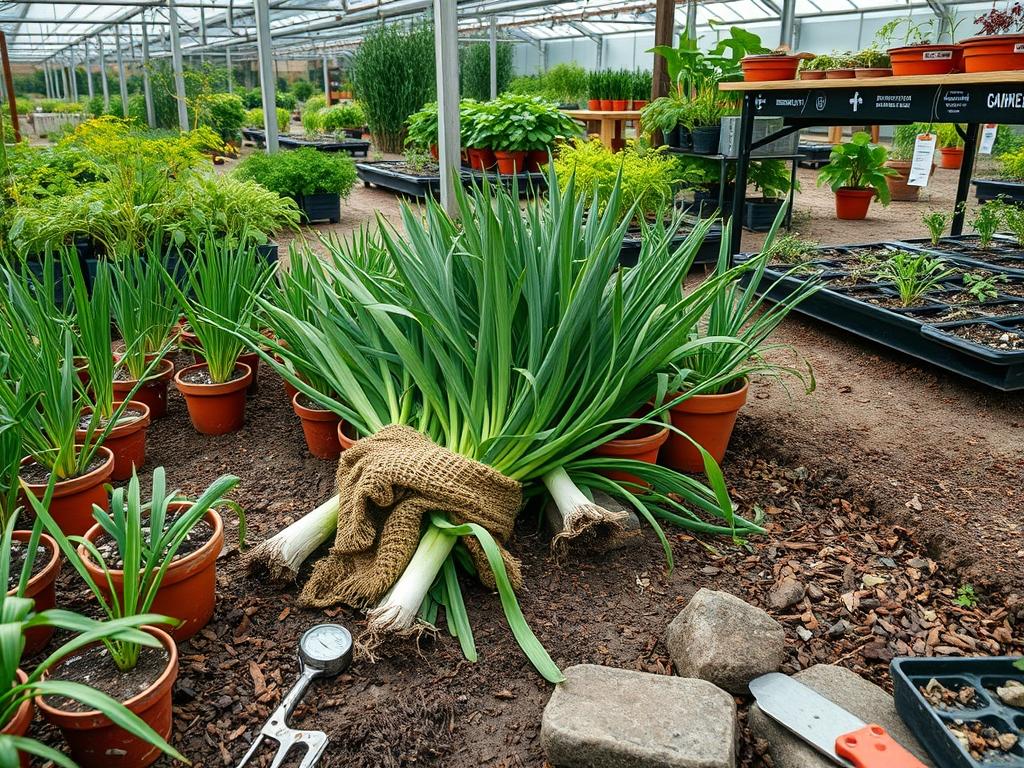
Integrating edible perennials into a residential landscape architecture plan requires a delicate balance between ecological stewardship and aesthetic intentionality. For many homeowners, the challenge of shaded backyard corners often results in wasted space or neglected turf that struggles to thrive under a heavy tree canopy. However, these damp, shaded microclimates provide the perfect site for Harvesting Garden Wild Leeks, also known as ramps. As a landscape architect, I view these plants not merely as a culinary trend, but as a critical component of a functional forest garden. They offer a solution to the common problem of spring groundcover while providing a sustainable food source. By treating wild leeks as part of a broader “softscaping” strategy, we can enhance curb appeal through early season greenery and improve the overall biodiversity of the property.
The primary landscaping challenge with Allium tricoccum is its ephemeral nature. These plants emerge in the early spring, often before the deciduous trees have fully leafed out, and disappear completely by the heat of summer. This creates a “seasonal void” that must be managed through clever design. To maintain outdoor functionality and visual appeal throughout the year, the planting site must be chosen based on its ability to support these bulbs during their active phase and remain attractive when they go dormant. Careful site analysis of drainage patterns and soil composition is essential, as wild leeks require the rich, loamy environment typically found in ancient woodlands. When we design for these plants, we are essentially recreating a high functioning ecosystem within a controlled residential context.
LANDSCAPE DESIGN PRINCIPLES
In professional landscape design, symmetry and focal points define how a viewer perceives the space. When incorporating wild leeks, we use them to create a lush, textured “carpet” that serves as a soft focal point beneath the high canopy of Oak or Maple trees. We apply the principle of elevation layering, where the leeks occupy the lowest tier of the garden. Above them, we might place mid-story shrubs like Witch Hazel or Spicebush, followed by the primary overstory. This vertical arrangement mimics natural forest structures, which provides natural irrigation management. The canopy leaves fall and decay, creating the very leaf mold that wild leeks need to thrive.
Visual balance is achieved by bordering these edible patches with permanent hardscaping elements. I often recommend using Fieldstone or Pennsylvania Blue Stone for walkways that wind through the leek patches. This prevents soil compaction, which is the nemesis of bulb development. Furthermore, the use of retaining walls can help manage elevation changes in a sloped backyard, creating terraced beds that are easier to harvest without disturbing the root systems of neighboring plants. Irrigation planning must account for the specific needs of the transition period; while the leeks are active, the soil must stay moist, but it should never become waterlogged, as this leads to bulb rot.
PLANT AND MATERIAL SELECTION
| Plant Type | Sun Exposure | Soil Needs | Water Demand | Growth Speed | Maintenance Level |
| :— | :— | :— | :— | :— | :— |
| Wild Leek (Ramp) | Part to Full Shade | Rich, Deciduous Loam | Moderate | Very Slow | Low/Passive |
| Ostrich Fern | Full Shade | Moist, Acidic | High | Fast | Medium |
| Wild Ginger | Shade | Well-Drained | Moderate | Slow | Low |
| Bloodroot | Filtered Sun | Humus-Rich | Moderate | Moderate | Low |
| Maidenhair Fern | Full Shade | Calcareous/Moist | High | Slow | Medium |
The selection of companion plants is vital for a sustainable harvest. We use Ostrich Ferns and Wild Ginger to fill the visual gaps left behind when the leeks go dormant in June. These companions provide continuous groundcover and suppress weed growth, reducing the need for chemical interventions. For structural materials, we prioritize shredded hardwood mulch or leaf mulch rather than decorative stone, as the organic matter is essential for the long term health of the leeks.
IMPLEMENTATION STRATEGY
The implementation of a wild leek garden begins with precise grading and soil preparation. First, we identify a site with a slight slope to ensure that water does not pool, which could suffocate the bulbs. Use a Garden Spade to test the soil depth; you need at least 6 inches of loose, organic-rich topsoil. If the existing soil is heavy clay, we amend it with compost and limestone to reach a slightly acidic to neutral pH.
Once the grading is settled, we establish the layout using staking and string lines to define the harvesting zones. It is a common mistake to plant leeks in a disorganized fashion; instead, we plant them in “drifts” or clusters. Each bulb should be tucked into the soil at a depth of about 2 to 3 inches, spaced 4 to 6 inches apart. After planting, a layer of leaf mold approximately 2 inches thick is applied. This mimics the forest floor and protects the bulbs from temperature fluctuations.
For the hardscaping aspect, we install steel edging or natural stone borders to separate the leek beds from traditional turf areas. This prevents the encroachment of invasive grasses which could compete for nutrients. Drainage is further managed by installing French drains or dry creek beds nearby if the land naturally holds too much moisture. This ensures that even during heavy spring rains, the leeks remain in a well-oxygenated environment.
COMMON LANDSCAPING FAILURES
One of the most frequent failures in managing wild leeks is improper drainage. Because these plants are often placed in low lying shaded areas, they are susceptible to “wet feet.” If the soil becomes anaerobic, the bulbs will liquefy and die. Another significant issue is root overcrowding. While wild leeks are slow growers, a successful patch will eventually become too dense. If the bulbs are not thinned or harvested sustainably, the quality of the foliage will decline and the plants will become more susceptible to disease.
Soil compaction is perhaps the greatest threat in a residential setting. Foot traffic from pets or children can compress the soil, making it impossible for the delicate roots to penetrate and for the shoots to emerge in the spring. This is why defined walkways and stepping stones are a non-negotiable part of my design strategy. Finally, irrigation inefficiencies occur when homeowners use automated sprinklers designed for lawns on their forest gardens. Wild leeks need consistent moisture in the spring but prefer a period of “drying out” during their summer dormancy. Over-watering during the summer can lead to fungal infections.
SEASONAL MAINTENANCE
Spring is the primary season for both enjoyment and maintenance. This is when Harvesting Garden Wild Leeks occurs. To ensure sustainability, a professional landscape manager will only harvest approximately 10 percent of a mature patch and will often only take one leaf per plant, leaving the bulb in the ground to continue growing. We use a Hand Trowel to carefully lift the soil if whole bulbs are being thinned.
In the summer, the focus shifts to “invisible maintenance.” Since the plants have disappeared, we mark the area with wooden stakes or permanent perennials to avoid accidental digging. We ensure that the mulch layer remains intact to keep the hidden bulbs cool. Autumn is the time for “feeding” the garden. As the trees drop their leaves, we do not rake the leek beds. Instead, we allow the leaves to decompose naturally, or we add a fresh layer of shredded leaf mulch to replenish the nutrients. Winter maintenance is minimal, as the snow provides a natural insulating blanket. However, we must ensure that no heavy equipment or salt from de-icing procedures enters the leek beds, as salt will significantly alter the soil chemistry and kill the colony.
PROFESSIONAL LANDSCAPING FAQ
How long does it take for a new leek patch to be harvestable?
Wild leeks are exceptionally slow. If you are starting from seed, it can take 5 to 7 years before the patch is established enough for a light harvest. Starting with transplanted bulbs can reduce this timeframe to 2 to 3 years.
Can I grow wild leeks in a sunny part of my yard?
It is not recommended. Direct summer sun will scorch the soil and dry out the bulbs during their dormancy. High heat effectively kills the delicate microbial life in the soil that these plants rely on for nutrient uptake.
What is the best way to prevent weeds in a ramp bed?
Use a thick layer of organic mulch and plant native companion groundcovers like Wild Ginger. These plants create a dense root mat that prevents weed seeds from germinating without competing for the same nutrients as the leeks.
Which trees are contemporary to wild leeks in most landscapes?
They thrive best under deciduous hardwoods. Sugar Maples, Beech, and Birch are ideal because they provide a high canopy. Avoid planting them under Black Walnut trees, as the juglone produced can be toxic to many plants.
How do I know if my soil is rich enough for leeks?
A soil test is recommended. You are looking for a high percentage of organic matter and a pH between 6.0 and 7.0. If your soil is sandy or heavy clay, you must amend it with compost.