
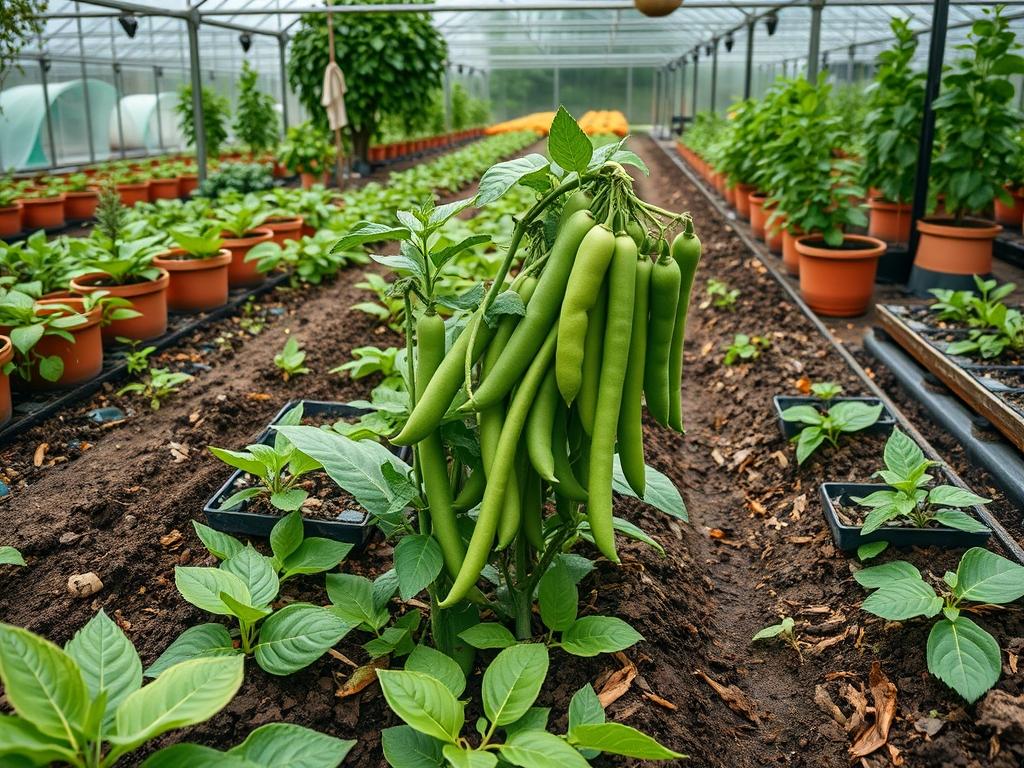
Integrating a productive edible garden into a high-end landscape requires a sophisticated understanding of both aesthetic geometry and horticultural timing. Many homeowners view vegetable patches as utilitarian eyesores, yet when managed by a professional designer, these spaces become vibrant focal points that enhance the overall curb appeal and functionality of an estate. The cultivation of legumes, specifically the process of picking fresh lima beans at the pinnacle of their sweetness, serves as a masterclass in site management and seasonal planning. A successful landscape architect does not merely place plants; they engineer a living environment where drainage, elevation, and sunlight intersect to produce both beauty and bounty.
Integrating large-seeded legumes like Phaseolus lunatus into a residential master plan requires careful consideration of the site’s microclimate. These plants thrive in warm, well-draining soil and demand significant vertical support if the pole variety is selected. From a design perspective, the lush foliage of the lima bean provides a dense, green screen that can soften the hard lines of a Stone Retaining Wall or a Cedar Perimeter Fence. The timing of the harvest is critical. Harvesting too early results in underdeveloped seeds, while waiting too long yields starchy, tough beans that have lost their delicate buttery texture. This intersection of utility and timing is where the landscape professional excels, ensuring that the outdoor living space remains both productive and visually pristine throughout the growing season.
Landscape Design Principles
In the realm of professional outdoor design, symmetry and focal points dictate how a user interacts with the space. For an edible landscape, this means creating a sense of order through the use of geometric raised beds or traditional potager layouts. Symmetry is often achieved by mirroring bean trellises on either side of a central Blueberry Stone Path or a Decomposed Granite Walkway. This creates a formal entry point into the garden, making the act of picking fresh lima beans feel like a curated experience rather than a chore.
Elevation layers are equally important. By utilizing Raised Planter Boxes constructed from Western Red Cedar or Corten Steel, the architect can introduce varying heights that make harvesting easier on the back while improving soil drainage. These elevated structures act as architectural anchors. Irrigation planning must be integrated into the initial site grading to ensure that moisture is delivered directly to the root zone without wetting the foliage, which helps prevent fungal diseases. A well-placed Drip Irrigation System with Pressure-Compensating Emitters ensures that the plants receive consistent hydration, which is vital for the development of plump, healthy pods. Visual balance is maintained by surrounding these structural elements with native pollinator species, which bridge the gap between the wilder edges of the property and the manicured vegetable beds.
Plant and Material Selection
The following table outlines the essential components for a high-performing edible landscape that incorporates both structural beauty and productive yield.
| Plant or Material | Sun Exposure | Soil Needs | Water Demand | Growth Speed | Maintenance Level |
| :— | :— | :— | :— | :— | :— |
| Phaseolus lunatus | Full Sun | Loamy, Well-Draining | Moderate | Fast | Medium |
| Buxus sempervirens | Full to Part Sun | Rich, Organic | Moderate | Slow | Low |
| Lavandula angustifolia | Full Sun | Gritty, Alkaline | Low | Medium | Low |
| Cedar Trellis | N/A | N/A | N/A | N/A | Low |
| River Rock | N/A | N/A | N/A | N/A | Low |
| Organic Mulch | N/A | N/A | N/A | N/A | Seasonal |
Implementation Strategy
Planning a backyard layout for successful bean production begins with precision grading. The site must be sloped at a 2 percent grade away from residential foundations to ensure proper runoff. Once the sub-grade is established, the placement of the garden beds should be staked out using Surveyor’s Tape and Wooden Stakes. For lima beans, the soil must be amended with Aged Compost and Biochar to a depth of 12 inches, providing a nutrient-rich horizon for the deep taproots of the plants.
Edging is the next step in the implementation process. Using Steel Landscape Edging or Fieldstone, define the boundaries between the turf and the planting beds. This prevents invasive grass species from encroaching on the legumes. After the trellises or supports are anchored at a depth of 24 inches to withstand wind loads, the seeds should be planted when soil temperatures consistently reach 65 degrees Fahrenheit. Mulch application is the final touch. A 3-inch layer of Shredded Arp or Pine Straw helps retain moisture and suppress weeds. Hardscaping elements, such as Flagstone Stepping Stones, should be placed within the beds to allow the gardener to access the center of the planting area for picking fresh lima beans without compacting the soil near the sensitive root systems.
Common Landscaping Failures
One of the most frequent mistakes in edible landscape design is poor drainage planning. If the soil remains saturated, the roots of the lima bean will suffocate, leading to yellowing foliage and dropped blossoms. Soil compaction is another silent killer. When heavy machinery or frequent foot traffic compresses the earth, the delicate macropores needed for air and water movement disappear. In these environments, even the most expensive plants will struggle to thrive.
Root overcrowding often occurs when designers prioritize immediate fullness over long-term health. Lima beans require at least 6 inches of spacing between plants to ensure adequate airflow, which is essential for preventing powdery mildew. Improper irrigation is also a common failure point. Over-head spraying can lead to leaf burn and blossom rot. Instead, a professional consultant will always recommend a Surface Drip System. Finally, failing to account for the weight of a mature vine can lead to trellis collapse. A fully loaded lima bean vine can be surprisingly heavy, especially after a rainstorm, requiring robust, permanent support structures rather than flimsy temporary stakes.
Seasonal Maintenance
Spring is the season of preparation. The landscape architect should focus on testing the soil pH, aiming for a range between 6.0 and 6.8. This is also the time to inspect irrigation lines for leaks or clogs caused by winter debris. As the weather warms, planting begins. Early monitoring for pests like aphids or bean Beetles is essential to protect the tender young shoots.
Summer is the peak season for management. This is the period dedicated to picking fresh lima beans. The best timing occurs when the pods feel firm and look plump, yet still retain a bright green color. If the pods begin to turn yellow or feel dry, the beans have moved past the shelling stage and are transitioning into dried beans. Regular harvesting encourages the plant to continue producing flowers and new pods.
In Autumn, the focus shifts to sanitation and soil health. Once the harvest is complete, the spent vines should be removed and composted, unless they show signs of disease. Because legumes fix nitrogen in the soil, many professionals recommend cutting the plants at the base and leaving the roots to decompose naturally. Winter is the time for structural audits. Check Retaining Walls for shift and repair any damaged Hardscaping. Applying a fresh layer of Winter Mulch protects the soil biology during the freezing months, ensuring the ground is ready for another cycle of growth in the spring.
Professional Landscaping FAQ
How do I know the absolute best time for picking fresh lima beans?
The pods should be vivid green and feel filled out when squeezed gently. If the pod looks shriveled or has lost its green luster, the bean inside has likely become too starchy for fresh shelling.
What is the best way to support climbing lima beans?
Use a heavy-duty Cedar A-Frame or a Powder-Coated Steel Grid. These materials offer the necessary tensile strength to support the dense canopy of the vines while resisting rot and corrosion in damp outdoor environments.
How does mulch depth affect bean production?
Maintaining a 3-inch depth of organic mulch regulates soil temperature and prevents the rapid evaporation of moisture. Consistent soil moisture is the primary factor in preventing pod drop during the high heat of mid-summer.
Can I grow lima beans in a small urban courtyard?
Yes, by using vertical gardening techniques. Select “pole” varieties and train them up a Wall-Mounted Trellis. This maximizes the vertical footprint while leaving floor space for seating or other aesthetic hardscaping features.
Why are my bean plants producing leaves but no pods?
This is often caused by excess nitrogen in the soil or extreme heat. High nitrogen levels encourage lush foliage at the expense of flowers. Professionals balance this by using Bone Meal to boost phosphorus levels.