
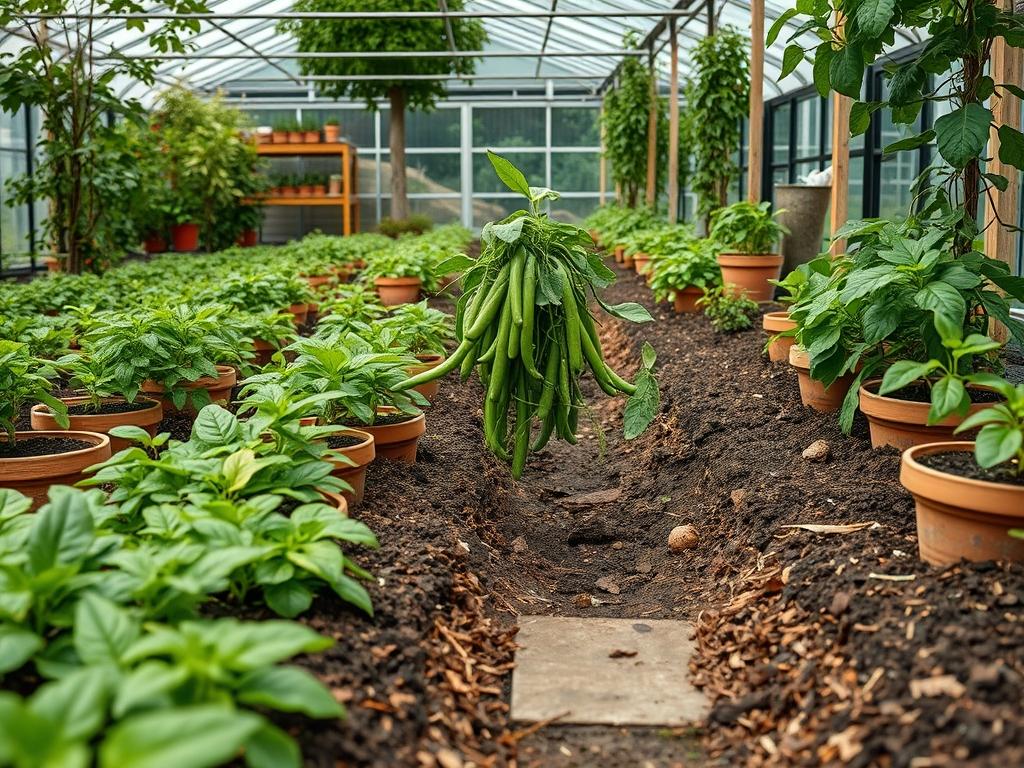
Integrating a functional edible harvest into a sophisticated landscape design requires a delicate balance between utilitarian production and aesthetic harmony. When planning a site for Picking Fresh Pinto Beans, the consultant must view the garden not as a hidden vegetable patch, but as a structural component of the outdoor living environment. Modern landscape architecture increasingly favors the “edible estate” concept, where the lush greenery of Phaseolus vulgaris provides texture and rhythmic color to the property. The primary challenge involves managing the lifecycle of the pinto bean within a high visibility area, ensuring that the transition from flowering vine to harvest ready pod does not detract from the overall curb appeal. Climate considerations are paramount, as these plants thrive in warm, semi-arid environments where daytime temperatures consistently exceed 70 degrees Fahrenheit. By treating the garden bed as a formal element, utilizing Retaining Walls and designated Walkways, the landscape architect transforms a simple crop into a deliberate design statement.
### Landscape Design Principles
Successful garden planning relies on the core tenets of symmetry and focal points to ground the space. For a site designed specifically for Picking Fresh Pinto Beans, the layout should utilize elevation layers to facilitate easy access and visual depth. Incorporating Raised Beds constructed from Western Red Cedar or Natural Limestone allows the designer to control the soil quality while creating clean, architectural lines. These beds should be oriented along a North to South axis to maximize sunlight exposure, ensuring that every plant receives at least 8 hours of direct sun.
Focal points can be established by installing Ornate Steel Trellises or Obelisks at the center of the planting zones. These structures support climbing varieties and draw the eye upward, providing a vertical dimension that contrasts with lower groundcovers. Symmetry is achieved by mirroring these structures across a central Flagstone Path. When planning the irrigation, the outdoor environment consultant must hide all tubing and emitters beneath a layer of Hardwood Mulch. This keeps the aesthetic clean while delivering moisture directly to the root zone. Proper Landscaping Grade is essential; a 2 percent slope away from the home foundation prevents water from pooling, which is critical since pinto beans are susceptible to root rot in oversaturated conditions.
### Plant and Material Selection
The following table outlines the botanical and structural requirements for a high performance edible landscape focused on legume production and visual appeal.
| Plant Type | Sun Exposure | Soil Needs | Water Demand | Growth Speed | Maintenance Level |
| :— | :— | :— | :— | :— | :— |
| Pinto Bean (Bush) | Full Sun | Well Draining Loam | Moderate | Fast | Medium |
| Pinto Bean (Pole) | Full Sun | Rich Organic Matter | High | Very Fast | High |
| French Marigold | Full Sun | Standard Garden Soil | Low | Moderate | Low |
| Sweet Alyssum | Partial Sun | Moist, Rich Soil | Moderate | Fast | Low |
| Blue Salvia | Full Sun | Sandy or Rocky Soil | Low | Moderate | Low |
| Rosemary | Full Sun | Gritty, Dry Soil | Very Low | Slow | Low |
### Implementation Strategy
Execution begins with precise site grading and the demarcation of the garden footprint using a Transit Level and Marking Paint. Once the layout is confirmed, the installation of the hardscape elements, such as Retaining Walls and Patios, must precede any planting. For the bean beds, excavate the existing soil to a depth of 12 inches and replace it with a professional grade mix of 70 percent sandy loam and 30 percent organic compost. This ensures the high porosity required for the bean root systems.
When the structural components are in place, install a Drip Irrigation System with 0.5 GPH emitters spaced every 12 inches. This precision prevents the foliage from getting wet, which is a major factor in preventing fungal diseases like powdery mildew. Use a Spade to create clean edges between the turf and the planting beds, and apply a 3 inch layer of Triple Shredded Bark Mulch to regulate soil temperature and suppress weeds. For the actual planting, space the Pinto Bean seeds exactly 3 inches apart and 1 inch deep. As the season progresses, the designer must monitor the pods. Picking Fresh Pinto Beans at the correct stage, specifically when the pods are plump and firm but still green and succulent, requires frequent inspection of the plant’s lower nodes. Using Bypass Pruners for harvest avoids damaging the delicate stems of the plant.
### Common Landscaping Failures
One of the most frequent errors in garden planning is neglecting the long term impact of soil compaction. Heavy foot traffic near the planting beds collapses the soil structure, suffocating the nitrogen fixing bacteria necessary for pinto beans to thrive. This is why the inclusion of Stepping Stones or Gravel Paths is non negotiable. Another common failure is improper drainage infrastructure. If the garden is situated at the base of a slope without a French Drain or Surface Catch Basin, the beans will likely fail during the peak of the growing season due to stunted root growth and anaerobic soil conditions.
Overcrowding is a third pitfall. Designers often plant for immediate fullness, but pinto beans require significant airflow to prevent the spread of pathogens. Maintaining a distance of 18 inches between rows is a standard industry practice that must be observed to ensure a healthy crop. Lastly, irrigation inefficiencies, such as using overhead spray heads rather than drip lines, can lead to scorched leaves and water waste. High salt content in irrigation water can also stunt the “Picking Fresh Pinto Beans” process, as leguminous plants are sensitive to mineral buildup in the rhizosphere.
### Seasonal Maintenance
In the spring, maintenance focuses on soil preparation and the installation of the irrigation manifold. Use a Garden Fork to aerate the soil without inverting the layers, and test the pH levels to ensure they fall between 6.0 and 7.0. Once the danger of frost has passed, transplant seedlings or direct sow. During the summer months, the primary task is moisture management and pest monitoring. Check the Tensiometers to ensure soil moisture remains consistent. The transition to autumn is the peak period for Picking Fresh Pinto Beans for traditional cooking. As the pods reach their full size, they should be harvested every few days to encourage the plant to continue producing flowers.
As winter approaches, the landscape architect should transition the garden into its dormant phase. Remove all spent bean vines to prevent the overwintering of pathogens; these can be chopped and added to a Compost Tumbler. Once the beds are cleared, plant a cover crop such as Winter Rye or apply a heavy 4 inch layer of Organic Leaf Mold to protect the soil from erosion and nutrient leaching. Inspect all Hardscaping for frost heave and ensure that the irrigation system is fully blown out with an Air Compressor to prevent pipe bursts.
### Professional Landscaping FAQ
What is the best time for Picking Fresh Pinto Beans for cooking?
Harvest fresh pinto beans when the pods are approximately 4 to 6 inches long and the beans have visible bulges inside. The pods should be firm to the touch but still bright green and flexible, not dry or brittle.
How do I integrate beans into a formal landscape without looking messy?
Utilize structured Stone Edging and Boxwood Borders to contain the beans. Use high quality Metal Trellises for climbing varieties to keep the growth vertical and tidy, which maintains the garden’s architectural integrity throughout the season.
Can