
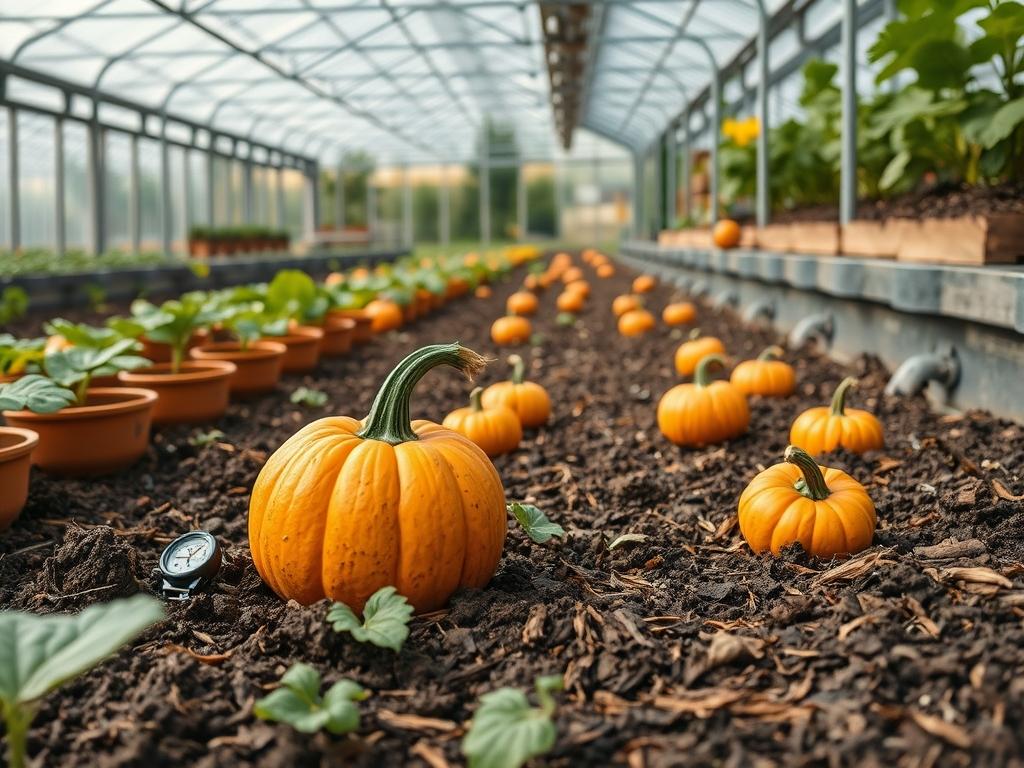
Integrating edible crops into a sophisticated landscape design requires a delicate balance between utility and aesthetics. When a homeowner transitions from the vibrant green of summer to the high-yield period of late autumn, the landscape must perform double duty as both a visual centerpiece and a functional agricultural site. The specific process of Picking Fresh Pumpkin Seeds marks a pivotal moment in the annual garden cycle, requiring the landscape architect to envision a space that accommodates the harvest without sacrificing curb appeal. This involves more than just a vegetable patch; it requires a deep understanding of Soil Science, Drainage, and Spatial Organization. A well-planned garden ensures that the transition from sprawling vines to the final seed cure happens seamlessly within the broader context of the outdoor living environment.
Managing the physical space for large vining crops like pumpkins often presents a unique challenge for urban and suburban landscapes. These plants can easily overwhelm Boxwood borders or creep into high-traffic Walkways if not properly zoned. To maintain professional standards, the architect must implement structural boundaries such as Retaining Walls or Steel Edging to contain the vigorous growth. Climate considerations also play a critical role, as the curing process for seeds depends heavily on the ambient humidity and airflow provided by the landscape’s microclimates. By strategically placing the pumpkin patch in a zone with maximum sun exposure and utilizing Terracing to prevent water logging, the designer creates an environment where the crop can reach its full potential while enhancing the overall value of the property.
Landscape Design Principles
Symmetry and visual balance are the cornerstones of a high-end estate garden. When designing a space meant for Picking Fresh Pumpkin Seeds, one must consider the plant’s life cycle. Early in the season, the large, architectural leaves of the Cucurbita pepo provide a lush, tropical texture that can serve as a ground cover or a filler under taller focal points like Ornamental Grasses. As the season progresses, those same vines may begin to decline, necessitating a design that includes “masking plants” such as Echinacea or Rudbeckia to divert the eye. Establishing a clear focal point, perhaps a Granite Fountain or a large Statue, ensures that the sprawling nature of the pumpkin vines feels intentional rather than neglected.
Elevation layers and irrigation planning are equally vital. Because pumpkins are heavy feeders and require significant water, an integrated Drip Irrigation System must be buried beneath a layer of Hardwood Mulch to provide moisture directly to the roots without wetting the leaves, which can lead to powdery mildew. Grading the land at a slight 2 Percent Slope prevents pooled water from rotting the fruit before the harvest can occur. Furthermore, the inclusion of permanent Flagstone Paths allows the homeowner to access the center of the patch for Picking Fresh Pumpkin Seeds without compacting the soil, which is a common error that damages the delicate Mycorrhizal Networks in the earth.
Plant and Material Selection
| Plant or Material | Sun Exposure | Soil Needs | Water Demand | Growth Speed | Maintenance Level |
| :— | :— | :— | :— | :— | :— |
| Cucurbita maxima | Full Sun | Sandy Loam | High | Rapid | Moderate |
| Nepeta fassenii | Full Sun | Well-Drained | Low | Medium | Low |
| Buxus microphylla | Partial Shade | Loamy | Moderate | Slow | High |
| River Rock | N/A | Stability | N/A | N/A | Low |
| Aged Compost | N/A | Nutrient Rich | High Retention | N/A | N/A |
| Steel Edging | N/A | N/A | N/A | N/A | Low |
Implementation Strategy
The actual implementation of a pumpkin-focused landscape begins with professional Site Grading. To facilitate the process of Picking Fresh Pumpkin Seeds, the area must be cleared of all perennial weeds and leveled to ensure even water distribution. We recommend using a Power Tiller to incorporate at least 4 Inches of Aged Compost and Well-Rotted Manure into the top 12 Inches of soil. This creates a nutrient-rich foundation that supports the explosive growth required for large fruit production. Once the soil is prepared, a layer of Landscape Fabric can be applied to the surrounding pathways to keep the harvest area clean and mud-free during the autumn rains.
After the pumpkins have reached maturity and the stems have hardened into a woody texture, the process of harvest begins. For Picking Fresh Pumpkin Seeds, use a Bypass Pruner to cut the fruit from the vine, leaving at least 3 Inches of stem attached to prevent rot. Once the pumpkins are moved to a staging area, such as a Cedar Deck or a Paver Patio, they should be cleaned with a solution of 1 Part Bleach to 10 Parts Water to kill surface bacteria. The seeds are then extracted, washed in a large Stainless Steel Mesh Strainer, and spread across a Drying Screen made of Hardware Cloth. This screen should be elevated on Cinder Blocks to allow 360-degree airflow, which is the most critical factor in successful curing.
Common Landscaping Failures
One of the most frequent failures in garden planning is improper drainage. If a pumpkin patch is located at the bottom of a hill without a French Drain or a Dry Well, the roots will suffocate in anaerobic conditions. This not only kills the plant but also taints the flavor and viability of the seeds. Another common mistake is root overcrowding. While it is tempting to plant many varieties close together, they require at least 50 Square Feet per plant to thrive. Without this space, the vines will compete for nutrients, resulting in small, stunted fruit that lacks the robust seed count desired for Picking Fresh Pumpkin Seeds.
Soil compaction is another silent killer of landscape functionality. Often, homeowners walk directly on the planting beds during the growing season, which crushes the air pockets in the Loam and prevents water infiltration. Use of Stepping Stones or a Permanent Boardwalk is necessary to maintain soil integrity. Finally, irrigation inefficiencies, such as using overhead Impact Sprinklers, can lead to a host of fungal diseases. A professional landscape should always prioritize Subsurface Irrigation to keep the foliage dry and the fruit healthy until the final harvest.
Seasonal Maintenance
Spring maintenance focuses on soil preparation and the installation of Pre-emergent Herbicides to prevent weed competition. As the weather warms, apply a Slow-Release Fertilizer with a high phosphorus count to encourage flowering. During the summer, the primary task is monitoring the Drip Irrigation and ensuring the vines are directed toward their designated areas using U-Shaped Landscape Staples. This keeps the walkways clear and maintains the architectural lines of the garden.
As autumn arrives, the focus shifts to the harvest and the process of Picking Fresh Pumpkin Seeds. Once the vines have turned brown, they should be removed and added to a Compost Pile, provided they are free of disease. In winter, the landscape should be protected with a 2 Inch layer of Straw Mulch or Cover Crops like Winter Rye to prevent erosion. This dormant period is also the ideal time to inspect Hardscaping elements, like Stone Walls or Fencing, and make any necessary repairs before the spring planting cycle begins again.
Professional Landscaping FAQ
What is the best soil for pumpkin seeds?
A nutrient-dense Sandy Loam is ideal. It provides the necessary drainage while holding onto the organic matter required for growth. Always test your soil pH to ensure it falls between 6.0 and 6.8 for optimal nutrient uptake.
How do I prevent my pumpkin vines from taking over?
Use Structural Edging and frequent pruning. You can also train vines to grow vertically along a Heavy-Duty Trellis or Cattle Panel to save ground space while keeping the fruit clean and away from ground-dwelling pests.
When is the exact right time for picking seeds?
Wait until the exterior rind is too hard to be pierced by a fingernail. The vine should be withered and the fruit should sound hollow when thumped. This ensures the seeds inside have reached full maturity and nutrient density.
How do I dry seeds without them molding?
Increase airflow by using an elevated Wire Mesh Screen. Keep them out of direct sunlight in a cool, dry area with a temperature between 60 and 70 Degrees Fahrenheit. Turn the seeds daily to ensure even moisture evaporation.
Can I use pumpkin vines as a design element?
Yes, their large leaves offer a bold texture that contrasts well with fine-textured plants like Lavender or Ferns. Use them as a temporary summer ground cover that gives way to the focal point of the orange fruit in autumn.