
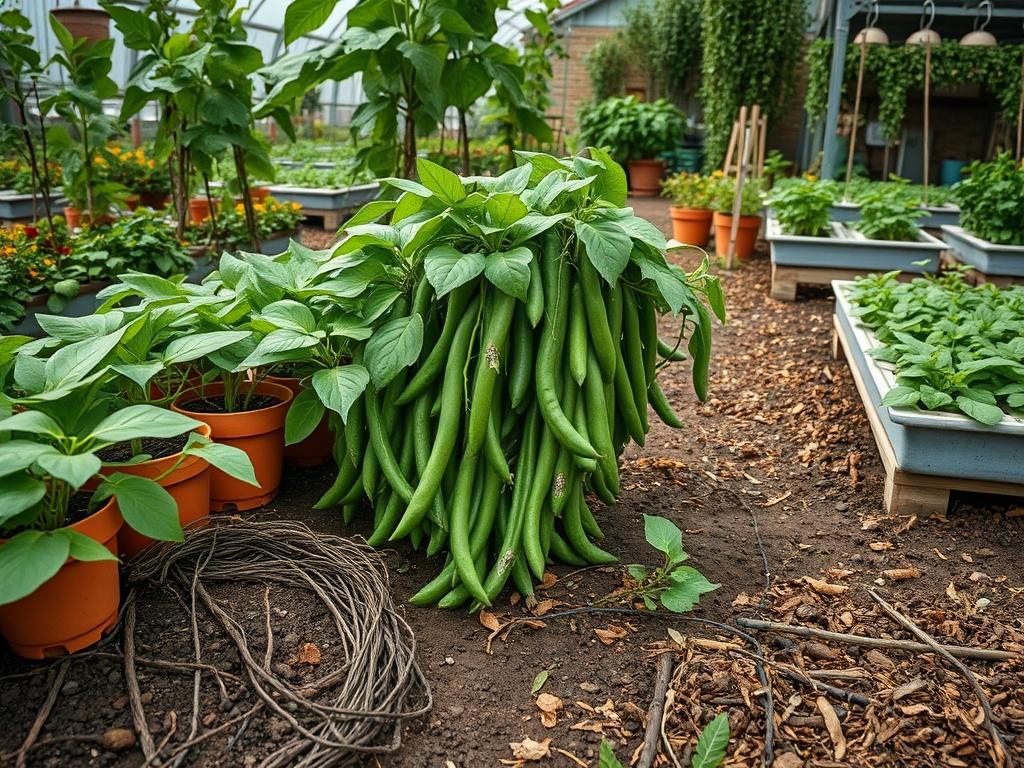
Integrating heavy leafed, nitrogen-fixing crops into a sophisticated landscape requires a shift in perspective from traditional ornamental gardening to functional ecological design. The fava bean, known botanically as Vicia faba, serves as a sculptural vertical element that bridges the gap between aesthetic appeal and high-yield productivity. In many temperate climates, the challenge of maintaining curb appeal during the transition from late winter to early spring can be solved by the upright, sturdy habit of these legumes. They provide a structural density that few other cool-season annuals can match, reaching heights of three to five feet with matte, glaucous foliage. For a landscape architect, the primary goal is to utilize these plants as a living privacy screen or a backdrop for shorter, colorful cool-weather flowers like pansies or primrose. By focusing on the spatial arrangement and harvesting garden fava beans at the peak of their nutritional and visual maturity, a homeowner can ensure their outdoor living space remains both beautiful and multi-functional.
Proper site selection for these legumes involves more than just finding a sunny patch of dirt; it requires an understanding of microclimates and soil porosity. Favas are remarkably frost-tolerant, which allows them to occupy the garden during months when most other plants are dormant. This early-season growth protects the soil from erosion and compaction caused by heavy spring rains. From a consultant’s viewpoint, the integration of fava beans into a formal landscape provides an opportunity to enhance the soil profile through biological nitrogen fixation. The nodules on their roots act as tiny fertilizer factories, pulling nitrogen from the atmosphere and storing it in the soil for the next rotation of ornamental plants. This cycle reduces the need for synthetic inputs, aligning the landscape with modern sustainable practices.
Landscape Design Principles
Symmetry and focal points are essential when incorporating edible plants into a high-end landscape. To prevent the garden from looking unkempt, fava beans should be planted in structured rows or geometric clusters within raised beds or defined parterres. When using them as a focal point, consider their upright growth. They create a vertical “layer” that can be used to hide unsightly foundations or utility boxes. Balancing this height with lower-growing textural plants like creeping thyme or sedum creates a tiered effect that is pleasing to the eye.
Elevated planting areas are particularly effective for fava beans because they ensure proper drainage. These plants are susceptible to root rot if they sit in standing water. When planning the layout, include walkways that are at least 36 inches wide to allow for easy access during the harvest without trampling the root zones. Irrigation planning is another critical step; drip systems are preferred over overhead spray to keep the foliage dry and prevent fungal issues such as chocolate spot. By installing a dedicated irrigation line with emitters spaced every 12 inches, you provide consistent moisture that supports large pod development while maintaining the visual integrity of the garden beds.
Visual balance is achieved by contrasting the silver-green leaves of the fava bean with dark mulches or stone edging. A dark brown or black hardwood mulch applied at a 3-inch depth provides a professional finish and helps regulate soil temperature. This contrast highlights the white and black butterfly-shaped flowers that appear in early spring, turning a utilitarian vegetable into a striking ornamental feature.
Plant and Material Selection
| Plant Type | Sun Exposure | Soil Needs | Water Demand | Growth Speed | Maintenance Level |
| :— | :— | :— | :— | :— | :— |
| Fava Bean | Full Sun | Loamy/Well-drained | Moderate | Medium | Moderate |
| Snap Pea | Full Sun | Rich Organic Matter | High | Fast | High (Needs Trellis) |
| Comfrey | Part Shade | Any/Moist | Moderate | Fast | Low |
| Winter Rye | Full Sun | Poor/Sandy | Low | Medium | Low |
| Borage | Full Sun | Well-drained | Low | Fast | Low |
Implementation Strategy
The process begins with a comprehensive site analysis focused on grading and drainage. If the area is prone to saturation, the ground must be contoured to direct water away from the root zones. A 1 percent to 2 percent slope is typically sufficient for horizontal water movement toward a French drain or lower-lying bioswale. Once the grading is finalized, use steel edging or stone pavers to create a crisp border between the planting area and lush turf or gravel paths. This edging serves as a physical barrier that prevents grass from encroaching on the beans and makes the harvest process feel more organized.
Preparation of the planting site involves tilling in 2 inches of mature compost to a depth of 6 inches. Because fava beans are heavy-feeders, the soil must be rich in phosphorus and potassium. When sowing the seeds, place them 2 inches deep and 6 to 8 inches apart. For a dense, hedge-like appearance, use a staggered double row. As the plants reach 12 inches in height, it is advisable to install a simple support system. Even though favas are sturdy, a twine-and-stake system, often called the Florida Weave, prevents the stalks from flopping over during spring windstorms.
When the time arrives for harvesting garden fava beans, the strategy depends on the desired culinary outcome. For tender, whole-pod consumption, harvest when the pods are 2 to 3 inches long. At this stage, they are crisp and lack the tough inner parchment. For traditional shelled beans, wait until the pods feel firm and “lumpy” to the touch, usually around 6 to 8 inches in length. Use bypass pruners or sharp garden snips to remove the pods from the stem. Pulling the pods by hand can damage the brittle stalks and uproot the plant, which is counterproductive if you intend to leave the roots in the ground for nitrogen enrichment.
Common Landscaping Failures
The most frequent mistake in edible landscaping is improper spacing, which leads to poor air circulation. In the case of fava beans, overcrowding is a primary cause of aphid infestations. Black bean aphids are attracted to the tender succulent tips of the plants; if the plants are too close together, the infestation can sweep through the entire row in days. A professional solution is to pinch off the growing tips once the first few clusters of pods have set, which both focuses the plant’s energy on bean production and removes the aphids’ favorite food source.
Soil compaction is another common failure, especially in new construction landscapes where heavy machinery has compressed the subsoil. Favas require deep, friable soil to establish their taproots. If the soil is compacted, the plants will be stunted and yellowing. Always test the soil’s percolation rate before planting. If water takes more than an hour to drain from a 12-inch hole, the soil must be amended with expanded shale or organic matter to improve its structure. Finally, avoid the mistake of over-watering during the flowering stage, as this can cause blossom drop and significantly reduce the harvest.
Seasonal Maintenance
Spring is the peak season for fava beans. This is when growth is most rapid and the demand for consistent moisture is highest. Ensure the irrigation controller is adjusted to account for increasing temperatures. In late spring, as the harvest concludes, the decision must be made whether to remove the plants entirely or use them as a “green manure.” For a clean landscape aesthetic, cut the stalks at the soil line, leaving the nitrogen-rich roots to decompose naturally.
Summer maintenance focuses on the transition. Once fava beans are removed, the area is ready for heat-loving ornamentals like zinnias or salvia. If any fava pods were missed and have dried on the vine, they can be harvested for seed to be used the following autumn.
Autumn is the secondary planting season for fava beans in milder climates. Planting in October allows the beans to establish a root system and small amount of foliage before winter. They will then overwinter and be the first plants to surge in growth once the ground thaws.
Winter maintenance is minimal. If a severe freeze is expected (below 15 degrees Fahrenheit), a light covering of frost cloth or a layer of pine straw can protect the young plants. In snowy regions, the remaining stalks can be left to catch snow, which provides a natural insulating blanket for the soil.
Professional Landscaping FAQ
How do I know the pods are ready for shelling?
The pods will appear thick and bright green. When you squeeze them, you should feel individual beans about the size of a nickel inside. The pod’s interior will feel spongy and the exterior will lose its fuzzy texture.
Is it necessary to use a trellis for fava beans?
While not always required for shorter varieties, a support system prevents lodging during heavy rains. Using bamboo stakes and jute twine creates a clean, architectural look that keeps the pods off the ground and prevents rot.
What should I do with the plants after picking the beans?
Cut the plants at the base rather than pulling them up. This keeps the nitrogen-fixing nodules in the soil. The “green” tops can be composted or used as a nutrient-rich mulch for other parts of the landscape.
Why are the leaves on my beans turning black?
This is often chocolate spot, a fungal disease caused by high humidity and poor airflow. Enhance drainage, increase spacing between plants, and ensure you are using a drip irrigation system to keep the foliage as dry as possible.
Can fava beans be grown in decorative containers?
Yes, provided the container is at least 12 inches deep to accommodate the taproot. Large terracotta pots or stone planters look excellent when grouped on a patio, especially when under-planted with trailing flowers for a spilled-pot effect.