
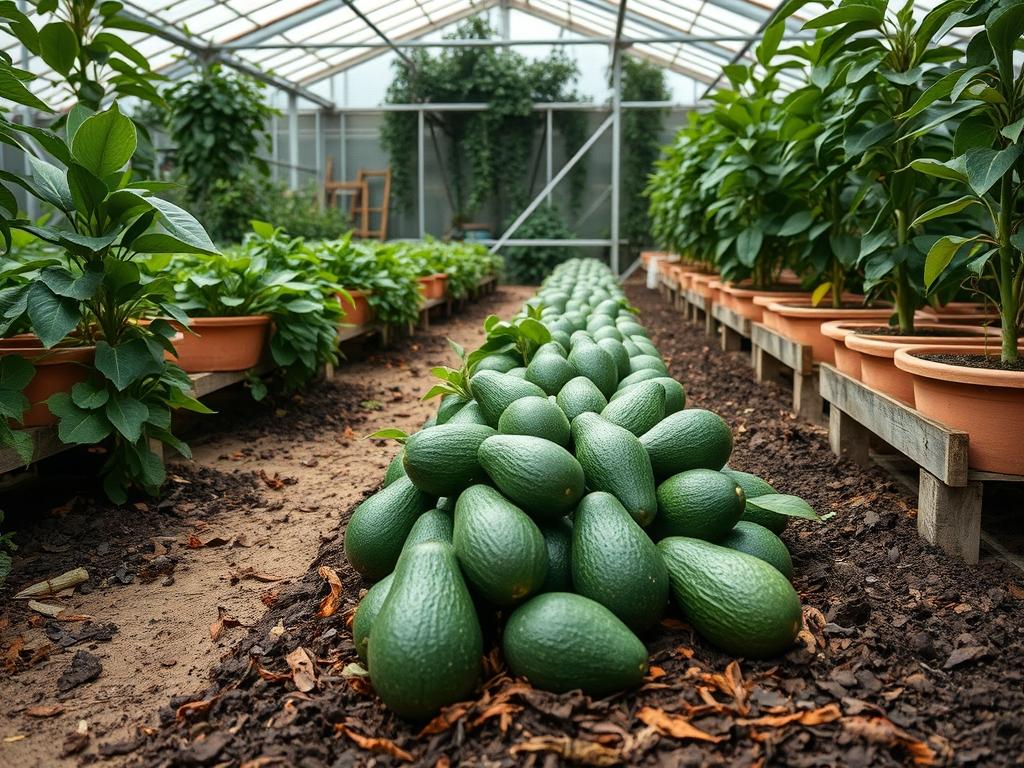
Integrating a productive orchard element into a luxury landscape requires a deep understanding of botanical physiology and spatial design. When we consider the unique nature of the avocado tree, we are dealing with a species that functions as both a dense evergreen canopy and a primary food source. Most fruit trees follow a linear path toward ripeness on the branch, yet Harvesting Garden Avocados represents a distinct departure from this norm. The avocado fruit reaches maturity on the tree but refuses to soften or ripen until it is physically detached from its nutrient source. This biological quirk provides a significant advantage for the home gardener and landscape planner alike. It essentially turns the tree into a living warehouse where the crop can be stored for months until the homeowner is ready to use it. However, the placement of these trees must be calculated with precision to account for their specific drainage needs, the weight of the canopy, and the eventual height that can reach 30 feet or more in a residential setting.
Successfully incorporating these trees into a garden layout involves more than just digging a hole and waiting for fruit. From a consultant perspective, the avocado serves as a structural anchor that dictates the movement of water and light throughout the surrounding zones. Because the fruit stays firm while hanging, the harvest window can span several months, meaning the area beneath the tree must remain accessible and well maintained throughout multiple seasons. We must also address the aesthetic challenge of the leaf drop. Avocados are notorious for shedding large, leathery leaves that take time to decompose. Rather than seeing this as a maintenance burden, a professional design utilizes this organic material as a natural mulch layer, creating a self-sustaining ecosystem that protects the shallow, sensitive root systems of the Persea americana species.
Landscape Design Principles
Symmetry and balance are the hallmarks of a well-executed estate plan, yet the irregular growth habit of many avocado varieties requires a flexible approach to focal points. One should approach the placement of a Hass or Reed avocado by considering the sightlines from the primary residence. Because these trees provide dense, year-round shade, they are ideal for creating natural privacy screens along property boundaries. Integrating them into a multi-layered elevation strategy allows for a more dynamic visual experience. For instance, planting avocados on a slight upslope or a constructed 3-foot berm ensures that water moves away from the sensitive root crown while providing a sense of verticality to the yard. This elevation also assists in the harvesting process, as it brings the canopy slightly closer to eye level for easier access with a fruit picker tool.
Irrigation planning must be integrated into the aesthetic design of the walkways and hardscaping. We often recommend a rings of inline drip tubing or low-flow micro-sprinklers that sit beneath a thick layer of arborist wood chips. This keeps the irrigation infrastructure hidden while maintaining the high humidity levels these subtropical trees crave. Walkways should be positioned at least 8 feet from the trunk of a mature specimen to avoid soil compaction. If a path must pass closer, the use of permeable pavers or a raised timber boardwalk is necessary to protect the atmospheric roots that sit just below the surface. Visual balance is achieved by pairing the coarse texture of the avocado leaves with finer-textured companion plants, creating a contrast that prevents the garden from looking overly heavy or monolithic.
Plant and Material Selection
Choosing the right components to surround your avocado grove is essential for soil health and pest management. The following table provides a breakdown of species and materials that complement a productive backyard environment.
| Plant Type | Sun Exposure | Soil Needs | Water Demand | Growth Speed | Maintenance Level |
| :— | :— | :— | :— | :— | :— |
| Hass Avocado | Full Sun | Sandy Loam | Moderate | Medium | Moderate |
| Meyer Lemon | Full / Partial | Well-Drained | Moderate | Medium | Low |
| Comfrey | Partial Shade | Moist / Rich | High | Fast | Minimal |
| French Lavender| Full Sun | Gritty / Dry | Low | Fast | Low |
| Wood Chip Mulch| N/A | Organic Base | N/A | N/A | Annual Top-off |
| Pea Gravel | N/A | Sub-base | N/A | N/A | Leveling |
Implementation Strategy
The transition from a design on paper to a physical landscape begins with grading and drainage. Before any trees are installed, the site must be evaluated for its ability to shed water. Avocados cannot tolerate wet feet; even 48 hours of standing water can trigger root pathogens that are often fatal. A professional layout begins with a transit level to identify low spots. If the soil is heavy clay, we implement a system of French drains or subterranean pipes that lead to a dry well or a designated runoff area. Once the grade is established, we mark the positions for the primary specimens, ensuring they are spaced at least 15 to 20 feet apart to allow for airflow and light penetration.
Hardscaping should occur before the final planting phase. This includes the installation of retaining walls if the garden is tiered, as well as the placement of landscape edging to define the boundaries between turf and mulch zones. When it is time to plant, the hole should be twice as wide as the root ball but no deeper. In fact, planting the tree 2 inches above the surrounding soil line is a common industry practice to prevent crown rot. After the tree is set, a 3-inch layer of coarse pine bark mulch is applied, leaving a 6-inch gap around the trunk. Finally, we install a series of sturdy wooden stakes and arborist ribbon to support the young tree during its first two years of establishment, ensuring it can withstand wind while developing a strong central leader.
Common Landscaping Failures
The most frequent mistake in residential landscapes is the over-irrigation of mature trees. While young avocados need consistent moisture, an adult tree can easily be killed by a “set it and forget it” mentality regarding irrigation timers. Poor drainage is the silent killer. If a landscape designer fails to account for the soil’s percolation rate, the result is often a stunted tree with yellowing leaves. Another significant failure is the misuse of weed barrier fabric. While it may seem like a labor-saving tool, it prevents the natural breakdown of avocado leaves into the soil and can trap excess moisture, leading to fungal outbreaks.
Root overcrowding and improper spacing also lead to long-term issues. Homeowners often underestimate the width of a mature canopy, planting multiple trees too close together. This creates a dark, damp environment that discourages fruit production and makes harvesting a nightmare. Furthermore, the use of heavy machinery or even heavy foot traffic near the drip line causes soil compaction. This crushes the delicate feeder roots and limits the tree’s ability to take up nutrients. Finally, many gardeners fail to monitor the pH level of their soil. Avocados prefer a slightly acidic environment; if the soil becomes too alkaline, the tree will suffer from iron chlorosis, which manifests as distinctive yellow patterns on the foliage.
Seasonal Maintenance
Seasonal management of an avocado-centric landscape changes throughout the year. In the Spring, the focus is on light pruning and the application of a high-quality nitrogen-rich fertilizer. This is the time to remove any frost-damaged wood and to shape the canopy to allow light into the interior. In the Summer, moisture management becomes the priority. Utilizing a soil moisture probe is highly recommended to ensure the water is reaching a depth of 12 inches without saturating the top layer. This is also the peak time for mulching to prevent the summer sun from baking the surface roots.
When Autumn arrives, the task shifts to Harvesting Garden Avocados. Because the fruit will not ripen on the tree, growers must perform a “test pick.” Select a large, mature-looking fruit and leave it on the kitchen counter for 7 to 10 days. If it softens without shriveling, the rest of the crop is ready to be harvested as needed. During the Winter, protection from frost is paramount for younger trees. We recommend the use of frost blankets or even incandescent string lights wrapped in the branches to provide a few degrees of warmth during freezing nights. It is also a good time to inspect the irrigation system for leaks and to clean all pruning shears with isopropyl alcohol to prevent the spread of pathogens in the coming season.
Professional Landscaping FAQ
How do I know when to harvest my avocados?
Select a large fruit and place it on your counter at room temperature. If it softens within two weeks without shrinking, the crop is mature. Harvesting garden avocados is a staggered process based on your consumption needs.
Do I need two different trees for fruit production?
While many avocados are self-fertile, having both Type A and Type B varieties significantly increases your yield. This cross-pollination ensures a much heavier fruit set and more consistent harvests for the home landscape.
Why are the leaves on my avocado tree turning brown?
This is often caused by salt buildup from irrigation water or over-fertilization. To fix this, perform a deep “leaching” by watering the tree slowly for several hours to wash the salts below the root zone.
Can I grow an avocado tree in a small backyard?
Yes, but you should choose a “dwarf” or “semi-dwarf” variety like the Little Cado. Regular pruning is necessary to maintain a height of 8 to 10 feet, making it manageable for smaller spaces.
What is the best mulch for an avocado tree?
Coarse wood chips or the tree’s own fallen leaves are the best options. These materials mimic the forest floor, protect the shallow roots, and provide a slow-release source of organic nutrients as they decompose over time.