
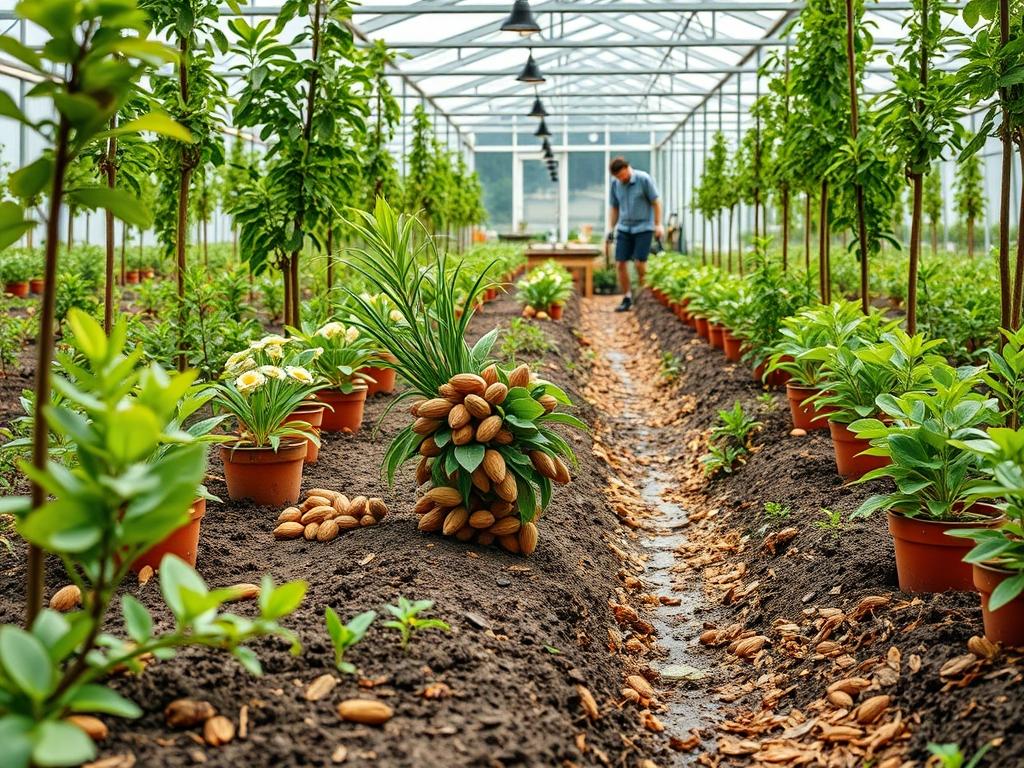
Integrating a productive orchard into a sophisticated landscape requires a balance between aesthetic appeal and agricultural efficiency. The almond tree, known scientifically as Prunus dulcis, serves as an exceptional specimen for Mediterranean and semi-arid climates due to its striking spring blossoms and structural canopy. However, the true challenge for a landscape architect lies in designing a space that facilitates picking fresh almonds while maintaining the elegance of an outdoor living environment. Proper site planning must account for the debris associated with nut production, the specific drainage needs of stone fruits, and the necessity of a clear, level floor beneath the canopy for harvesting activities. When these elements are ignored, an orchard becomes a source of maintenance frustration rather than an asset to the property.
Landscape Design Principles
A successful almond orchard within a residential or commercial landscape relies on structured symmetry and thoughtful elevation layers. Unlike a random cluster of ornamental trees, almond trees should be spaced roughly 20 feet to 25 feet apart to ensure adequate airflow and sunlight penetration. This spacing creates a natural grid that designers can use to define walkways or frame distant views. By aligning these trees in rows, the architect establishes a sense of rhythm that draws the eye toward a focal point, such as a water feature or a stone seating area.
Elevation layers are equally critical. While the almond canopy provides high-level shade, the mid-level should remain relatively open to allow for easy access during the harvest. For the understory, designers often opt for low-profile groundcovers or specialized mulch zones. This layering prevents the landscape from looking neglected when the trees drop their hulls. Furthermore, the irrigation planning must be discrete. Subsurface drip systems or low-profile micro-sprayers are preferred. These systems deliver water directly to the root zone without creating surface pools that might interfere with the drying process or cause structural instability in the soil near the trunk.
Visual balance is achieved by contrasting the gnarled, architectural bark of mature almond trees with smooth hardscaping materials. Incorporating stabilized decomposed granite or flagstone paths allows the homeowner to navigate the orchard comfortably. These paths should be wide enough to accommodate harvest equipment, such as ladders and collection tarps, without damaging perimeter plantings. By treated the orchard as a deliberate design element, picking fresh almonds becomes a choreographed seasonal event rather than a messy chore.
Plant and Material Selection
| Plant Type | Sun Exposure | Soil Needs | Water Demand | Growth Speed | Maintenance Level |
| :— | :— | :— | :— | :— | :— |
| Nonpareil Almond | Full Sun | Well-drained Loam | Moderate | Medium | High |
| All-in-One Dwarf | Full Sun | Sandy/Gravelly | Low to Moderate | Medium | Moderate |
| French Lavender | Full Sun | Rocky/Alkaline | Very Low | Fast | Low |
| Creeping Thyme | Full Sun/Part Shade | Neutral pH | Low | Medium | Very Low |
| Mexican Feather Grass | Full Sun | Any/Drought Tolerant | Very Low | Fast | Low |
| Shredded Cedar Mulch | N/A | N/A | N/A | N/A | Periodic Refresh |
Implementation Strategy
The transition from a conceptual blueprint to a functional orchard requires precise execution, starting with grading and drainage. Almond trees are notoriously sensitive to “wet feet,” which can lead to fungal pathogens. The land should be graded at a 2 percent slope away from the tree trunks to prevent water from pooling at the crown. If the natural topography is flat, a landscape architect might suggest creating slight berms or mounds to elevate the root balls above the surrounding grade. This ensures that even during heavy rainfall, the primary root structure remains oxygenated.
Once the grading is complete, the focus shifts to the orchard floor, which is the most critical area for picking fresh almonds. A common strategy involves a 3-inch layer of hardwood mulch or a compacted layer of crushed stone. This provides a clean surface where hulls can fall without becoming lost in mud or tall grass. Edging is then installed to define the boundary between the orchard and the lawn or flower beds. Using heavy-gauge steel edging or poured concrete curbs prevents invasive grass species from creeping into the harvest zone, which would otherwise complicate the use of collection tarps.
Hardscaping elements should be finalized before the trees reach maturity. This includes the installation of low-voltage LED path lights and permanent anchors for harvest nets. By planning the layout for ease of movement, the designer ensures that the orchard remains functional for decades. The final step of implementation involves a precise irrigation schedule. Young trees require frequent, shallow watering to establish their roots, while mature trees benefit from deep, infrequent cycles that encourage the roots to reach deeper into the soil profile.
Common Landscaping Failures
One of the most frequent errors in orchard design is improper spacing, which leads to root overcrowding and a closed canopy. When almond trees are planted too closely, the lack of sun prevents the nuts in the lower branches from ripening at the same rate as those at the top. This creates an uneven harvest. Additionally, poor spacing reduces wind circulation, increasing the risk of brown rot and other moisture-related diseases. Designers must resist the urge to plant for immediate density, choosing instead to plan for the tree’s size at the ten-year mark.
Soil compaction is another significant failure point, often caused by heavy foot traffic or machinery use on wet soil. Compacted soil restricts the movement of air and water to the roots, leading to stunted growth and poor nut quality. To avoid this, designated walkways should be clearly marked and constructed with porous materials. Furthermore, many property owners fail to account for the impact of lawn fertilizers near almond trees. High-nitrogen fertilizers used for turf can stimulate excessive leaf growth in almonds at the expense of nut production, and the over-spray may even lead to toxic accumulations of salts in the orchard soil.
Irrigation inefficiencies often manifest as “salt burn” on the edges of the almond leaves. This occurs when water is applied via overhead sprinklers rather than at the base. Overhead watering can also knock fresh almonds off the branches prematurely, leading to rot on the damp ground. Finally, the failure to prepare the orchard floor before the hull split is a common oversight. If the ground is covered in weeds or uneven debris when picking fresh almonds begins, the harvest will be inefficient and the risk of contamination from soil-borne fungi increases.
Seasonal Maintenance
Seasonal management is the key to both the health of the trees and the success of the harvest. In the spring, the primary focus is on nutrition and pest monitoring. Applying a balanced 10-10-10 fertilizer before the first irrigation cycle helps support the heavy energy demands of bloom and fruit set. Mulch should be inspected and replenished to maintain a consistent 3-inch depth, which suppresses weeds and regulates soil temperature during the transition into the warmer months.
Summer maintenance centers on water management and preparing for the hull split. As the heat intensifies, the water demand of the almond tree peaks. However, irrigation should be slightly reduced as the hulls begin to crack. This controlled stress encourages the nuts to dry more quickly on the branch. Practitioners should also prune any “water sprouts” or vigorous vertical shoots that compete for nutrients. These shoots provide no fruit and can clutter the interior of the tree, making the process of picking fresh almonds more difficult.
Autumn is the most active time in the almond orchard. Picking fresh almonds begins when the green hulls have fully split and turned a leathery brown. At this stage, the nut is easily separated from the branch. Once harvested, the almonds must be dried effectively. If they are not dried on the tree, they should be spread in a single layer on elevated screen trays in a shaded, well-ventilated area for several days. After the harvest, winter maintenance involves dormant pruning to remove dead or diseased wood and the application of a dormant oil spray to manage overwintering pests like scale and mites.
Professional Landscaping FAQ
How do I know when to begin picking fresh almonds?
Look for the hull split. When the green outer husks crack open to reveal the brown nut shell inside, the almonds are ready. The process usually occurs between August and October depending on the specific cultivar and local climate.
What is the best way to dry almonds after harvesting?
Spread the de-hulled nuts in a single layer on a screen or tarp. Place them in a dry, ventilated area away from direct sunlight for two to four days. They are dry when the kernel snaps cleanly when broken.
Can I grow almonds in a small backyard landscape?
Yes, use a dwarf variety like the All-in-One. These trees reach a manageable height of roughly 12 feet to 15 feet. They are self-fertile, meaning you only need one tree to produce a successful harvest in limited spaces.
Do almond trees require a lot of water?
They are relatively drought-tolerant once established but require consistent moisture for a high-quality nut yield. For the best results, use deep-root irrigation methods and maintain a heavy mulch layer to significantly reduce evaporation and water waste in the orchard.
What groundcover is best for an almond orchard floor?
Low-growing, pollinator-friendly plants like Creeping Thyme or Kurapia are excellent. They stay low to the ground, allowing you to lay tarps easily. Alternatively, using a clean gravel or mulch bed is highly efficient for professional-grade harvesting and drying.