
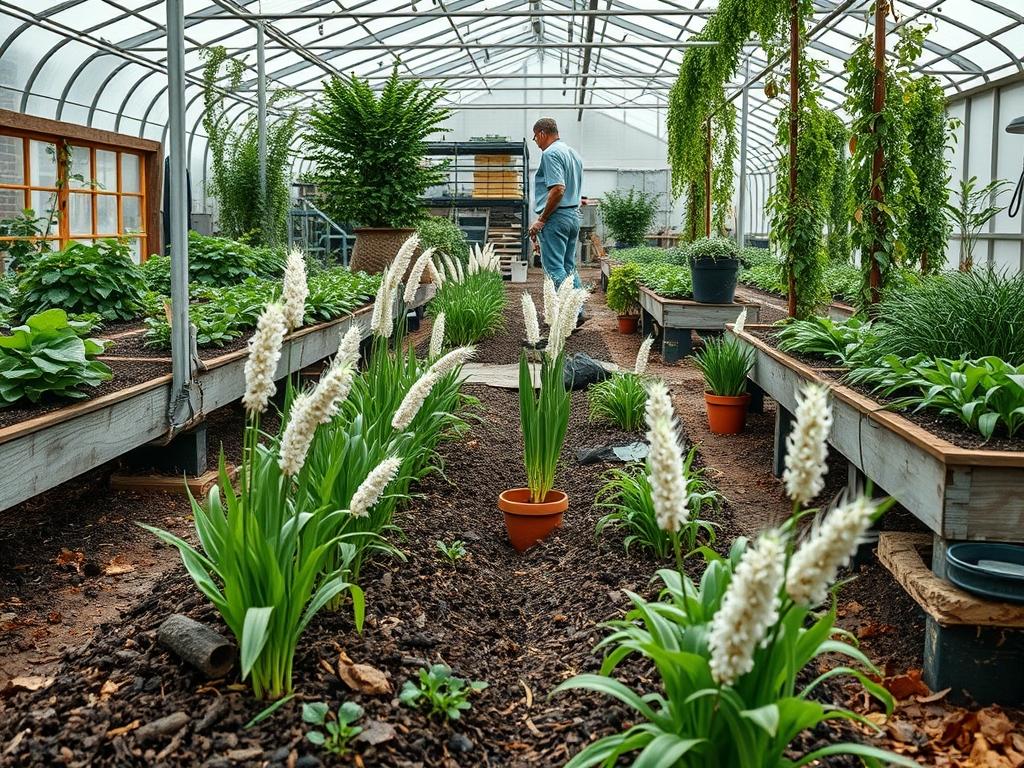
Integrating industrial crops into a residential or commercial site requires a delicate balance between utility and visual interest. When the focus shifts toward picking fresh flax seeds, the landscape architect must account for the plant lifecycle, which transitions from a shimmering sea of pale blue flowers to a brittle, golden landscape of drying stalks. This transition can often conflict with the traditional expectations of lush, green curb appeal. However, with careful spatial planning and the selection of complementary structural elements, a flax meadow can serve as a sophisticated blue focal point that adds unique texture to the outdoor environment. The challenge lies in the dual-purpose nature of the crop; the timing for fiber collection differs from that of seed collection, necessitating a layout that allows for selective harvesting without disrupting the surrounding aesthetic.
Climate considerations are paramount when incorporating Linum usitatissimum into a garden plan. This plant thrives in temperate zones where the growing season provides cool, moist springs followed by drier summers. In the context of curb appeal, the landscape must be designed to withstand the period when the crop dries out on the stalk. This is the critical phase for those interested in picking fresh flax seeds. Designers often mitigate this “brown” phase by utilizing retaining walls or elevation layers, placing the flax behind evergreen shrubs or decorative grasses that maintain structure while the flax matures and reaches its harvest point.
Landscape Design Principles
Symmetry and massing are the most effective tools for incorporating flax into a professional landscape. Because flax is a slender, upright plant with a delicate silhouette, a single specimen will disappear into the background. To create a visual impact, architects should specify mass plantings of at least 100 to 200 square feet. This creates a sea of color during the blooming phase, which typically occurs in the early morning. By using landscape timber or steel edging, the designer can define these areas as intentional “wildflower meadows” rather than unkempt weeds, which is vital for maintaining homeowner association standards or commercial professional standards.
Focal points should be established using hardscaping elements such as stone benches, weathered steel sculptures, or large granite boulders. These heavy elements provide a visual anchor for the wispy flax stalks. Furthermore, elevation plays a key role. Planting flax on a slight or moderate slope, or within raised masonry beds, improves drainage and brings the delicate flowers closer to eye level. Irrigation planning must be discretized; while the seedlings require consistent moisture, the plants must be allowed to dry out as the seed bolls mature. Subsurface drip irrigation is the preferred method here, as overhead watering can cause the tall, slender stalks to lodge or fall over, complicating the process of picking fresh flax seeds and damaging the fiber quality.
Plant and Material Selection
Selecting the right cultivars and companion materials is essential for a dual-purpose landscape. Below is a specification table for a flax-centered botanical zone.
| Plant Type | Sun Exposure | Soil Needs | Water Demand | Growth Speed | Maintenance Level |
| :— | :— | :— | :— | :— | :— |
| Linum usitatissimum | Full Sun | Well-drained Loam | Low to Moderate | Fast | Moderate |
| Lavandula angustifolia | Full Sun | Sandy/Gravelly | Low | Medium | High |
| Festuca glauca | Full/Partial | Lean/Well-drained | Low | Medium | Low |
| Rosmarinus officinalis | Full Sun | Rocky/Well-drained | Low | Slow to Medium | Moderate |
| Panicum virgatum | Full Sun | Adaptable/Clay | Moderate | Medium | Low |
For the hardscaping materials, choose natural stone or decomposed granite for walkways. These provide a neutral palette that complements the blue of the flax flowers and the golden hue of the harvest-ready bolls. Using a 2-inch layer of cedar mulch in the surrounding perennial beds helps retain moisture for companion plants while providing a clean, dark backdrop that makes the flax stalks pop visually.
Implementation Strategy
The first step in garden layout planning for a harvest-ready landscape is grading. Ground surfaces must be leveled or pitched at a 2 percent grade away from building foundations to prevent water pooling. Flax is highly susceptible to root rot in saturated soils. Once grading is complete, the soil should be amended with organic compost to a depth of 6 inches, ensuring a friable texture that allows the long taproots to penetrate easily.
When laying out the beds, incorporate narrow access paths made of flagstone or crushed rock. These paths allow the gardener to walk through the meadow for picking fresh flax seeds without trampling the delicate stems intended for fiber. For fiber harvest, you will pull the entire plant, roots and all, when the stems are about ready, which is usually when they have turned yellow but still retain some green at the base. If the goal is seed harvest, you must wait until the bolls are brown and the seeds rattle inside. Placing edging around the perimeter prevents the seeds from self-sowing into nearby lawn areas. Finally, install a low-voltage lighting system with path lights to highlight the texture of the drying stalks during the late summer evenings, turning a maturing crop into a seasonal dcor feature.
Common Landscaping Failures
The most frequent error in flax landscaping is poor drainage. If the site sits in a low-lying area or has heavy clay soil without proper amendment, the crop will fail before it reaches the flowering stage. Soil compaction is another significant issue. If construction equipment or heavy foot traffic has compressed the earth, the delicate root system of the flax cannot thrive. Landscape consultants should always recommend a deep tilling or aeration before sowing.
Improper spacing often leads to mold and mildew. While a dense “meadow” look is desirable, planting too closely in humid climates prevents airflow. This can ruin the fiber quality and cause the seed bolls to rot before you are finished picking fresh flax seeds. Furthermore, many designers forget to plan for the “void” left after harvest. Since flax is an annual, once it is pulled for fiber or harvested for seeds, the area will be bare. A professional plan must include secondary plantings or a heavy application of decorative mulch to maintain the site’s aesthetics during the autumn months.
Seasonal Maintenance
Spring is the primary season for site preparation and sowing. Ensure that the irrigation zones are tested and that the 1/2-inch emitters are clear. Seeds should be broadcast and lightly raked into the top 0.25 inches of soil. During the early summer, maintenance involves selective weeding to ensure the flax is not outcompeted. Because flax is sensitive to many herbicides, manual weeding is often the safest professional recommendation.
In late summer, monitor the color of the stalks and the hardness of the bolls. For fiber, harvest should begin when the lower half of the stem turns yellow. For the seed enthusiast, picking fresh flax seeds happens when the capsules are tan and dry. In autumn, once the crop is cleared, the site should be top-dressed with 1 inch of composted manure to prepare the soil for the next cycle. Winter maintenance is minimal, focusing on the structural integrity of retaining walls and the pruning of any evergreen companion plants to ensure they do not shade out the flax site for the following spring.
Professional Landscaping FAQ
What is the best way to prevent flax from falling over?
Planting at a consistent density of 1 gram of seed per square foot creates a self-supporting canopy. Additionally, avoid high-nitrogen fertilizers, which cause weak, spindly growth. Windbreaks or decorative picket fencing can also provide structural support against heavy gusts.
Can flax be grown in a xeriscape design?
Yes, flax is remarkably drought-tolerant once established. It integrates perfectly with native grasses and stone mulches. However, the seed yield may be lower if the plant undergoes extreme water stress during the flowering period, so occasional deep watering is recommended.
How do I manage the transition after the harvest is complete?
Plan for a “cover crop” or seasonal annuals. Once the flax is pulled, planting autumn chrysanthemums or applying a fresh layer of dark wood mulch maintains the landscape’s polished appearance until the next spring sowing begins.
Does flax require special soil pH levels?
Flax prefers a neutral to slightly acidic soil, ideally between 6.0 and 7.5 pH. If your soil is too alkaline, apply agricultural sulfur; if too acidic, use dolomitic lime to bring the levels into the optimal range for fiber production.
When is the optimal time for picking fresh flax seeds?
Wait until approximately 30 days after the flowers have dropped. The bolls should be golden-brown and firm. If you can hear the seeds rattling when you shake the stalk, the moisture content is low enough for a successful harvest.