
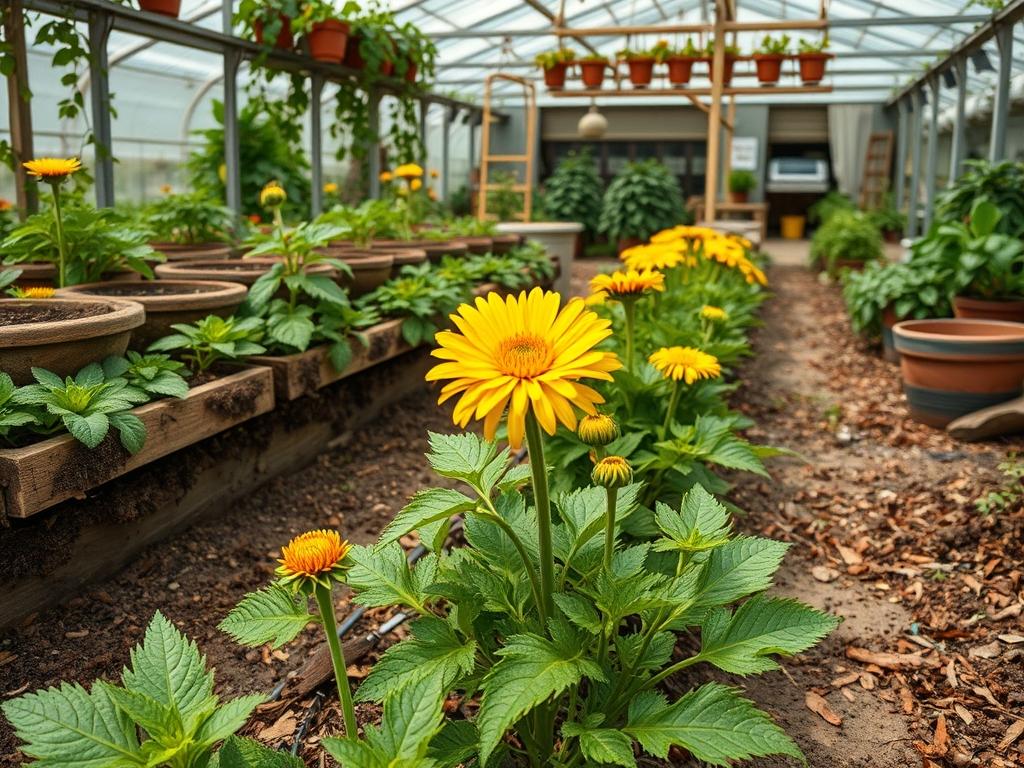
Integrating dual-purpose botanicals into a modern landscape requires a sophisticated understanding of both aesthetic utility and harvest cycles. Safflower, or Carthamus tinctorius, represents a unique challenge for the landscape architect because its visual peak coincides precisely with its peak utility as a dye source. In arid and semi-arid climates, this plant offers a structural, thistle-like texture that complements xeriscaping and low-moisture cottage designs. However, the management of its flowering phase is critical; if the goal is Harvesting Garden Safflower for natural dye, the transition from a vibrant ornamental focal point to a harvested raw material must be planned with precision. A successful design ensures that the removal of these blooms for pigment extraction does not leave glaring voids in the curb appeal. By layering Safflower behind perennial shrubs or within well-defined structural borders, the professional gardener can maintain a functional outdoor environment that produces high-quality carthamin while remaining visually balanced throughout the growing season.
Landscape Design Principles
Effective landscape design relies on the strategic use of symmetry and elevation layers to guide the eye toward specific focal points. When incorporating Safflower, which typically reaches heights of 18 to 36 inches, it is essential to treat it as a mid-layer element. Plantings should be grouped in clusters of at least five to seven specimens to create a dense wash of color, rather than scattering them sporadically. This grouping mimics natural meadow patterns and provides a stronger visual impact from the street. Symmetry can be achieved by flanking a central walkway or entryway with matching beds of Safflower, balanced by low-growing evergreen shrubs like Buxus microphylla to provide year-round structure when the Safflower is eventually cut back.
Irrigation planning is another vital principle. Because Safflower is highly susceptible to root rot, the elevation of the planting bed must be slightly raised above the surrounding turf. Using a Slope Gauge to ensure a 2 percent grade away from building foundations is standard practice. Walkways should be designed to offer easy access for Harvesting Garden Safflower without compacting the soil near the root zones. A path constructed of Crushed Granite or Flagstone allows the harvester to reach the center of the bed without stepping on the delicate soil structure, maintaining the health of the plant and the integrity of the landscape layout.
Plant and Material Selection
The following table outlines the technical requirements for Safflower and its common companion plants in a dye-focused landscape.
| Plant Type | Sun Exposure | Soil Needs | Water Demand | Growth Speed | Maintenance Level |
| :— | :— | :— | :— | :— | :— |
| Carthamus tinctorius | Full Sun | Well-drained, Sandy | Low | Fast | Moderate |
| Lavandula angustifolia | Full Sun | Calcareous, Lean | Low | Moderate | Low |
| Achillea millefolium | Full Sun | Poor to Average | Very Low | Fast | Low |
| Rosmarinus officinalis | Full Sun | Gritty, Sharp drainage | Low | Moderate | Low |
| Salvia officinalis | Full or Partial | Loamy, Well-drained | Moderate | Fast | Moderate |
Implementation Strategy
The process begins with thorough site preparation and grading. Use a Power Tiller to break up compacted soil to a depth of 12 inches, incorporating Coarse Sand or Perlite if the native soil contains high clay content. Proper drainage is the most critical factor for Safflower success. Once the grade is established, use a Spade to create clean edging between the planting beds and the lawn. This prevents turf grass from encroaching on the Safflower and provides a professional, manicured finish.
When planting, space the Safflower seeds or seedlings 6 to 10 inches apart. This density is sufficient to support the heavy flower heads as they mature, reducing the need for individual staking. After the seeds germinate, apply a 2 inch layer of Hardwood Mulch or Pine Bark. This mulch depth is sufficient to suppress weeds while still allowing for air circulation at the base of the stems. As the plants reach maturity, the focus shifts to the harvest. For the highest quality red and yellow dyes, the petals must be gathered when they are a vibrant orange-red but before they turn brown and brittle. Use Bypass Pruners to snip the flower heads, ensuring you leave enough foliage on the plant if you intend to leave the stalks for structural interest or seed collection.
Hardscaping elements, such as Steel Edging or Stacked Stone Retaining Walls, should be installed prior to planting. These elements provide a permanent framework that holds the landscape together even after the Safflower has been harvested. If the bed looks too empty after the petals are removed, consider interplanting with late-summer bloomers that can take over the visual heavy lifting in late August and September.
Common Landscaping Failures
The most frequent mistake in managing a Safflower-centric landscape is poor drainage. Because Safflower evolves from arid environments, its taproot will quickly decay if trapped in standing water. Irrigation systems must be calibrated to avoid over-saturation; a Drip Irrigation System with 0.5 GPH emitters is far superior to overhead sprayers, which can also encourage fungal growth on the flower heads. Soil compaction is another silent killer. When soil is packed too tightly by foot traffic or heavy machinery during construction, the Safflower cannot develop the deep root system required to support its tall, top-heavy blooms.
Root overcrowding also presents a significant issue. While dense planting is encouraged for visual impact, a lack of air circulation can lead to blight. Professional architects ensure that while the canopy of the plants may touch, the bases remain clear enough for wind to move through the lower third of the stalks. Finally, improper spacing between the Safflower and permanent hardscaping can lead to staining. The oils and pigments in the petals, while excellent for dye, can sometimes discolor porous light-colored stones if spent blooms are allowed to decay directly on the surface.
Seasonal Maintenance
Spring is the season for preparation and installation. Test the soil pH to ensure it falls between 6.0 and 7.0. Apply a light, balanced fertilizer, such as a 10-10-10 NPK blend, to provide the initial nutrient boost required for rapid spring growth. Monitor the beds for early weed emergence and refresh the Mulch as needed to maintain that consistent 2 inch depth.
Summer is the peak activity period for those Harvesting Garden Safflower. Daily inspections are necessary to catch the blooms at their color peak. This is also the time to monitor irrigation closely; while Safflower is drought-tolerant, extreme heat waves will require deep, infrequent watering to prevent the petals from scorching. Deadheading any diseased or secondary blooms that are not fit for dye will keep the plant’s energy focused on its primary flowers and maintain a clean aesthetic.
Autumn marks the transition to seed saving and cleanup. If the Safflower stalks were left in place after the dye harvest, they can now be cut back to the ground using Hedge Shears. Collect the dried seed heads if you intend to replant the following year. This is also the ideal time to add Compost to the beds, replenishing the organic matter spent during the vigorous summer growing season.
Winter maintenance is primarily focused on the hardscape and structural perennials. Ensure that Retaining Walls and Drainage Pipes are clear of debris. In regions with heavy snow, the skeletal remains of Safflower can be left for winter interest and bird forage, but most professional landscapes prefer a clean cut-back to the soil line to prepare for the spring reset.
Professional Landscaping FAQ
How often should I water Safflower during the bloom cycle?
Water deeply once a week, allowing the top 3 inches of soil to dry completely. Avoid overhead watering to prevent petal rot, which ruins the dye quality and the plant’s visual appeal during the peak flowering stage.
Can Safflower grow in heavy clay soil?
Only if the soil is heavily amended. Safflower requires sharp drainage to thrive. Use a Garden Fork to incorporate 3 inches of organic matter and Expanded Shale to improve the porosity of clay-heavy ground.
When is the best time for Harvesting Garden Safflower for dye?
Harvest the petals when they turn a deep, brilliant orange but remain supple. Use Needle-Nose Snips to collect individual florets in the morning after the dew has evaporated but before the intense midday sun hits.
Do I need to stake Safflower plants in a garden bed?
Generally, no. If planted in dense groups of 6 to 10 inches apart, the rigid, branching stems support each other. However, in high-wind seaside environments, a subtle Green Bamboo Stake may be necessary for individual tall specimens.
Will Safflower attract pollinators to my landscape?
Yes, Safflower is a magnet for bees and butterflies. This makes it an excellent choice for a biodiversity-focused landscape design. Note that the presence of pollinators is a sign of a healthy, chemical-free environment suitable for dye harvesting.