
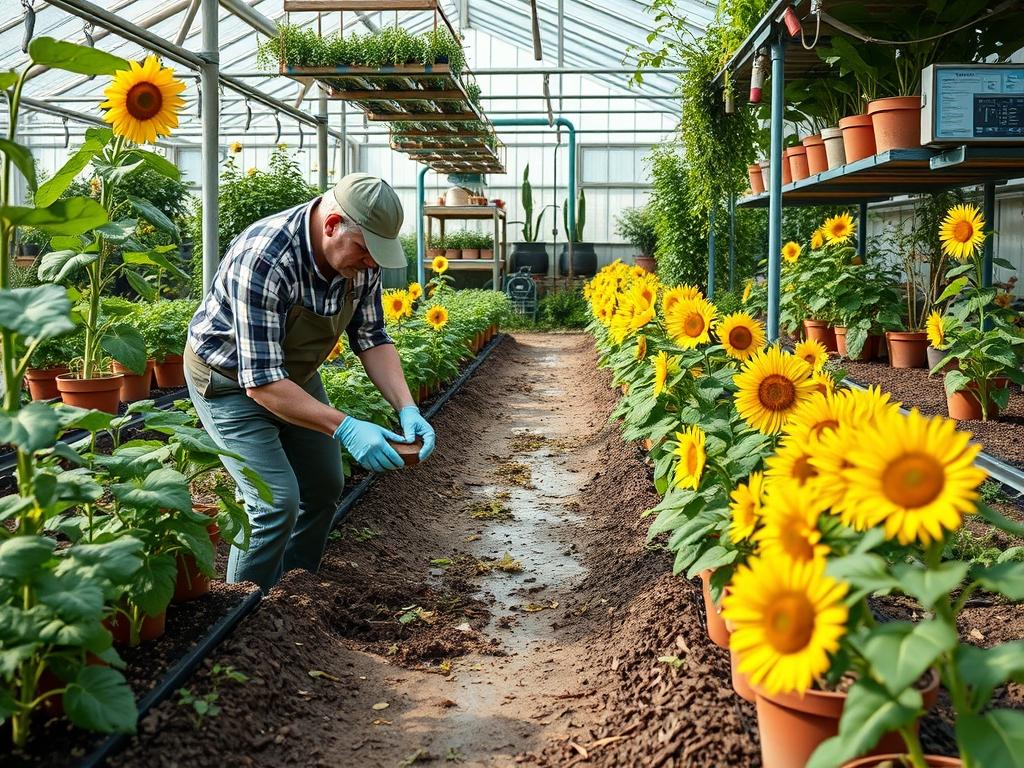
Integrating sunflowers into a high-performance landscape requires more than aesthetic awareness; it demands a deep understanding of plant lifecycles and their functional yields. Picking fresh sunflower seeds is often viewed as a simple backyard activity, but for the professional landscape architect, it represents the final stage of a carefully managed structural cycle. Sunflowers, specifically Helianthus annuus, offer a unique challenge in site planning. They command significant vertical presence, influence local soil nitrogen levels, and require specific irrigation strategies to ensure they do not collapse under their own weight. Integrating these giants into a residential or commercial property enhances curb appeal through dramatic height and vibrant color. However, the transition from peak bloom to seed harvest must be handled with precision to avoid a look of regional neglect. A well-designed garden treats the de-seeding process as a planned seasonal event, ensuring the landscape remains functional and tidy even as the primary floral interest wanes.
Landscape Design Principles
Successful integration of sunflowers begins with spatial hierarchy and the principle of elevation layers. Because many seed-producing varieties can reach heights of eight to twelve feet, they must be positioned as “living walls” or back-of-border elements. Placing them in the foreground often disrupts the visual balance of a garden, obscuring smaller ornamental grasses or perennials. Symmetry plays a vital role here; a mirrored row of Mammoth Grey Stripe sunflowers can frame a walkway or define a property boundary with architectural intent. To maintain focus, these tall stalks should be supported by mid-tier plants like Black-eyed Susans or Salvia, which mask the lower, often coarser foliage of the sunflower as the season progresses.
Irrigation planning is another critical design pillar. Sunflowers are heavy drinkers during their vegetative growth phase, yet they require excellent drainage to prevent root rot. In a professional layout, this is achieved through mounded planting beds or integrated French drains that direct excess moisture away from the crown. Pathing and walkways must also be considered. If the goal is picking fresh sunflower seeds, access is paramount. Designers should leave at least thirty-six inches of clearance between the sunflower row and the path to allow for easy harvesting without trampling the surrounding landscape. Visual balance is maintained by grouping sunflowers in clusters rather than single, lonely stalks, which creates a sense of intentionality and provides mutual structural support against high winds.
Plant and Material Selection
Selecting the right cultivar is the difference between a high-yield harvest and a purely decorative garden. The following table outlines the requirements for common varieties used in luxury landscapes that also provide edible or plantable seeds.
| Plant Type | Sun Exposure | Soil Needs | Water Demand | Growth Speed | Maintenance Level |
| :— | :— | :— | :— | :— | :— |
| Mammoth Grey Stripe | Full Sun (8+ hrs) | Well-drained Loam | High (Bloom) | Rapid | Moderate |
| Autumn Beauty | Full Sun | Sandy/Clay Mix | Moderate | Fast | Low |
| Lemon Queen | Full Sun/Partial | Rich Organic | Moderate | Fast | Low |
| Maximilian (Perennial) | Full Sun | Adaptable | Low | Medium | Low |
| Titan | Full Sun | Heavy Nutrients | Very High | Rapid | High |
For those focusing on picking fresh sunflower seeds, Titan and Mammoth varieties are the industry standard due to their massive head size, often reaching eighteen inches in diameter. When selecting materials for the bed, use double-shredded hardwood mulch to retain moisture and coarse builder’s sand if the native soil is too heavy in clay.
Implementation Strategy
The transition from a design on paper to a flourishing backyard requires a methodical implementation strategy. Start with grading. The area must be slightly sloped, perhaps a transition of two percent, to ensure water does not pool at the base of the stalks. Once the site is graded, edging provides the clean lines necessary for professional curb appeal. Use weathered steel edging or natural stone to create a sharp boundary between the sunflower bed and the lawn.
Spacing is the most common error in amateur layouts. For large seed-producing varieties, seeds or seedlings should be placed at least twenty-four inches apart. Overcrowding results in smaller heads and weak, spindly stalks. During the planting phase, integrate a high-phosphorus fertilizer into the soil to encourage strong root development and large flower production. As the plants reach three feet in height, professional-grade bamboo stakes or hidden rebar supports should be installed. These supports are essential for the late-summer weight of the seed-heavy heads. To manage the aesthetic during the drying phase, some architects recommend “bagging” the heads with breathable mesh covers. This protects the seeds from birds while signaling to the homeowner that the harvest is approaching.
Common Landscaping Failures
Failure in sunflower landscaping often stems from a lack of foresight regarding the plant’s weight and nutrient demands. Soil compaction is a frequent culprit; sunflowers cannot penetrate dense, oxygen-poor soil, leading to stunted growth. If the soil has not been tilled or amended with organic compost, the root system remains shallow. This creates a high risk for “lodging,” where the entire plant tips over during a summer thunderstorm.
Another failure is improper irrigation. While sunflowers are drought-tolerant once established, inconsistent watering during the head-filling stage leads to hollow seeds. Conversely, over-watering in a basin without proper drainage causes the stalk to soften and decay. Root overcrowding is the final major pitfall. If the landscape plan does not account for the massive leaf span of these plants, nearby sun-loving perennials will be shaded out, resulting in “dead zones” within the garden beds. Professional planners avoid this by using a staggered, tiered planting approach where the sunflowers occupy the highest elevation.
Seasonal Maintenance
Managing a sunflower landscape is a year-round commitment that changes with the sun’s trajectory. In the spring, the focus is on soil preparation and pre-emergent weed control. Applying a three-inch layer of organic mulch early in the season prevents competition from invasive grasses. As summer arrives, monitoring for pests like the sunflower moth is crucial. If picking fresh sunflower seeds is the priority, the plants must stay healthy until the petals begin to shrivel.
Autumn is the most active season for de-seeding. You will know the seeds are ready when the back of the flower head (the bracts) turns from green to a deep yellow or brown. Cut the heads with bypass pruners, leaving about twelve inches of stem attached. Hang them in a dry, well-ventilated area such as a potting shed or garage to finish the curing process. Once the seeds are harvested, the stalks should be removed entirely. They are too woody for most home composting systems and should be shredded or hauled away to maintain a clean winter landscape. During the winter months, the landscape architect focuses on soil replenishment, adding bone meal or well-rotted manure to replace the nutrients extracted by the heavy-feeding sunflowers.
Professional Landscaping FAQ
When is the best time for picking fresh sunflower seeds?
Harvest when the back of the flower head turns yellow or brown and the tiny florets in the center rub off easily. The seeds should look plump and the outer husks should be fully striped and hard to the touch.
How do I prevent birds from eating my harvest?
Cover the flower heads with lightweight mesh bags or cheesecloth once the petals begin to wilt. Secure the fabric with twine around the neck of the stalk. This allows for airflow while creating a physical barrier against foraging birds.
What is the best way to de-seed a sunflower head?
After the head has dried for several days in a low-humidity environment, rub your thumb across the seed face over a large bucket. If the head is sufficiently dry, the seeds will dislodge and fall freely with minimal effort or pressure.
Can I grow sunflowers in containers for seed harvest?
Yes, but you must use a heavy, wide-based container at least fifteen gallons in size. Ensure the pot is weighted at the bottom with river rocks to prevent the top-heavy plant from blowing over in the wind during late summer.
How should I store seeds for next year’s planting?
Ensure seeds are completely dry by leaving them on a flat tray for forty-eight hours. Store them in an airtight glass jar or a paper envelope kept in a cool, dark, and dry location to maintain high germination rates for spring.