
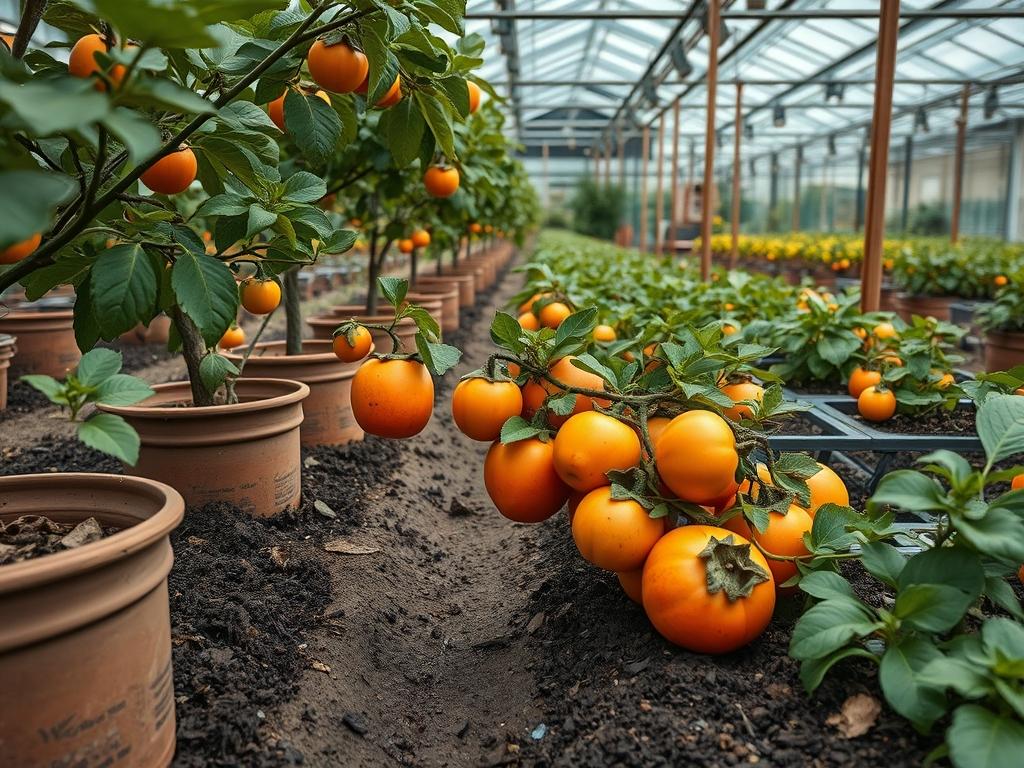
Integrating fruit-bearing trees into a professional landscape design requires a sophisticated balance between aesthetic appeal and functional utility. The persimmon tree, specifically the Diospyros kaki species, serves as a premier candidate for focal point placement due to its structural elegance and striking autumn display. In high-end residential architecture, these trees provide more than just a harvest; they offer a dramatic shift in texture and color as temperatures cool. However, the successful integration of these trees hinges on the designer’s ability to plan for the eventual harvest. Picking ripe persimmons is an art that dictates the placement of the tree relative to walkways, patios, and retaining walls. If a designer selects an astringent variety and places it over an expensive natural stone terrace, the resulting fruit drop can lead to staining and maintenance burdens. Conversely, placing non-astringent varieties near an outdoor kitchen encourages interaction with the landscape, bridging the gap between the garden and the table.
When evaluating a site for persimmon integration, the landscape consultant must consider the vertical layers of the garden. A mature persimmon can reach heights of 20 to 30 feet, demanding careful consideration of sightlines and overhead clearances. The curb appeal of a property is significantly enhanced in late October and November when the leaves drop, leaving bright orange orbs clinging to dark, architectural branches. To maximize this effect, the tree should be framed against a neutral background, such as a buff-colored stucco wall or a dark evergreen hedge. This framing ensures that the vibrant fruit becomes a living sculpture during the winter months. Proper planning also involves calculating the canopy spread, which can extend to 15 or 25 feet, necessitating a generous root zone protected from soil compaction by designated mulch beds.
Landscape Design Principles
Symmetry and visual balance are the cornerstones of a well-executed plan involving persimmon trees. While a single specimen can serve as a stunning focal point in a small courtyard, larger estates may benefit from a rhythmic allee of dwarf varieties lining a decomposed granite path. When creating these focal points, it is essential to consider the elevation. Planting on a slight mound or a raised planter bed not only improves visual prominence but also addresses the critical need for drainage. Persimmons detest “wet feet,” and a raised position ensures that excess water moves away from the root flare through a carefully graded surface drainage system.
Irrigation planning is another pillar of professional design. In many Mediterranean or temperate climates where persimmons thrive, a dedicated drip irrigation zone is mandatory. This system should be designed with multiple emitters per tree, spaced at the drip line rather than the trunk, to encourage a wide and stable root architecture. By managing water delivery precisely, the architect can control growth rates and fruit quality, ensuring that Picking Ripe Persimmons remains a rewarding experience for the homeowner. Furthermore, the selection of edging materials around the tree base, such as powder-coated steel or tumbled Belgian block, helps define the space and prevents damage from string trimmers and mowers.
Plant and Material Selection
| Plant Type | Sun Exposure | Soil Needs | Water Demand | Growth Speed | Maintenance Level |
| :— | :— | :— | :— | :— | :— |
| Fuyu Persimmon | Full Sun | Well-Drained Loam | Moderate | Moderate | Low |
| Hachiya Persimmon | Full Sun | Silty to Loamy | Moderate | Moderate | Medium |
| Chocolate Persimmon| Full Sun/Part Shade| Organic Rich | High | Fast | Moderate |
| Saijo Persimmon | Full Sun | Deep, Fertile | Low once set | Moderate | Low |
| Giant Fuyu | Full Sun | Loamy/Neutral | Moderate | Moderate | Medium |
Implementation Strategy
The process begins with a comprehensive site analysis, focusing on grading and solar orientation. A persimmon tree requires at least 6 to 8 hours of direct sunlight to develop the sugars necessary for fruit ripening. During the layout phase, the architect should mark the center of each planting hole with surveyor stakes, ensuring that the distance from hardscaping accounts for the mature trunk diameter. The hole should be excavated to twice the width of the root ball but no deeper, preventing the tree from settling too low, which can lead to crown rot.
Once the tree is positioned, the installation of soil amendments such as composted organic matter should be localized to the backfill to encourage outward root growth. A 3-inch layer of double-shredded hardwood mulch or pine bark is then applied, leaving a 4-inch gap around the trunk to maintain airflow. If the site is prone to heavy rains, a French drain or catch basin should be installed nearby to divert runoff. Finally, the edging is installed to create a clean transition between the turf grass and the planting island, providing a professional finish that defines the landscape’s geometry.
Common Landscaping Failures
One of the most frequent errors in garden planning is the failure to account for fruit type when Picking Ripe Persimmons. Homeowners often mistake an astringent Hachiya for a non-astringent Fuyu based solely on color. From a landscaping perspective, a Hachiya variety that is picked too late will become extremely soft, falling and creating a slippery hazard on concrete walkways or paver driveways. Designers must educate clients on these differences or place astringent varieties in “low-traffic” zones of the backyard where fallen fruit will decompose harmlessly into the mulch.
Root overcrowding is another systemic failure. Planting a persimmon too close to a retaining wall or a swimming pool can eventually result in structural damage as the primary lateral roots expand. Similarly, improper spacing between multiple trees leads to a tangled canopy that inhibits airflow, increasing the risk of fungal diseases like anthracnose. Inefficient irrigation also contributes to failure; a system that only waters the surface discourages the deep root penetration needed for wind resistance during winter storms. Over-fertilization with high-nitrogen products is also problematic, as it produces lush foliage at the expense of structural wood strength, leading to limb breakage under the weight of a heavy harvest.
Seasonal Maintenance
Spring maintenance focuses on structural pruning and nutrient management. Using bypass pruners and pole saws, the gardener should remove any dead or crossing branches to maintain an open-center shape. This pruning allows sunlight to penetrate the inner canopy, which is vital for fruit development. A balanced, slow-release organic fertilizer should be applied just before the first flush of growth.
In the summer, the emphasis shifts to water management. As temperatures rise, the evapotranspiration rate increases, necessitating an adjustment to the irrigation controller. Deep, infrequent watering is preferable to light daily sprays. Monitoring for pests like scale or mealybugs is also essential during this period to ensure the health of the upcoming harvest.
Autumn is the season for Picking Ripe Persimmons. This is when the landscape professional’s variety selection pays off. For Fuyu varieties, harvesting occurs when the fruit is a uniform orange but still as firm as an apple. For Hachiya and other astringent types, the fruit may be harvested when fully colored but firm if the owner intends to ripen them indoors; otherwise, they are picked when they feel like a soft balloon. Following the harvest, the fallen leaves should be collected and composted to prevent the overwintering of pathogens in the leaf litter.
Winter is the time for dormancy and structural adjustments. It is the ideal season for major renovated pruning and for inspecting the hardscaping around the tree for any signs of root-related shifting. If the tree is young, applying a tree wrap can protect the tender bark from sunscald on bright, cold days.
Professional Landscaping FAQ
How can I tell the difference between Fuyu and Hachiya?
Look at the shape first. Fuyu persimmons are squat and shaped like a tomato, while Hachiya persimmons are elongated and heart-shaped. Fuyu is picked firm, but Hachiya must be jelly-soft before it is edible.
Will persimmon roots damage my retaining wall?
If planted closer than 10 feet, the expanding root flare can exert pressure on smaller masonry walls. Use a root barrier or ensure a minimum 15-foot offset from major structural hardscaping to prevent any future displacement or cracking.
What is the best mulch for persimmon trees?
A 3-inch layer of shredded cedar or natural hardwood mulch is ideal. It retains moisture, suppresses weeds, and breaks down slowly to improve soil structure. Always maintain a clear space around the trunk to prevent rot.
How do I manage drainage for a persimmon tree?
Install a subsurface drainage system or a French drain if the area has heavy clay soil. Planting the tree on a 6-inch mound of amended soil will also ensure that water drains away from the sensitive root crown.
When is the peak time for picking ripe persimmons?
The window typically opens in mid-October and extends through late November. Watch for the fruit to turn from a yellowish-green to a deep, saturated orange. The calyx, or the leaf-like top, should remain green and healthy.