
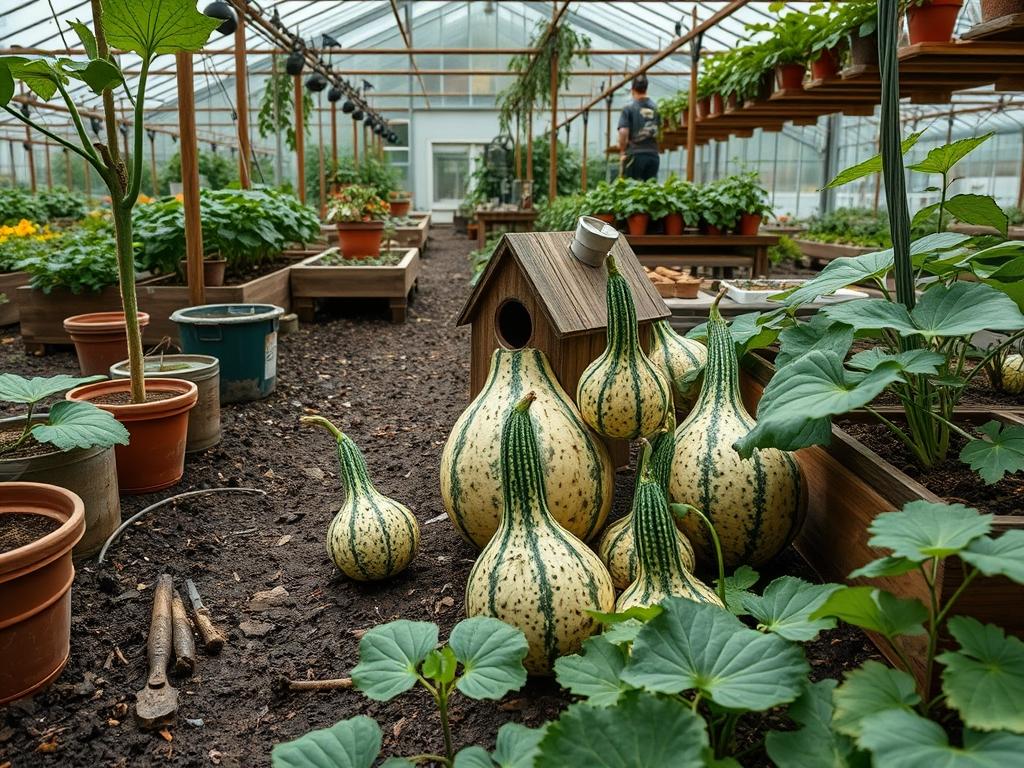
Integrating vigorous vines such as Lagenaria siceraria into a residential landscape requires an intentional balance between untamed seasonal growth and structural discipline. Harvesting Garden Birdhouse Gourds is a process that technically begins months before the first frost, rooted deeply in the initial site design and the selection of appropriate hardscaping supports. From a landscape architecture perspective, these gourds offer more than just a craft project. They provide a dense, tropical-looking canopy that can serve as a living privacy screen or a rhythmic element along a northern boundary. However, the sheer weight of the fruit and the sprawling nature of the vines necessitate a professional approach to soil preparation, drainage, and vertical elevation. Successful integration ensures that the garden remains aesthetically pleasing during the peak growing season while functioning as a high-yield production space. Designers must account for the transition from the lush, green vibrancy of summer to the stark, brown reality of the autumn harvest.
The environmental conditions required for these gourds often intersect with common landscaping challenges, particularly regarding sun exposure and moisture management. In many temperate climates, the primary goal is maximizing the growing degree days to ensure the gourds reach full maturity before the arrival of killing frosts. This often involves the use of thermal mass, such as stone retaining walls or dark mulch, to maintain soil temperatures through the cooling nights of late summer. Curb appeal is maintained by ensuring that the large, sometimes unruly vines are confined to specific zones using heavy-duty trellising or arbors. When planned correctly, the hanging fruit becomes a unique focal point, drawing the eye upward and creating a sense of overhead enclosure in an outdoor room.
Landscape Design Principles
In the realm of high-end landscape design, symmetry and focal points are essential for managing large-scale vegetable elements. When planning for gourds, the use of vertical layers is the most effective way to save ground space while preventing fruit rot. A well-designed garden arbor or a series of perpedicular trellises can transform a simple gourd patch into a grand entrance or a shaded walkway. Placing these structures at the ends of sightlines creates a destination within the garden, encouraging movement through the space. The visual balance is achieved by pairing the coarse texture of the gourd leaves with finer-textured companion plants, which helps soften the transition between the structural hardscaping and the aggressive vine growth.
Elevation is another critical factor. By elevating the vines, the designer ensures better air circulation, which is the most effective defense against powdery mildew and fruit rot. From a functional standpoint, hanging gourds grow straighter and more symmetrically than those left on the ground, which often develop flat spots or inconsistent coloring. Irrigation planning must be integrated into the design from the start. A drip irrigation system with emitters spaced every 12 inches ensures that moisture reaches the roots without wetting the foliage, a key requirement for maintaining plant health in humid environments. Walkways around the gourd area should be wide enough to accommodate the spread of the vines, typically using crushed gravel or paver stones to provide a stable, well-drained surface for harvesting activities.
Plant and Material Selection
Selecting the right cultivars and supporting materials is the foundation of a durable landscape. The following table outlines the requirements for a successful birdhouse gourd installation and its common landscape companions.
| Plant Type | Sun Exposure | Soil Needs | Water Demand | Growth Speed | Maintenance Level |
| :— | :— | :— | :— | :— | :— |
| Birdhouse Gourd | Full Sun | Rich, Well-Drained | High | Aggressive | Moderate |
| Marigold | Full Sun | Average | Moderate | Fast | Low |
| Sweet Alyssum | Sun to Part Shade | Moist, Well-Drained | Moderate | Medium | Low |
| Nasturtium | Full Sun | Poor to Average | Moderate | Fast | Low |
| Sunflowers | Full Sun | Deep, Fertile | Moderate | Very Fast | Medium |
The choice of hardscape materials for gourds should favor longevity and strength. Use pressure-treated lumber or rot-resistant cedar for the main posts, and 12-gauge galvanized wire for the internal climbing grids. Avoid lightweight plastic netting, as the weight of mature gourds can easily exceed the tensile strength of inferior materials, leading to a catastrophic collapse of the vertical garden mid-season.
Implementation Strategy
The implementation of a gourd-focused landscape begins with site grading and soil amendment. Gourds are heavy feeders that require a high concentration of organic matter. Excavate the planting area to a depth of 18 inches and incorporate composted manure or leaf mold. Ensure the site has a slight grade of approximately 1 to 2 percent to prevent standing water, which can lead to root asphyxiation. Once the soil is prepared, install the structural supports. For a professional finish, set 4×4 posts in concrete footings or use heavy-duty ground spikes to ensure the trellis can withstand high winds when fully loaded with foliage.
Edging the gourd bed with steel landscape edging or tumbled stone prevents the aggressive root systems from encroaching on adjacent lawn areas. Apply a layer of hardwood mulch at a 3-inch depth to regulate soil temperature and suppress weeds. When planting, space the seeds or seedlings at least 24 inches apart. As the vines begin to climb, use twine or velcro plant ties to train the leads along the desired paths of the trellis. This early intervention ensures the vine coverage is even and aesthetically pleasing.
When the harvest time approaches in late autumn, look for the browning of the stems and a change in the fruit skin from bright green to a dull, yellowish-tan. Use sharp bypass pruners to cut the gourds from the vine, leaving at least 2 inches of stem attached. This stem acts as a natural handle and aids in the curing process. Avoid harvesting too early, as immature gourds have thin walls that will collapse or shrivel during the drying phase.
Common Landscaping Failures
One of the most frequent errors in gourd cultivation is inadequate structural support. Many homeowners underestimate the biomass of a Lagenaria vine. A single vine can reach 30 feet in length and support dozens of gourds each weighing several pounds. If the trellis is not anchored properly, the entire system may lean or fall. Additionally, poor drainage is a primary killer of gourd crops. Soil compaction in high-traffic areas can lead to “wet feet,” where the roots sit in anaerobic conditions. This is often solved by installing a French drain or mounding the soil into raised hills before planting.
Improper spacing is another common failure. Overcrowding leads to poor air circulation, which creates a breeding ground for pests like cucumber beetles and diseases like downy mildew. Professionals avoid this by calculating the square footage needed for each vine and adhering strictly to those dimensions. Finally, irrigation inefficiencies, such as overhead watering, can cause the fruit to spot or rot before it reaches maturity. A subsurface soaker hose is always the preferred method for high-performance vegetable landscapes.
Seasonal Maintenance
Landscape management for gourds follows a strict quarterly cycle. In the spring, the focus is on soil preparation and structural inspection. Check all trellises and fasteners for winter damage and apply a fresh layer of organic compost. Early summer is the time for aggressive training and thinning of the vines to ensure the best fruit placement. Professional landscapers will often pinch off the ends of the primary runners once they reach the top of the structure to encourage side branching and increased flowering.
Autumn is reserved for the harvest and the beginning of the curing process. Once the gourds are harvested, they must be moved to a dry, well-ventilated area such as a covered porch or a ventilated garden shed. Wipe the gourds with a 10 percent bleach solution to kill surface fungi. This step is crucial for preventing mold from penetrating the shell during the months-long drying period. During the winter, the landscape is cleared of old vine material to prevent pests from overwintering. The gourds themselves should be checked monthly; any that become soft or display sunken black spots should be discarded immediately. A gourd is fully cured when it feels lightweight and the seeds rattle inside when shaken.
Professional Landscaping FAQ
How do I know if my soil is ready for gourds?
Perform a soil test to ensure a pH between 6.0 and 6.5. Incorporate high-nitrogen organic matter in early spring to support the rapid vegetative growth phase required for large vine development and fruit production.
Can I grow birdhouse gourds in containers?
Containers are possible but challenging. Use at least a 20-gallon pot with excellent drainage and a dedicated vertical support. Frequent fertilization with a balanced liquid fertilizer is necessary to compensate for limited root volume and high nutrient demand.
What is the best way to prevent gourd rot?
Elevate the fruit using a trellis system to ensure maximum air circulation. If growing on the ground, place a cedar shingle or a layer of pea gravel under each gourd to prevent direct contact with moist soil.
How do I handle powdery mildew on the vines?
At the first sign of white spots, apply a neem oil spray or a mixture of potassium bicarbonate. Improve airflow by pruning excess foliage and ensure you are only using drip irrigation to keep leaves dry.
How long does the curing process take?
Curing typically takes between three to six months depending on humidity and gourd size. Store them in a single layer on wire racks in a cool, dark, and dry location until the outer shell becomes hard and woody.