
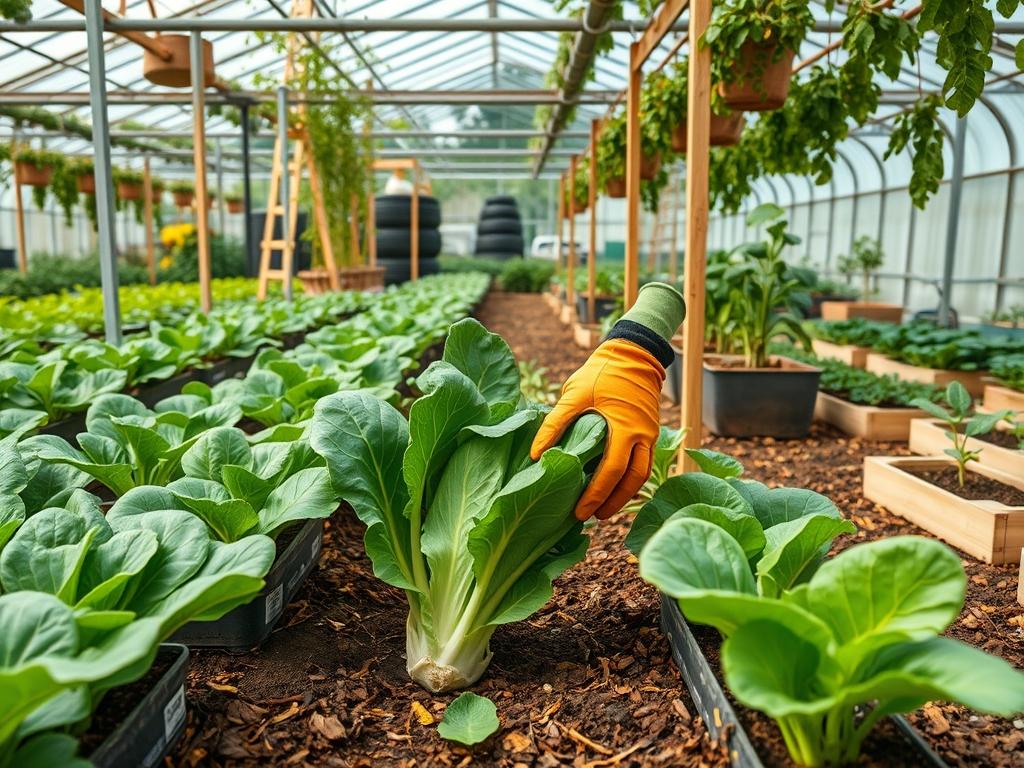
Integrating functional edible elements into high end landscape design requires a sophisticated balance between aesthetic structuralism and horticultural science. When we approach an outdoor environment with the specific goal of cultivating crops such as Brassica rapa subsp. chinensis, we are moving beyond simple gardening and into the realm of the curated potager. The landscaping challenge lies in maintaining curb appeal and a clean visual silhouette while supporting the high nutrient and water demands of leafy greens. Within a modern residential context, this involves careful consideration of the site microclimate, soil composition, and the integration of harvestable assets into the broader architectural vision. A well designed landscape should not only provide a bounty but should also enhance the property value through permanent hardscape features and thoughtful spatial organization. Achieving the perfect result, culminating in the act of Picking Fresh Bok Choy for your kitchen, begins with a blueprint that prioritizes both drainage and accessibility.
Landscape Design Principles for Edible Environments
The foundation of a successful edible landscape is grounded in the principle of formal symmetry. By utilizing a grid based layout, the designer can create a sense of order that prevents the vegetable elements from appearing chaotic or overgrown. Focal points are essential here; a central obelisk or a high quality stone birdbath can anchor the space, drawing the eye toward a structured center while the crops grow in surrounding quadrants. Elevation layers are equally vital. By incorporating raised beds constructed from 4×4 pressure treated timber or weathering steel, we can create vertical interest and define clear boundaries between the lawn and the production zones.
Irrigation planning must be integrated into the initial site design rather than added as an afterthought. For a leafy green like bok choy, which requires consistent moisture to prevent bolting, a low pressure drip irrigation system with 0.5 GPH emitters is the professional standard. This ensures water is delivered directly to the root zone, reducing evaporation and preventing the foliage from becoming damp, which can lead to fungal issues. Walkways are another critical design element. Using permeable pavers or crushed granite ensures the gardener can access the plants without compacting the soil, creating a clean path for the specific task of Picking Fresh Bok Choy without tracking mud into the home. Visual balance is maintained by surrounding these edible zones with perennial borders of Buxus microphylla or Lavandula, providing a green frame that remains attractive even after the harvest is complete.
Plant and Material Selection
The following table outlines the technical specifications for integrating edible and ornamental species into a cohesive landscape plan.
| Plant Type | Sun Exposure | Soil Needs | Water Demand | Growth Speed | Maintenance Level |
| :— | :— | :— | :— | :— | :— |
| Bok Choy (Shanghai) | Full Sun to Part Shade | Loamy, pH 6.0-7.5 | High (Consistent) | Fast (45-60 days) | Moderate |
| Buxus (Boxwood) | Full Sun to Shade | Well-Drained | Medium | Slow | Low (Shearing) |
| Rosmarinus (Rosemary) | Full Sun | Sandy/Gravelly | Low | Moderate | Low |
| Tall Fescue Grass | Full Sun | Varied | Medium | Fast | Moderate (Mowing) |
| Dwarf Citrus | Full Sun | Acidic, Well-Drained | Medium | Moderate | High (Feeding) |
| Heuchera (Coral Bells) | Part Shade | Rich, Humid | Medium | Moderate | Low |
Implementation Strategy
The transition from a conceptual drawing to a functional backyard starts with professional site grading. One must ensure a 2 percent slope away from the home’s foundation to prevent water pooling. Once the grade is established, the construction of raised beds can begin. These beds should be at least 12 inches deep to allow for maximum root expansion and filled with a custom soil blend consisting of 60 percent topsoil, 30 percent organic compost, and 10 percent perlite.
Proper edging is the hallmark of a professional installation. Using 14-gauge steel edging creates a crisp line between the mulch and the turf, preventing grass from invading the edible beds. Once the beds are prepped, the planting can occur. For those interested in Picking Fresh Bok Choy, the spacing is critical; seedlings should be placed 6 to 10 inches apart to allow for adequate airflow which minimizes pest pressure. After planting, apply a 3-inch layer of organic cedar mulch or straw to the surface. This mulch layer serves three purposes: it suppresses weeds, regulates soil temperature, and keeps the lower leaves of the produce clean for harvest. Finally, the installation of a French drain system may be necessary if the site has heavy clay soil, ensuring that excess winter rains do not drown the perennial root systems.
Common Landscaping Failures
The most frequent error in integrated edible landscaping is poor drainage management. When water stagnates around the root zone, it leads to anaerobic conditions that promote Pythium or root rot. Professional designers avoid this by testing the percolation rate of the soil before any plants are installed. Another common failure is root overcrowding. Many homeowners underestimate the mature size of ornamental shrubs planted near edible beds, leading to a competition for nutrients and sunlight that stunts the vegetable growth.
Improper spacing and soil compaction also plague many backyard projects. If the walkways are not clearly defined, foot traffic will eventually compress the soil, destroying the pore space necessary for oxygen to reach the roots. In irrigation, the biggest mistake is “cycle and soak” mismanagement. Using a spray head meant for turf on a vegetable bed can damage delicate leaves and lead to uneven moisture distribution. Instead, professional consultants insist on dedicated zones for various plant types to ensure each gets the specific volume of water required.
Seasonal Maintenance
Landscape management is a year round commitment that changes with the solar cycle. In the Spring, the focus is on soil revitalization. This involves working a 1-inch layer of fresh compost into the topsoil and checking the irrigation lines for any leaks or clogs caused by winter freezes. This is also the primary time for planting the first round of crops intended for early summer picking.
During the Summer, maintenance shifts to hydration and pest surveillance. As temperatures rise, the evapotranspiration rate increases, requiring the irrigation controller to be adjusted for more frequent intervals. Mulch depth should be inspected and replenished to maintain the cooling effect on the soil. In the Autumn, the landscape is prepped for the cooler months. This is often the prime season for Picking Fresh Bok Choy, as the cooler nights enhance the sweetness of the stalks. Once the final harvest is complete, cover crops like Crimson Clover can be sown to protect the soil from winter erosion. In Winter, the focus turns to hardscape care and dormant pruning. It is the time to sharpen bypass pruners, clean shovels, and inspect retaining walls for any sign of shifting or hydrostatic pressure damage.
Professional Landscaping FAQ
How do I prevent pests in my edible landscape without using harsh chemicals?
Utilize integrated pest management by planting marigolds and alliums as companion plants. These species naturally deter common insects. Additionally, installing a fine bird netting over the edible zones can protect your leafy greens from avian damage and larger pests.
What is the best material for raised bed construction?
For longevity and safety, use Western Red Cedar or ACQ-treated lumber. These materials resist rot for many years while remaining safe for food production. For a modern aesthetic, powder-coated aluminum or weathering steel offer sleek lines and extreme durability in various climates.
How does soil pH affect my harvest quality?
Soil pH dictates nutrient availability. For most greens, a pH between 6.0 and 7.0 is ideal. If the soil is too acidic, plants cannot take up magnesium; if too alkaline, iron becomes unavailable, leading to yellowed leaves and poor growth.
Can I integrate bok choy into a standard ornamental flower bed?
Yes, this is known as “intercropping.” The bold, structural leaves of the plant create a beautiful texture when paired with pansies or snapdragons. Ensure the soil in the flower bed is high in organic matter to support the vegetable’s rapid growth.
What are the signs that it is time for picking fresh bok choy?
Observe the base of the plant. When the stalks are firm and the plant has reached 6 to 8 inches in height for baby varieties, it is ready. Use a serrated harvesting knife to cut the plant at the soil line for a clean finish.