
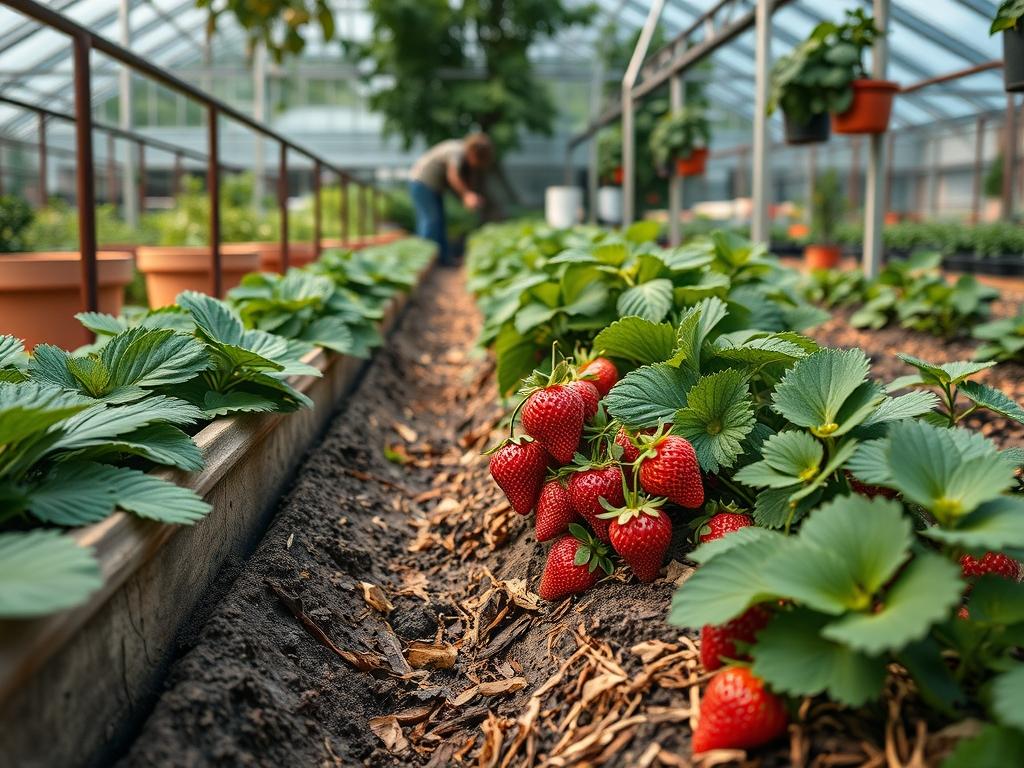
Integrating edible elements into a luxury landscape requires a delicate balance between aesthetic architectural standards and the practical requirements of the harvest. When a client requests a garden optimized for Picking Ripe Strawberries, the landscape architect must look beyond the simple planter box. The challenge lies in creating an environment where the fruit is accessible, protected from ground-level pathogens, and positioned to reach peak sugar content without suffering physical damage from poor handling or environmental stress. A well-designed edible landscape enhances curb appeal through varied textures and consistent green cover while serving as a functional outdoor pantry. Successful integration depends on understanding the site’s microclimate, specifically how sun exposure and airflow interact with the soft tissues of the fruit. By prioritizing ergonomics and soil health, we ensure that the act of harvesting becomes a seamless part of the outdoor living experience rather than a taxing chore.
Landscape Design Principles
To achieve a professional-grade fruit garden, we apply the same principles used in traditional ornamental design, beginning with elevation and focal points. Elevation layers are critical for berry production. By utilizing Raised beds at a height of 18 to 24 inches, we bring the fruit closer to the harvester, which is the primary defense against bruising. When a grower has to reach too far into a deep bed, they are more likely to grip the fruit too firmly or drop it. We recommend a maximum bed width of 3 feet if accessible from both sides, ensuring no plant is more than 18 inches from the edge.
Symmetry and visual balance play a role in how these beds sit within the larger property. Placing strawberry tiers as a border for a primary Walkway creates a formal transition between hardscaped patios and wilder garden zones. We often use Natural stone or Pressure-treated timber to define these boundaries, providing a clean line that separates the lush foliage from the transit path. Irrigation planning must be subterranean or ground-level. Overhead watering is a significant design failure in fruit landscapes because it increases the weight of the berry and softens the skin, making the process of Picking Ripe Strawberries without causing damage much more difficult. We specify Drip irrigation lines buried beneath 2 inches of mulch to keep the root zones hydrated while keeping the fruit dry and firm.
Plant and Material Selection
| Plant Type | Sun Exposure | Soil Needs | Water Demand | Growth Speed | Maintenance Level |
| :— | :— | :— | :— | :— | :— |
| June-bearing Strawberries | Full Sun (8+ hours) | Loamy, Well-drained | Moderate | Fast (Runners) | High (Pruning) |
| Everbearing Strawberries | Full Sun | High Organic Matter | Consistent | Medium | Moderate |
| Day-neutral Strawberries | Partial to Full Sun | Neutral pH (6.0-7.0) | High | Slow | Moderate |
| Pine Straw Mulch | N/A | Acidic influence | Low (Breathable) | N/A | Annual top-dress |
| Creeping Thyme | Full Sun | Sandy/Rocky | Low | Fast | Low (Companion) |
| Aluminum Edging | N/A | Structural | None | N/A | Very Low |
Implementation Strategy
The transition from blueprint to backyard requires a methodical approach to soil Preparation and site grading. We begin by assessing the Drainage of the designated area. Strawberries cannot tolerate “wet feet,” so the site must be graded at a 2 percent slope away from the home’s foundation and toward a drainage swale or French drain. Once the grading is established, we install the Retaining walls for the raised beds. These structures should be backfilled with a custom soil mix consisting of 40 percent sandy loam, 40 percent compost, and 20 percent peat moss.
After the soil has settled, we install the Drip irrigation system with emitters spaced every 6 inches. This ensures uniform moisture distribution without the risk of crown rot. For the actual planting, we space the Strawberry crowns approximately 12 inches apart in a staggered pattern. This provides enough air circulation to prevent mold, which is a common cause of fruit softening and subsequent bruising during the pick. To protect the developing berries, a layer of Pine needles or Clean wheat straw is applied. This material creates a physical barrier between the fruit and the damp soil. When the time comes for Picking Ripe Strawberries, the fruit will be resting on a soft, dry cushion rather than abrasive earth, preserving the delicate skin and ensuring a professional-quality harvest.
Common Landscaping Failures
One of the most frequent errors in edible landscaping is root overcrowding. When plants are placed too closely together to achieve an “instant” lush look, the competition for nutrients leads to smaller, weaker fruit that is prone to tearing. Furthermore, poor spacing restricts hand movement during harvest, forcing the picker to push aside dense foliage and accidentally crush ripening berries. Another critical failure involves soil compaction. If Walkways are not clearly defined with Pavers or Crushed stone, foot traffic will compress the soil near the root zones, leading to poor drainage and nutrient lockout.
Irrigation inefficiency also ranks high among common mistakes. Many homeowners use oscillating sprinklers that saturate the leaves and fruits. This moisture promotes the growth of botrytis, also known as gray mold, which tenderizes the fruit to the point where it bruises at the slightest touch. Finally, a failure to manage “runners” or stolons can turn a structured garden into a chaotic mess. Without regular maintenance with Pruning shears, the energy of the mother plant is diverted away from fruit production and into vegetative expansion, resulting in a high volume of low-quality, easily damaged berries.
Seasonal Maintenance
Landscape management is a year-round commitment that changes with the solar cycle. In the Spring, the focus is on “uncovering.” We remove the heavy Winter mulch once the threat of a hard frost has passed to allow the soil to warm up. This is also the time to apply a balanced 10-10-10 fertilizer to jumpstart leaf development. As we move into Summer, the priority shifts to moisture management and harvest technique. We instruct clients on the proper mechanics of Picking Ripe Strawberries; use the thumb and forefinger to pinch the stem one inch above the fruit rather than pulling the berry itself. This technique prevents the internal structure of the strawberry from collapsing.
In Autumn, the garden transition begins. We remove old, woody plants that have passed their three-year peak production cycle and replace them with new Runner plants that have been tucked into the soil throughout the summer. The beds should be cleared of all debris to prevent pests from over-wintering. As Winter approaches, a thick layer of Straw or Refined mulch, roughly 4 inches deep, is applied over the crowns once the ground has frozen. This prevents “frost heaving,” where the freeze-thaw cycle pushes the plants out of the ground, exposing the roots to killing temperatures.
Professional Landscaping FAQ
How does elevation affect the quality of the strawberry harvest?
Raised beds or containers provide superior drainage and airflow. This keeps the fruit drier and firmer, which significantly reduces the risk of bruising when you are Picking Ripe Strawberries compared to ground-level plantings where moisture accumulates.
What is the best mulch for a professional edible garden?
Pine straw is highly recommended by landscape architects. It is acidic, which strawberries prefer, and its needle-like structure allows water to pass through easily while providing a soft, dry surface that protects the berries from soil-borne abrasions and pathogens.
Can I integrate strawberries into a high-traffic curb appeal area?
Yes. Use Day-neutral varieties as a border plant along Stone walkways. They offer consistent green foliage and white blossoms throughout the season, providing a tidy, intentional look that combines ornamental beauty with the functional benefit of an easy harvest.
How do I prevent fruit rot in a high-humidity climate?
Ensure maximum airflow by spacing plants at least 12 inches apart. Use Drip irrigation instead of overhead sprayers. Keeping the foliage and fruit dry is the most effective way to maintain fruit firmness and prevent pre-harvest bruising.
What tools are essential for a bruise-free strawberry harvest?
Avoid using large garden tubs. Instead, use a Shallow harvest basket or a Crate that allows for a single layer of fruit. For the actual pick, use small Snips or your fingernails to sever the stem without touching the berry.