
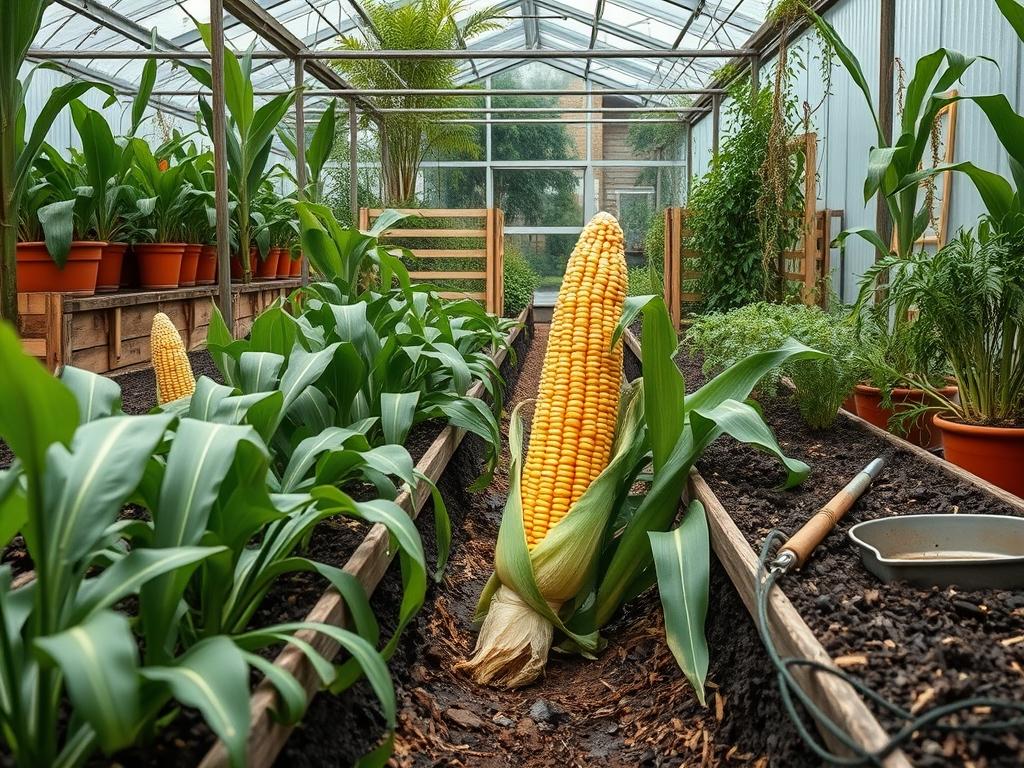
Integrating traditional agricultural elements into a modern landscape requires a delicate balance between utility and aesthetic appeal. When a homeowner decides to incorporate Sweet Corn into their suburban or urban garden, they are not merely planting a vegetable; they are introducing a structural vertical element that dictates the flow of the entire outdoor environment. The primary challenge lies in the dual-purpose nature of the plant, specifically when the goal involves harvesting garden corn husks while simultaneously ensuring the edible crop remains protected and viable. Effective landscape architecture treats these corn rows as a living screen or a seasonal focal point, rather than a hidden utility patch. This approach demands a deep understanding of site topography, wind patterns, and local microclimates to ensure the stalks reach their full height of 6 feet to 8 feet without compromising the visual harmony of the property. For a landscape to remain functional and beautiful, the harvest process must be surgical, preserving the protective layers of the ear to prevent pests and desiccation from ruining the internal kernels.
Landscape Design Principles
In the realm of high end residential landscaping, corn serves as a powerful tool for establishing elevation layers and visual rhythm. We often use the verticality of Zea mays to create temporary privacy barriers that define the boundaries of outdoor “rooms.” To achieve symmetry, corn should be planted in blocks rather than single rows. This design choice is not just for visual weight; it is a functional necessity for wind pollination. A block of at least four rows ensures that pollen from the tassels reaches the silks effectively, resulting in full, uniform ears. Framing these blocks with low-lying perennials or a crisp stone border creates a sense of intentionality, signaling that the corn is a planned architectural feature rather than an accidental growth.
Focal points are established by positioning the tallest stalks at the rear of a tiered planting bed. This creates a backdrop for mid-range textures like Lavender or Coneflowers. When planning the irrigation for these areas, the designer must account for the high water demand of the crop while maintaining a drainage system that prevents sitewide pooling. Grading the area with a 1 percent to 2 percent slope away from the primary residence is essential. Walkways between the corn blocks should be wide enough, roughly 3 feet, to allow for easy access during the harvest. These paths can be finished with organic cedar mulch or decomposed granite to provide a clean, professional aesthetic that contrasts with the lush green of the foliage.
Plant and Material Selection
The success of an edible landscape depends on selecting varieties and materials that thrive in the specific soil chemistry of the site. Below is a selection of plants and materials curated for a cohesive, productive garden environment.
| Plant/Material | Sun Exposure | Soil Needs | Water Demand | Growth Speed | Maintenance |
| :— | :— | :— | :— | :— | :— |
| Sweet Corn | Full Sun | Rich, Loamy | High | Fast | Moderate |
| Pole Beans | Full Sun | Well-Drained | Moderate | Fast | Low |
| Winter Squash | Full Sun | Compost-Rich | Moderate | Medium | Low |
| Marigolds | Full Sun | Any | Low | Fast | Minimal |
| Hardwood Mulch | N/A | N/A | N/A | N/A | Low |
| Drip Tubing | N/A | N/A | N/A | N/A | Low |
Implementation Strategy
Planning the layout begins with a thorough site analysis to identify the sunniest quadrant of the property. Corn requires a minimum of six hours of direct sunlight to develop the sugars necessary for the crop and the sturdy fibers required for high quality husks. Once the location is established, the soil must be amended with a 3-inch layer of well-rotted compost to provide the nitrogen necessary for rapid growth. Use a garden rake to level the surface, ensuring that the topography allows for even water distribution.
The next step involves the installation of the irrigation system. For corn, a drip irrigation setup is superior to overhead sprinklers because it delivers water directly to the root zone, keeping the foliage dry and reducing the risk of fungal infections. Space the emitters at 12-inch intervals along the rows. When planting, seeds should be placed 1 inch to 2 inches deep. As the stalks grow, professional edging using steel bender board or natural stone will keep the corn block contained and prevent the root systems from encroaching onto adjacent lawn areas.
When the time comes for harvesting garden corn husks, the strategy changes from growth to preservation. To save the crop while collecting husks for culinary use or crafts, wait until the kernels are in the milk stage. Use sharp bypass pruners or a serrated garden knife to carefully peel back only the outermost layers of the husk. It is vital to leave the inner layers intact to shield the kernels from the sun and insects. If the goal is to harvest dry husks, the corn must remain on the stalk until the silks have turned brown and the outer leaves are papery. In this scenario, the entire ear is removed using a downward pulling motion, and the husks are stripped after the ear has been detached from the main stem.
Common Landscaping Failures
One of the most frequent errors in garden planning is improper drainage. Corn cannot tolerate “wet feet,” and standing water will quickly lead to root rot, causing the tall stalks to topple during summer storms. If the soil is naturally heavy clay, the installation of a French drain or the construction of raised beds at least 12 inches high is mandatory. Another failure is soil compaction. Frequent foot traffic near the root zones of the corn can compress the soil, preventing oxygen from reaching the roots. Designers should always include designated stepping stones or mulched paths to direct traffic away from the growing medium.
Pollination gaps are another common issue that ruins the crop. When corn is planted in a single, long line along a fence, the wind often carries the pollen away from the target silks. This results in “skip,” where ears have missing kernels. To avoid this, always design the corn in a square or rectangular grid. Finally, neglect of nitrogen levels can lead to stunted, yellowed plants. Because corn is a heavy feeder, a secondary application of high-nitrogen fertilizer when the stalks are 18 inches tall is a professional standard that ensures a robust harvest of both corn and husks.
Seasonal Maintenance
Landscape management is a year round commitment that evolves with the seasons. In the spring, the focus is on soil preparation and the installation of weed barriers. Once the soil temperature reaches 60 degrees Fahrenheit, the first round of planting can begin. During the summer, the primary task is water management and monitoring for the corn earworm. Using a small dropper to apply neem oil or mineral oil to the silks can protect the crop without the use of harsh synthetic chemicals.
Autumn is the peak season for harvesting garden corn husks. This is the time to evaluate the structural integrity of the stalks. If the weather forecasts predict high winds, the stalks may need to be secured with garden twine and sturdy stakes. After the harvest is complete, the remaining stalks can be left as a decorative element for the fall landscape or shredded into the compost pile. In winter, the garden bed should be cleared of all debris to prevent pathogens from overwintering. Applying a 4-inch layer of shredded leaves or straw over the site will protect the soil structure and prepare the landscape for the next spring cycle.
Professional Landscaping FAQ
How do I prevent corn from looking messy in my front yard?
Incorporate the corn into a structured garden bed with formal edging and ornamental borders. Surround the stalks with colorful annuals like Zinnia to provide a polished, intentional appearance that enhances your home’s curb appeal throughout the growing season.
Can I grow corn in large containers or pots?
Yes, but you must select dwarf varieties and use containers holding at least 10 gallons of soil. Ensure the pots are heavy enough to prevent tipping and use a high quality potting mix supplemented with slow release fertilizer for best results.
What is the best way to dry husks for later use?
After harvesting garden corn husks, spread them out in a single layer on a wire drying rack in a shaded, well-ventilated area. Avoid direct sunlight, which can bleach the color and make the fibers brittle and difficult to work with later.
Why are my corn ears small and poorly developed?
This is often the result of insufficient water or a lack of nitrogen during the peak growth phase. Ensure your drip irrigation is functioning correctly and provide a nitrogen-rich side-dressing once the stalks reach knee height to support larger ear development.
How do I keep squirrels and raccoons away from the crop?
Install a motion-activated sprinkler or a low-voltage electric fence around the perimeter of the crop. These methods are highly effective at deterring wildlife without compromising the aesthetic beauty of your professionally designed landscape or harming the local ecosystem.