
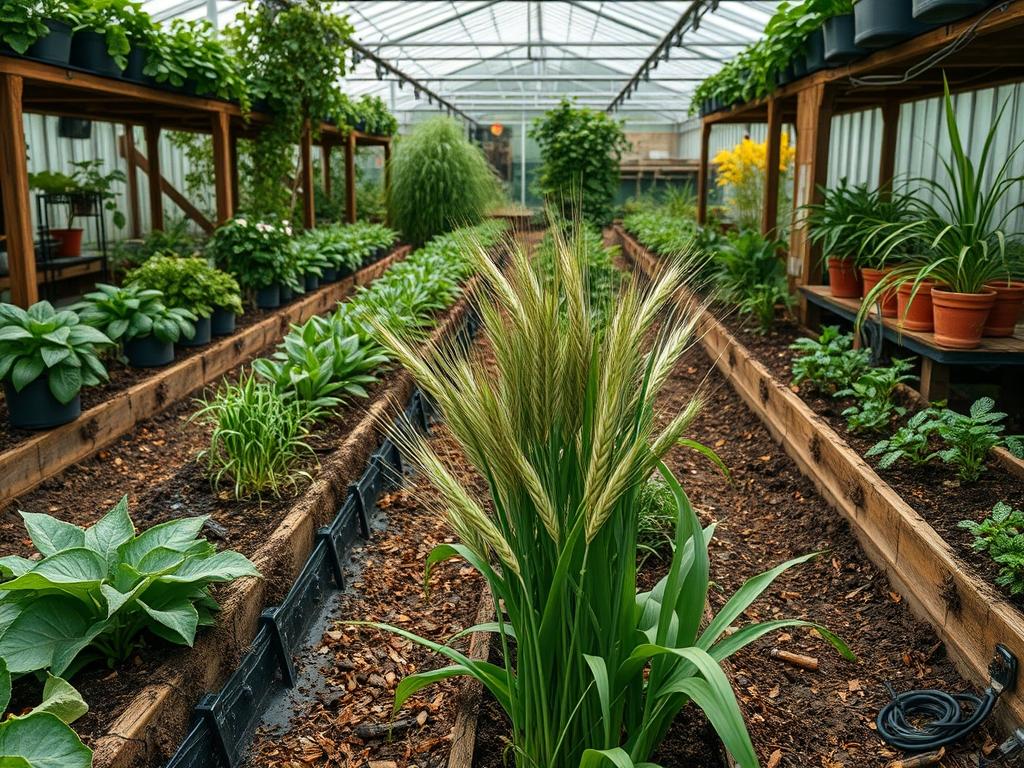
Integrating cereal grains into a residential or commercial landscape requires a shift in perspective, moving from purely decorative horticulture to functional, agrarian design. When we discuss picking fresh wheat stalks as a traditional practice, we are really discussing the culmination of a deliberate cycles of site preparation, water management, and timing. For a landscape architect, the challenge lies in balancing the sprawling, often untamed aesthetic of Triticum aestivum with the sharp lines and structured requirements of modern outdoor living. Integrating wheat requires a deep understanding of microclimates and soil chemistry, as these stalks are sensitive to moisture levels and wind patterns. From a curb appeal standpoint, a well managed patch of wheat offers a kinetic quality that few other plants can provide. The way the stalks catch the light and move with the wind creates a sensory experience that standard turf or mulch beds simply cannot replicate.
The ultimate goal of such a landscape is to create a seamless transition between functional harvest and visual beauty. This means the designer must plan for the lifecycle of the plant, ensuring that the area remains attractive even after the picking process is complete. We look at the harvest not as a removal of the landscape, but as a seasonal pruning that reveals the structural integrity of the site. Traditional methods of picking depend heavily on the physical condition of the grain and the stalk, which in turn depends on the drainage and sun exposure provided by the landscape design. By treating wheat as a premium ornamental grass that also provides a utilitarian yield, we can achieve a landscape that feels both grounded in history and refined in its execution.
Landscape Design Principles
Symmetry and focal points are essential when designing a space intended for wheat cultivation. Unlike a wild field, a landscape designed for picking must prioritize accessibility. We often use the principle of golden ratios to determine the size of wheat plots relative to hardscaped areas. A large, sweeping curve of wheat can act as a soft backdrop to more structured elements like a Stone Retaining Wall or a specialized Outdoor Kitchen. The height of the wheat provides a natural elevation layer, creating a middle ground between low lying groundcovers and tall canopy trees. This layering is vital for visual balance, preventing the landscape from feeling flat or one dimensional.
Irrigation planning for wheat requires a sophisticated approach. Traditional flood irrigation is rarely practical in a curated backyard, so we transition to Drip Irrigation systems that mimic natural groundwater patterns. The goal is to keep the roots hydrated without saturating the stalks, which can lead to fungal issues and lodging. Walkways should be integrated directly into the planting beds using Crushed Granite or Flagstone. These paths serve a dual purpose: they allow the gardener to access the center of the crop for picking without compacting the soil, and they provide the geometric contrast necessary to make the wheat look intentional rather than accidental. Visual balance is maintained by pairing the fine texture of the wheat with broader leafed plants or bold architectural features.
Plant and Material Selection
Choosing the right variety of wheat is as much about the final harvest as it is about the growth habit during the season. We select species based on their structural integrity and their color profile at maturity.
| Plant Type | Sun Exposure | Soil Needs | Water Demand | Growth Speed | Maintenance Level |
| :— | :— | :— | :— | :— | :— |
| Hard Red Winter Wheat | Full Sun | Well-drained Loam | Moderate | Medium | Low |
| Durum Wheat | Full Sun | Heavy Clay/Loam | Low | Fast | Moderate |
| Soft White Wheat | Partial to Full | Rich Organic | Moderate | Fast | Moderate |
| Common Barley | Full Sun | Sandy/Rocky | Very Low | Rapid | Low |
| Einkorn Wheat | Full Sun | Poor Soil/Dry | Low | Slow | Very Low |
In addition to the plants themselves, material selection for the surrounding environment is critical. We utilize Steel Edging to create crisp boundaries that prevent the wheat from encroaching on manicured lawn areas. For the soil, a mix of Topsoil, Compost, and Course Sand ensures the drainage necessary for healthy stalk development. Tools for picking are also part of the material considerations. Traditionally, a Hand Sickle or Hand Scythe is used for the harvest. These tools must be kept sharp to ensure clean cuts, which prevents the remaining plant matter from fraying and attracting pests.
Implementation Strategy
The implementation begins with rigorous site grading. Wheat will not tolerate standing water; therefore, the land must be pitched at a minimum of two percent away from any structures. We start by clearing the area of all debris and existing vegetation. Once the grade is established, we install Drainage Pipes or French Drains if the site has a high water table. After the infrastructure is in place, the soil is amended with Organic Matter to a depth of 6 Inches. This creates the nutrient base necessary for the wheat to grow strong, upright stalks that are easy to pick.
When it comes to the actual layout, we recommend planting in rows spaced 8 Inches apart. This spacing allows for adequate airflow and makes the traditional method of hand picking much more efficient. As the wheat reaches the dough stage, which is the point where the grain is firm but still yields to a fingernail, the harvest begins. We use the traditional method of grasping a handful of stalks and cutting them roughly 4 Inches above the soil line. This height protects the crown of the plant and provides a neat, stubble like appearance in the garden. Edging the beds with Tumbled Cobblestone or Cedar Planks provides a clean finish that defines the space throughout the year.
Common Landscaping Failures
The most frequent failure in wheat based landscaping is improper drainage. If the soil remains saturated, the stalks will weaken at the base, causing them to fall over in a phenomenon known as lodging. This makes picking nearly impossible and ruins the aesthetic value of the garden. Another common mistake is root overcrowding. While it is tempting to plant wheat densely for a lush look, overplanting restricts airflow and promotes powdery mildew. Designers must adhere to strict spacing guidelines to ensure each plant has enough room to thrive.
Soil compaction is another significant hurdle. If the pathways are not clearly defined, foot traffic will compress the soil, air pockets will collapse, and the wheat will suffer from stunted growth. We also see many homeowners fail with irrigation timing. Wheat needs water during its vegetative state, but once it begins to turn golden and dry, water should be significantly reduced. Continuing to irrigate heavily during the ripening phase will lead to grain rot and brittle stalks. Finally, neglecting the removal of volunteer weeds can quickly turn a sophisticated wheat garden into an unmanaged mess.
Seasonal Maintenance
In the spring, maintenance focuses on Nitrogen application and weed suppression. This is the time to ensure the Irrigation System is functioning correctly and that the young shoots are not being shaded out by faster growing invasive species. As summer approaches, the focus shifts to monitoring the moisture content of the grain. This is the peak season for picking, and the timing must be precise. Traditional methods suggest picking when the stalks have turned from green to a pale gold and the node directly below the grain head has dried out.
Autumn is the season for residue management. After the final harvest, the remaining stalks can be tilled back into the soil or cut low to create a winter mulch. This is also the time to test the soil pH and add Lime or Sulfur as needed to balance the chemistry for the following year. In winter, the landscape should be kept clear of heavy snow accumulation if possible, though winter wheat varieties will tolerate a dormant period under a snow blanket. Protecting the soil from erosion during these dormant months is key, often achieved through the use of Burlap Netting or a light layer of Straw Mulch.
Professional Landscaping FAQ
How do I know the wheat is ready for traditional picking?
Test the grain by pressing it with your thumbnail. If the grain is firm and leaves a slight dent without squirting liquid, it has reached the dough stage. The stalk should be golden and the nodes dry to the touch.
Can wheat grow in areas with heavy shade?
Wheat requires a minimum of six to eight hours of direct sunlight daily. In shaded areas, the stalks will become leggy and weak, making them prone to falling over and reducing the quality of the fresh stalks for picking.
What is the best tool for a small scale wheat harvest?
A traditional Hand Sickle with a serrated blade is the most efficient tool for small landscape plots. It allows for precision cutting and enables the gardener to gather uniform bundles of stalks with one hand while cutting with the other.
Does wheat require a lot of fertilizer?
Wheat is a moderate feeder. A balanced application of Nitrogen, Phosphorus, and Potassium at the start of the growing season is usually sufficient. Excessive nitrogen should be avoided, as it can lead to overly tall stalks that lack structural strength.
How do I prevent the wheat from spreading into my lawn?
Use a permanent physical barrier like Deep Metal Edging or a Concrete Curb. Wheat is an annual grass and spreads primarily by seed, so harvesting the stalks before the seeds drop will also help control its spread.