
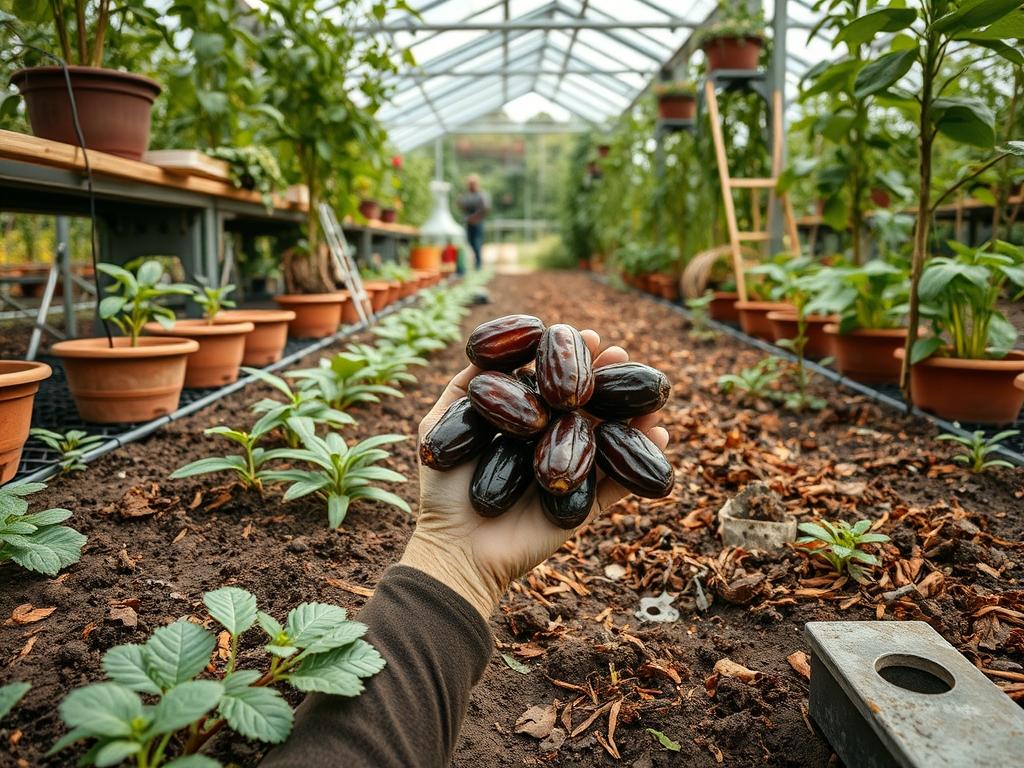
Landscaping at a professional level requires an understanding of verticality and the long term trajectory of every specimen planted within a site. When integrating towering species like the Phoenix dactylifera into a residential or commercial plan, the architect must look beyond the immediate aesthetic to consider the functional realities of future maintenance and harvest. The act of Picking Fresh Dates is not merely a seasonal chore but a logistical operation that dictates the spacing, ground stability, and canopy clearance of the entire outdoor environment. Because these palms can reach heights of 50 feet or more, the landscape must be designed to accommodate High Ladders, Aerial Lifts, and the necessary turning radii for maintenance machinery. A failure to plan for this vertical scale results in a landscape that is beautiful in its youth but becomes a liability as it matures. Designers must balance the curb appeal of these majestic focal points with the pragmatic necessity of accessing the fruit and foliage safely. This involves calculating the load bearing capacity of the soil near the trunk and ensuring that secondary plantings do not obstruct the path of heavy equipment. By treats the harvest cycle as a primary design constraint, we create environments that are both productive and enduring.
Landscape Design Principles
A successful landscape relies on a hierarchy of visual elements that lead the eye through the space while providing functional zones for movement and relaxation. Symmetry often serves as the backbone of formal designs, where mirrored rows of Date Palms or architectural shrubs create a sense of order and grandeur. However, true visual balance is achieved by counteracting high vertical elements with varied elevation layers. This means placing mid-sized species and groundcovers in a way that softens the transition from the towering canopy to the pedestrian walkway. We utilize focal points to anchor the design, often choosing a specimen tree or a stone water feature that captures attention from the primary viewing angles of the home.
Elevation planning is critical when dealing with tall specimens that require regular access. If a site features significant grading, the placement of large trees must occur on level plateaus to ensure that Heavy Duty Extension Ladders can be positioned securely during the season for Picking Fresh Dates. Sloped terrain complicates the use of climbing equipment and increases the risk of accidents during fruit thinning or harvesting. Furthermore, irrigation planning must account for the high water demand of large palms while preventing oversaturation of the surrounding root zones of smaller, drought-tolerant plants. We often utilize Zoned Irrigation Systems to deliver high volumes of water to the larger trees through Bubbler Emitters while using separate Drip Lines for the perimeter shrubs.
Walkways should be constructed with a minimum width of 4 feet to allow for the transport of tools and harvested produce. In professional settings, we prefer using Permeable Pavers or Crushed Granite to provide a stable surface that also allows for natural drainage. This prevents the “bathtub effect” where water collects around the base of the tree, leading to root rot. By integrating these elevation and structural considerations into the initial blueprint, the landscape architect ensures that the garden remains manageable for decades.
Plant and Material Selection
| Plant Type | Sun Exposure | Soil Needs | Water Demand | Growth Speed | Maintenance Level |
| :— | :— | :— | :— | :— | :— |
| Phoenix dactylifera | Full Sun | Well-drained Loam | High during fruit | Slow to Moderate | High (Harvesting) |
| Agave Americana | Full Sun | Sandy, Rocky | Low | Slow | Very Low |
| Bougainvillea | Full Sun | Gritty, Acidic | Moderate | Fast | Moderate (Pruning) |
| Mexican Feather Grass | Full Sun | Poor, Dry | Very Low | Fast | Low |
| Mediterranean Fan Palm | Partial to Full | Adaptable | Low to Moderate | Slow | Low |
| Star Jasmine | Partial Shade | Rich, Organic | Moderate | Moderate | Moderate |
Selection of materials also extends to the hardscaping components. Polished Pebbles, Decomposed Granite, and Wood Chips serve as essential mulch layers that regulate soil temperature and moisture. For high-traffic areas where ladders are frequently used, a compactable material like Stabilized DG (Decomposed Granite) provides the necessary firm footing to prevent ladder feet from sinking into the earth during Picking Fresh Dates.
Implementation Strategy
Implementing a professional garden layout begins with precise site grading. We use Laser Levels to ensure that the ground slopes away from the home at a rate of at least 2 percent to facilitate proper drainage. Once the grade is established, we mark the locations for the largest specimens first. For Date Palms, this involves digging a hole that is at least twice as wide as the root ball but no deeper than the original container depth. We often amend the backfill soil with Agricultural Gypsum to improve soil structure if high clay content is present.
Edging is the next step in the implementation process. We use Steel Edging or Concrete Curbing to create clean lines between lawn areas and planting beds. This prevents invasive grass species from encroaching on the root zones of the primary focal plants. After the primary trees are installed, a 4 inch layer of Organic Mulch is applied across the planting beds. This layer should be kept a few inches away from the trunks to prevent moisture-induced fungal infections.
Hardscaping, such as Retaining Walls built from Natural Limestone or Pre-cast Blocks, must be engineered to withstand the lateral pressure of the soil. If the wall is taller than 3 feet, we include Perforated Drain Pipe behind the wall, surrounded by 3/4 inch Clean Stone, to alleviate hydrostatic pressure. This structural integrity is paramount when the landscape must support the weight of a worker on a ladder reaching for the canopy.
Common Landscaping Failures
The most frequent mistake in landscape installation is poor drainage. When water pools around the base of a tree, it displaces oxygen in the soil, leading to anaerobic conditions that suffocate roots. This is often exacerbated by soil compaction, which occurs when heavy machinery is driven over wet soil during the construction phase. Once the soil is compacted, it loses its porosity, making it nearly impossible for roots to expand or for water to penetrate.
Another common failure is root overcrowding. Homeowners often plant for immediate “fullness” without considering the mature spread of the species. A Date Palm requires significant space not just for its roots, but for its fronds. If planted too close to a structure, the fronds will scrape against the siding or roof, causing damage. Furthermore, improper spacing makes the process of Picking Fresh Dates nearly impossible, as there is no room to lean a ladder at a safe angle. Irrigation inefficiencies also plague many gardens, with Spray Heads often hitting the trunks of trees rather than the soil. This constant moisture on the bark can lead to cankers and rot.
Seasonal Maintenance
Spring is the season for growth stimulation. We apply a Timed-release Fertilizer with a high Potassium and Magnesium content to support the developing fruit bunches. This is also the time to inspect the irrigation system for leaks and to clean any clogged Drip Emitters. Testing the soil pH during this period allows for minor adjustments before the heat of summer sets in.
Summer maintenance focuses on water management and fruit protection. In regions where Picking Fresh Dates is a primary activity, the fruit bunches must be thinned and bagged with Mesh Netting to protect them from birds and insects. This requires the first of several trips up the High Ladders. Regular deep watering is essential during this peak heat period to ensure the fruit remains plump and the tree remains hydrated.
Autumn is the primary harvest window. Workers should use Safety Harnesses and Serrated Pruning Saws to remove the ripe bunches. Once the harvest is complete, spent flower stalks and old fronds should be removed to improve airflow through the canopy. Winter maintenance involves a reduction in irrigation and the application of a fresh layer of Mulch to insulate the roots against cooler temperatures. Pruning should be kept to a minimum in winter to avoid stimulating new growth that could be damaged by frost.
Professional Landscaping FAQ
Why is soil grading important for tall trees?
Proper grading ensures that the ground is level and stable for heavy maintenance equipment. It also directs excess water away from the root flare, preventing rot and fungal growth that can destabilize the tree’s structural integrity over time.
What is the best irrigation for large palms?
Large palms thrive with Bubbler Emitters or Drip Rings that deliver high volumes of water directly to the root zone. This targeted approach minimizes evaporation and prevents the trunk from being hit by constant spray, reducing disease risk.
How deep should mulch be applied in planting beds?
A depth of 3 to 4 inches is ideal for most landscapes. This thickness effectively suppresses weeds, retains soil moisture, and regulates temperature. Always ensure the mulch is pulled back from the base of the plants to avoid rot.
How do I choose the right ladder for harvesting?
For Picking Fresh Dates, use an Orchard Ladder or a Tripod Ladder. These are specifically designed for stability on uneven ground. Ensure the ladder is rated for the height and weight of the operator and the heavy fruit bunches.
Can I plant flowers directly under my Date Palms?
Yes, but choose shallow-rooted, shade-tolerant species. Avoid plants with high water needs that conflict with the palm’s requirements. Ensure there is still enough clear ground space to safely place a ladder for seasonal maintenance and harvesting duties.