
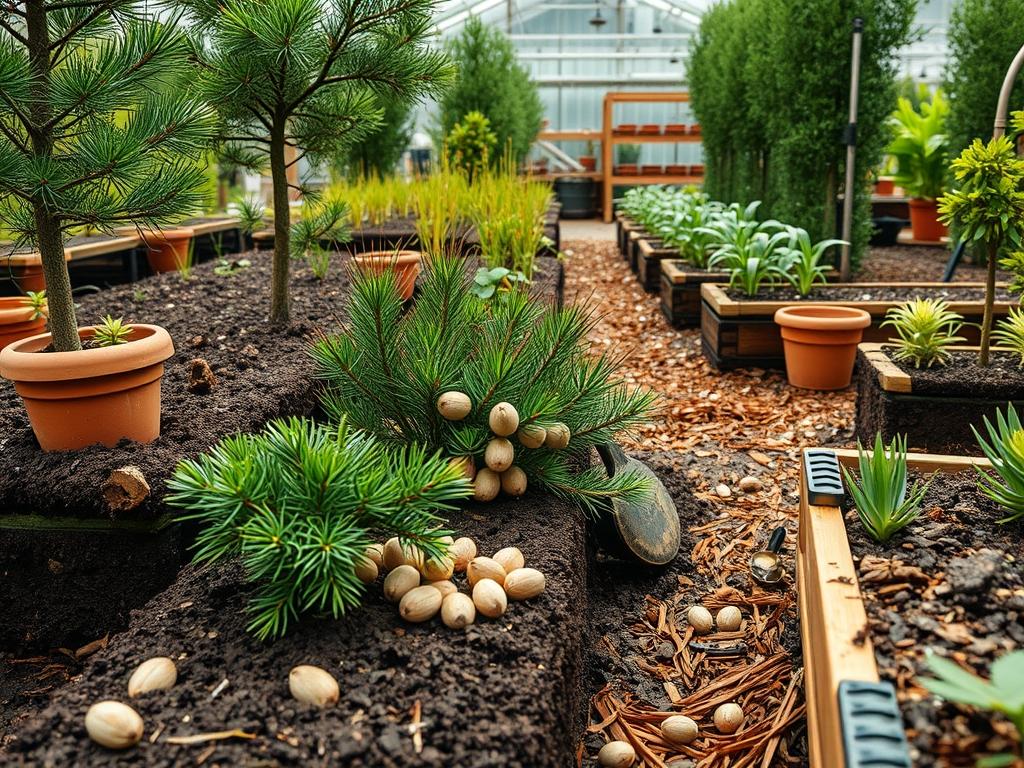
Integrating productive perennials into a high-end landscape requires a delicate balance between aesthetic form and functional yield. When a property owner expresses interest in picking fresh pine nuts, the landscape architect must transition from traditional ornamental thinking to a more holistic, silvicultural approach. Most professionals view the inclusion of edible conifers as a long term investment in the property’s value and ecological health. The site must be prepared to handle the substantial mature height of these species while ensuring that the harvesting process does not interfere with the manicured appearance of the grounds. Successfully incorporating these trees involves understanding the transition from youthful, symmetry focused designs to the rugged, picturesque profiles of mature specimens. Proper planning ensures that the transition is seamless, providing both curb appeal and a gourmet harvest for decades. Climate plays the most significant role in this planning phase. High altitude species may struggle in humid, coastal environments, while the classic Mediterranean Stone Pine requires specific temperature minimums to thrive.
Landscape Design Principles
Symmetry serves as the foundation for formal pine groves, but for the purpose of picking fresh pine nuts, a more naturalistic, staggered arrangement often proves superior. By utilizing triangular spacing, a landscape architect can maximize sunlight penetration to the lower branches, which is critical for cone development. Focal points within the garden should be anchored by the largest Pinus pinea or Pinus koraiensis specimens, as these provide the most dramatic silhouettes against the horizon. Elevation layers are essential; smaller shrubs and groundcovers should be placed at the periphery to avoid competing for the deep moisture required by the pines.
Irrigation planning must account for the changing needs of the trees as they establish. Drip irrigation systems are preferred during the first five years to encourage deep root penetration, but they should be phased out in favor of occasional, deep soakings once the trees reach maturity. Walkways should be positioned at a distance that allows for easy access with harvesting tools like Tarp Liners and Long-handled Hooks without trampling the delicate root zones or compacting the soil. Visual balance is achieved by pairing the dark, rugged needles of the pine with softer, lighter textures like Ornamental Grasses or silver-foliage shrubs. This contrast highlights the structural integrity of the pines throughout the dormant winter months.
Plant and Material Selection
| Plant Type | Sun Exposure | Soil Needs | Water Demand | Growth Speed | Maintenance Level |
| :— | :— | :— | :— | :— | :— |
| Stone Pine | Full Sun | Sandy, Well-drained | Low | Moderate | Low |
| Korean Pine | Full Sun/Part Shade | Loamy, Acidic | Moderate | Slow | Moderate |
| Pinyon Pine | Full Sun | Lean, Rocky | Very Low | Very Slow | Low |
| Swiss Stone Pine | Full Sun | Cool, Well-drained | Moderate | Slow | Moderate |
| Chilgoza Pine | Full Sun | Deep, Sandy Loam | Low | Moderate | High |
Implementation Strategy
The construction phase begins with rigorous grading. To prevent water from pooling at the base of the trees, a grade of at least 2 percent should be maintained away from the trunk. If the site has heavy clay, a French Drain or subsurface Drainage Tile system may be necessary to protect the root system from rot. Edging is used to define the “harvest zone” under the canopy. This area should be kept clear of heavy turf to make the process of picking fresh pine nuts more efficient.
A 4-inch layer of Organic Cedar Mulch should be applied, extending to the drip line of the tree. This helps retain moisture and prevents weed competition. When planning hardscaping near these trees, use Permeable Pavers or Decomposed Granite to allow for gas exchange in the soil. Retaining walls can be used to create level planting pockets on sloped terrain, which also brings the cones closer to eye level for easier monitoring of ripeness. Finally, the use of Root Barriers near foundations or walkways is a professional necessity to prevent the powerful lateral roots of larger pines from lifting concrete surfaces as the trees age.
Common Landscaping Failures
The most frequent error in productive pine landscaping is root overcrowding. Designing for the tree’s size at five years rather than fifty years leads to interlocking canopies that shade out the very branches that produce cones. Soil compaction is another silent killer. During the construction of walkways or patios, heavy machinery often crushes the soil structure, depriving the pines of oxygen. Irrigation inefficiencies frequently manifest as “over-watering” in a misguided attempt to speed up growth. Pines are generally drought tolerant once established; excessive moisture causes root pathogens to flourish.
Improper spacing of species with different water requirements can also lead to failure. If a drought resistant Pinyon Pine is placed in the same irrigation zone as a thirsty Hydrangea, one of them will inevitably suffer. Lastly, many homeowners fail because they do not account for the acidity of fallen needles. Over time, the soil pH can drop, which may negatively impact certain companion plants if they are not acid loving species.
Seasonal Maintenance
Spring is the season for structural integrity. Landscape consultants recommend light pruning to remove any deadwood or crossing branches, though heavy pruning should be avoided as it can reduce the number of potential cone sites. Check the Drip Emitters for clogs and ensure the Mulch layer hasn’t thinned out. As summer arrives, monitoring for pests like the Pine Tip Moth or Pine Shoot Beetle becomes the priority. Deep watering should be performed every two to three weeks during periods of extreme heat, focusing on the outer edges of the canopy where the feeder roots reside.
Autumn is the primary window for picking fresh pine nuts. The process involves identifying cones that have turned from green to a duller brown. Use a Heavy-duty Tarp spread beneath the tree to catch falling debris. Cones are often harvested manually or by gently shaking the branches. Once collected, the cones should be placed in a warm, dry area to open. To extract the nuts, one can use a Rubber Mallet to break apart the dried cone scales. Finally, the hard shells of the seeds are cracked using a small Mechanical Press or Nutcracker to reveal the buttery kernel inside. Winter maintenance is relatively hands-off; however, in areas with heavy snowfall, it is wise to gently brush accumulation off young branches to prevent snapping.
Professional Landscaping FAQ
How long does it take for a pine tree to produce nuts?
Most species require at least 10 to 15 years of growth before they begin producing significant cone crops. Selecting larger nursery stock can reduce this waiting period, but it requires more intensive irrigation during the establishment phase.
What is the best way to extract pine nuts from the cones?
Allow the harvested cones to dry in a sunny, well ventilated spot until the scales naturally flare open. Once open, shake the cones inside a Heavy-duty Bucket or bag to dislodge the seeds from the internal structure.
Can I plant pine nuts directly into the landscape?
While possible, germination rates are variable and seedlings are vulnerable to pests. It is significantly more effective to plant 3-gallon or 5-gallon containerized trees that have already developed a strong central leader and a robust root ball.
How do I prevent squirrels from stealing the harvest?
Installing a Baffle on the trunk can help, though it is often difficult with low-branching species. Many professionals suggest planting a surplus of trees to account for the local wildlife’s share of the annual nut production.
Do pine trees require specific fertilizer for nut production?
A balanced, slow release Tree Fertilizer applied in early spring can support growth. However, avoid high nitrogen formulas late in the season, as this can stimulate soft growth that is susceptible to winter frost damage.