
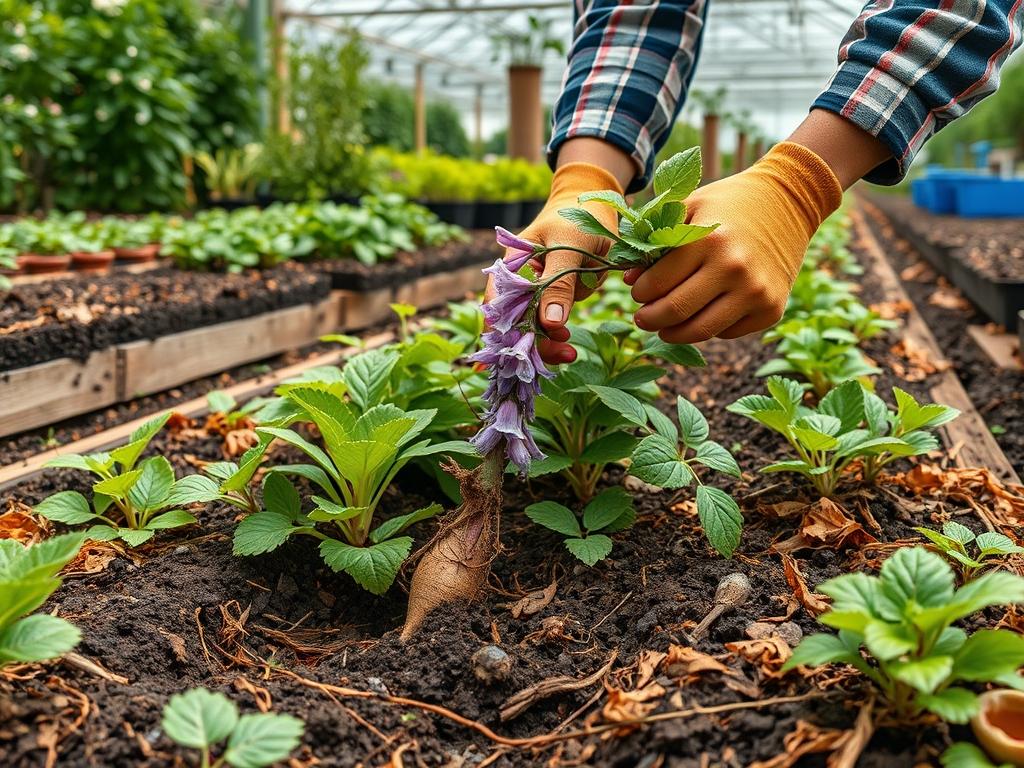
Integrating medicinal perennials into a professional landscape design requires a delicate balance between aesthetic elegance and functional utility. When a client requests a garden centered on the process of picking fresh Valerian root, the architect must look beyond the immediate visual appeal and consider the underground mechanics of the site. Valeriana officinalis is a robust herb that can reach heights of three to five feet, making it a primary candidate for the back of a border or as a naturalizing agent along a property’s periphery. However, the true purpose of this plant lies in its root system. A landscape designed for harvesting must prioritize soil friability, accessibility, and drainage to ensure that the extraction process does not disrupt the surrounding hardscaping or the structural integrity of neighboring ornamental species.
From a curb appeal perspective, Valerian offers a soft, fern-like foliage texture and airy umbels of fragrant white or light pink flowers that bloom in mid-summer. It acts as a beacon for pollinators, enhancing the ecological value of any outdoor living space. The challenge for a consultant is managing its tendency to self-seed and its preference for damp, nitrogen-rich environments. Without proper planning, a well-intentioned herb garden can quickly become a chaotic thicket, diminishing the clean lines of a modern landscape. We must treat the harvest of the root not as a simple gardening chore, but as a seasonal landscape management event that dictates the placement of Walkways, the selection of Mulch, and the engineering of the Irrigation system.
Landscape Design Principles
Successful landscape design for herbal harvesting relies on the principle of accessibility layered with visual symmetry. Because Picking Fresh Valerian Root involves deep excavation, the site must be organized into “zones of disturbance.” We place Valerian in designated harvesting bays that are framed by rigid Steel Edging or Cedar Timbers. This prevents the digging process from loosening the soil beneath delicate Flagstone paths or causing erosion near Retaining Walls.
Symmetry is maintained by echoing the verticality of the Valerian with structural elements like tapered Boxwood hedges or stone plinths. These focal points provide a visual anchor when the Valerian is cut back or removed for its roots. Elevation plays a critical role here; by planting Valerian in Twelve-Inch raised beds, the architect ensures superior drainage. This elevation also makes the physical act of digging more ergonomic, reducing the strain on the gardener while protecting the surrounding lawn from soil compaction caused by heavy foot traffic.
Plant and Material Selection
| Plant Type | Sun Exposure | Soil Needs | Water Demand | Growth Speed | Maintenance Level |
| :— | :— | :— | :— | :— | :— |
| Valeriana officinalis | Full Sun to Part Shade | Rich, Moist Loam | High | Fast | Moderate |
| Echinacea purpurea | Full Sun | Well-Drained | Low to Medium | Moderate | Low |
| Salvia nemorosa | Full Sun | Sandy, Dry | Low | Fast | Low |
| Fagus sylvatica | Full Sun to Part Shade | Deep, Well-Drained | Medium | Slow | High |
| Lavandula angustifolia | Full Sun | Gritty, Alkaline | Low | Moderate | Moderate |
For the hardscaping material selection, we recommend using Three-Quarter Inch Crushed Stone for secondary paths surrounding the harvest area. Unlike organic mulch, stone does not mix with the soil during the digging process, keeping the workspace clean. For the primary beds, a layer of Double-Shredded Hardwood Mulch at a depth of Three Inches is essential. This preserves the moisture the Valerian craves while suppressing weeds that would compete with the root development.
Implementation Strategy
The planning phase begins with a thorough site analysis focusing on Drainage. Valerian roots will rot in standing water, so we implement a French Drain or custom Perforated Pipe system if the topography suggests a low point. Once the grading is corrected to a Two Percent slope away from the home’s foundation, we delineate the planting blocks.
To prepare for Picking Fresh Valerian Root, the soil must be amended with Six Inches of organic compost to a depth of Two Feet. This ensures the soil remains loose enough for easy extraction. When the plant reaches its second year of maturity in the autumn, the harvest begins. The landscape professional uses a Straight-Blade Spade to cut a clean circle approximately Eight Inches from the base of the plant. A Garden Fork is then used to gently pry the rhizome from the earth.
Once the plant is lifted, the cleaning process is paramount for both the health of the plant and the cleanliness of the landscape. We recommend a dedicated wash station equipped with a Hardwood Slat Bench and a Stainless Steel Mesh Screen. Using a High-Pressure Garden Nozzle, the soil is washed away from the roots. The runoff should be directed back into the garden beds through a Silt Trap to prevent the fine particles from clogging the property’s main drainage lines.
Common Landscaping Failures
The most frequent error in medicinal landscaping is improper spacing, which leads to root overcrowding. If Valeriana officinalis is planted closer than Twenty-Four Inches apart, the roots interlock, making it impossible to harvest one plant without damaging the entire row. Overcrowding also restricts airflow, inviting powdery mildew which can quickly spread to other ornamental species.
Another failure involves soil compaction. Using heavy machinery or frequent treading near the root zones collapses the pore spaces in the soil, suffocating the roots and making the eventual harvest a grueling physical task. Furthermore, many homeowners fail to realize that Valerian is a heavy feeder. Without consistent nutrient replenishment, the soil becomes depleted, leading to stunted growth and a lack of the essential oils for which the root is prized. Lastly, a lack of Root Barriers can lead to Valerian spreading into unwanted areas of the turf, turning a structured garden into a maintenance nightmare.
Seasonal Maintenance
Landscape management for a Valerian-focused garden follows a distinct seasonal rhythm. In the Spring, the focus is on fertilization and thinning. We apply a slow-release organic fertilizer and clear any debris from the Irrigation emitters to ensure consistent moisture during the rapid growth phase. As summer approaches, deadheading the spent blooms is necessary to prevent excessive self-seeding, unless the goal is a wilder, meadow-like aesthetic.
In the Autumn, the harvest takes center stage. This is the prime window for Picking Fresh Valerian Root as the plant’s energy has returned to the underground rhizome. After the roots are removed, the voids in the soil must be filled immediately with fresh Topsoil and Compost to prevent erosion. During the Winter, the garden beds should be protected with a layer of Straw or Evergreen Boughs to prevent frost heaving, which can push younger roots out of the ground and expose them to lethal freezing temperatures.
Professional Landscaping FAQ
What is the best time of year to harvest the roots?
Harvesting is most effective in late autumn after the first frost or in very early spring before new growth appears. This ensures the concentrations of active compounds within the root system are at their peak for medicinal use.
How do I prevent the root harvest from ruining my lawn?
Always place a Heavy-Duty Tarp on the grass before you begin digging. This catches all the displaced soil and prevents the lawn from being smothered. Use Plywood Sheets to distribute weight if you must move heavy equipment across the turf.
Can Valerian be grown in large containers to avoid digging in the ground?
Yes, Valerian thrives in Twenty-Gallon pots. This approach protects your landscape’s underground infrastructure and makes the washing process much simpler. However, container-grown plants require more frequent watering and a more aggressive fertilization schedule than those in the ground.
How do I clean the roots without making a mess on my patio?
Use a portable wash station over a patch of permeable gravel. A large Plastic Pre-Wash Tub can catch the bulk of the mud, which can then be emptied into a compost pile rather than being hosed onto your decorative pavers.
Should I wear specific gear when handling the roots?
Wear Heavy-Duty Rubber Gloves and a Waterproof Apron. Fresh Valerian root has a distinct, pungent odor that can linger on skin and clothing. Using dedicated tools and apparel ensures the scent does not transfer to your home or other garden areas.