
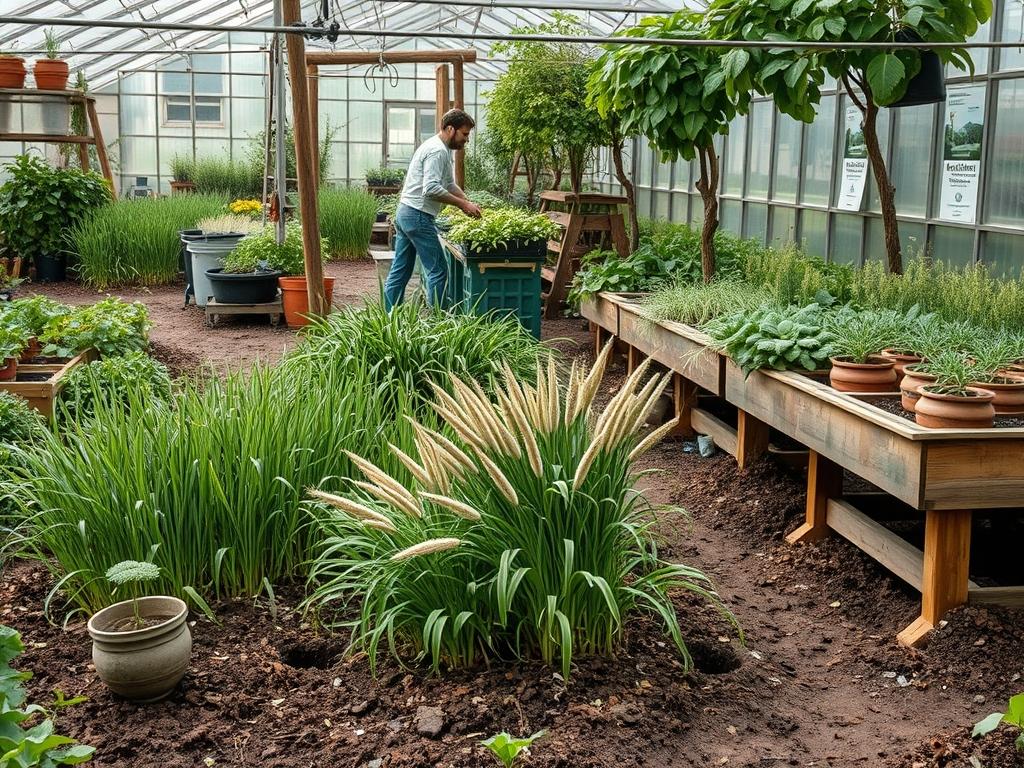
Integrating heirloom cereal crops into a residential landscape requires a sophisticated balance between agricultural utility and high-end aesthetic value. For the modern homeowner, the transition toward edible landscapes means that traditional ornamental grasses are increasingly being replaced by functional alternatives such as Ancient Einkorn, Black Emmer, or Golden Giant Amaranth. The primary landscaping challenge lies in managing the life cycle of these plants so they contribute to curb appeal during the growing season and remain manageable during the intensive process of Harvesting Garden Heirloom Grains. Architects must consider the golden hues of maturing stalks as a design asset, using them to provide textural contrast against dark green evergreens or structural hardscaping. By viewing grain as a structural element rather than a messy crop, we can enhance the outdoor environment while respecting the specific climate demands and drainage requirements of these storied species.
The success of a grain inclusive landscape depends heavily on sightlines and the movement of light. When the sun hits a stand of Turkey Red Wheat at a low angle, the visual impact is comparable to the finest designer grasses. However, unlike specimen plants, grains are usually grown in drifts or rows, meaning the site must be graded perfectly to avoid stagnant water that leads to fungal pathogens. Incorporating retaining walls made of natural fieldstone can help define these grain blocks, preventing the tall stalks from flopping over onto pristine flagstone walkways. This structural containment ensures that the “farm to table” aspect of the property feels intentional and integrated rather than accidental or overgrown.
Landscape Design Principles
When architecting a space for heirloom grains, professional designers prioritize the principle of rhythm and the use of focal points to guide the eye. Grains move beautifully in the wind; this kinetic energy should be leveraged by placing grain beds where they can be viewed from primary outdoor living areas or through large windows. Symmetry is often achieved by flanking a central permeable paver path with equal-sized plots of Barley or Rye, creating a formal entrance to a more wild, meadow-like backyard.
Elevation layering is an essential technique to maintain visual interest. Because many heirloom grains reach heights of 4 feet to 6 feet, they should be placed at the rear of the planting bed. Lower-growing native plants or medicinal herbs can be stepped down toward the edge of the bed to hide the lower, thinner sections of the grain stalks. This layering also aids in irrigation planning. By grouping plants with similar water demands, designers can install a drip irrigation system that delivers precise moisture levels to the grain roots without over-saturating the surrounding perennials.
Visual balance is maintained through the use of color and texture. The blue-green blades of young Oats provide a cool palette in late spring, while the deep bronze and purple seed heads of Amaranth offer a dramatic verticality in late summer. As these crops mature toward the harvest, their transition to gold and tan must be accounted for in the overall color scheme of the house and hardscape. A well-designed grain landscape looks as intentional in its dry, harvest-ready state as it does during its lush green phase.
Plant and Material Selection
The selection of specific grain varieties must be informed by the soil profile and the microclimates present on the property. The following table outlines the specifications for the most common heirloom grains used in professional residential designs.
| Plant Type | Sun Exposure | Soil Needs | Water Demand | Growth Speed | Maintenance Level |
| :— | :— | :— | :— | :— | :— |
| Einkorn Wheat | Full Sun | Well-drained Loam | Moderate | Medium | Medium |
| Common Buckwheat | Full Sun/Part Shade | Marginal/Sandy | Low | Very Fast | Low |
| Hulless Barley | Full Sun | Neutral pH | Moderate | Medium | Medium |
| Heritage Rye | Full Sun | Adaptable | Low | Fast | Low |
| Grain Amaranth | Full Sun | Rich/Well-drained | Moderate | Medium | High |
| Emmer Wheat | Full Sun | Heavy Clay/Loam | Moderate | Medium | Medium |
Implementation Strategy
The transition from a design on paper to a physical grain garden begins with rigorous site preparation. Most heirloom grains require a “clean” seedbed, meaning existing turf or weeds must be removed completely. In professional installations, we recommend a sod cutter to strip the top layer of grass, followed by a light tilling of the top 6 inches of soil. If the soil is heavy clay, incorporating organic compost or leaf mold will improve the internal drainage necessary for grain health. Once the soil is prepared, the area should be leveled with a landscape rake to ensure uniform seed germination.
Grading is the next critical step. A gentle slope of 2 percent away from the home foundation and towards a French drain or bioswale prevents the grain from sitting in “wet feet,” which can cause the heavy seed heads to topple, a condition known as lodging. After sowing the seeds at a depth of roughly 1 inch for wheat and barley, or 0.5 inches for smaller seeds like amaranth, the soil should be lightly firmed. Edging is mandatory for a polished look; use heavy-gauge steel edging or pressure-treated timber to create a sharp line between the grain plot and the lawn or walkway. Finally, applying a thin 1-inch layer of shredded straw mulch can help retain moisture during the germination phase without obstructing the emerging shoots.
Common Landscaping Failures
One of the most frequent mistakes in residential grain production is improper spacing. Homeowners often sow seeds too densely, which leads to root overcrowding and poor air circulation. When the air cannot move freely through the stalks, powdery mildew and other fungal issues can devastate the crop. A professional standard is to aim for a density that allows each plant enough room to “tiller” or produce multiple stems, usually spaced about 3 inches apart in rows that are 8 inches wide.
Another common failure involves irrigation inefficiencies. Over-watering headlines the list of problems, as most heirloom grains are surprisingly drought-tolerant once established. Excessive water, especially when applied via overhead sprays, can weigh down the maturing seed heads and cause the stalks to snap. Furthermore, soil compaction is a silent killer; walking through the grain beds to weed or inspect the plants compresses the earth, destroying the pore space needed for oxygen. To solve this, designers should always include narrow stepping stones or mulched paths within the grain blocks to allow for maintenance without damaging the soil structure.
Seasonal Maintenance
Managing a grain landscape is a year-round commitment that flows with the natural seasons. In the spring, the focus is on soil health and planting. This is the time to test soil pH and apply natural fertilizers like bone meal or well-rotted manure. Early weed suppression is vital; once the grains reach 12 inches in height, they will naturally shade out most competitors, but the first few weeks require diligent hand weeding.
Summer maintenance involves monitoring for pests and ensuring consistent moisture during the “heading out” phase, which is when the ears of grain first appear. As the grains turn from green to gold, irrigation should be scaled back significantly. Harvesting Garden Heirloom Grains typically occurs in late summer or early autumn. You will know the grain is ready when a kernel cannot be easily dented with a fingernail, a state known as the hard dough stage. Tools such as a hand sickle or garden shears are used to cut the stalks near the base.
In autumn, after the harvest, the remaining “stubble” can be tilled back into the earth to provide organic matter, or a cover crop like Crimson Clover can be planted to protect the soil over winter. Winter maintenance is primarily aesthetic. If the stalks are left standing for visual interest or to provide food for local birds, they should be cleared before the first heavy snow to prevent them from becoming a matted mess on the ground.
Professional Landscaping FAQ
What is the best way to tell if heirloom grains are ready for harvest?
The most reliable method is the fingernail test. Press your nail into a grain kernel; if it is hard and does not leave a deep indentation or release milky sap, the grain is dry enough for Harvesting Garden Heirloom Grains.
Can I grow heirloom grains in large decorative pots or containers?
Yes, but you must choose varieties like Buckwheat or Short-Stalk Barley. Ensure the containers are at least 18 inches deep and have excellent drainage properties. Use a high-quality potting mix amended with perlite to prevent the soil from compacting.
How do I prevent birds from eating my entire grain crop before I can harvest it?
Bird management is best handled through reflective flash tape or bird netting. Netting should be suspended on bamboo stakes at least 6 inches above the grain heads to prevent the birds from reaching through the mesh to feed.
Do these grains require heavy fertilization to look good in a landscape?
Most heirloom varieties are adapted to marginal soils and actually perform poorly with high-nitrogen fertilizers, which cause excessive leaf growth and weak stems. A single application of balanced organic compost in the spring is usually sufficient for the entire season.
Is it necessary to use a scythe for a small residential grain patch?
For plots smaller than 200 square feet, a traditional scythe is often unnecessary. A high-quality serrated hand sickle or even standard bypass loppers provide more control in tight spaces and allow you to harvest the stalks neatly without damaging surrounding ornamental plants.