
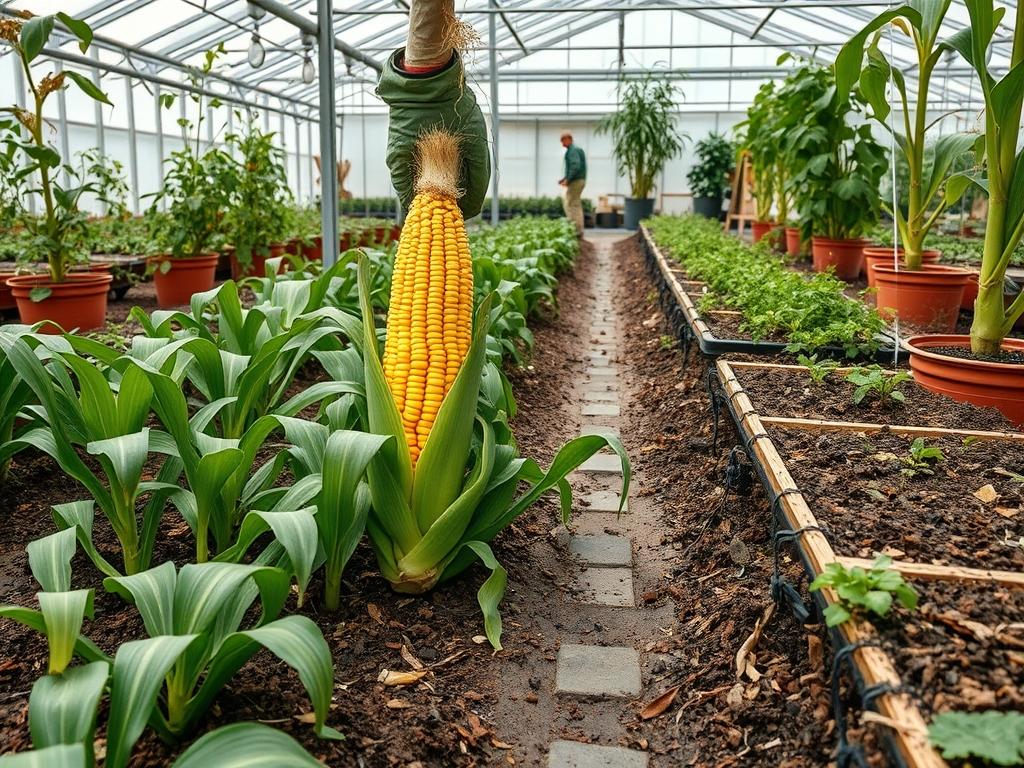
Integrating functional grain crops into a residential or estate landscape requires a sophisticated understanding of both aesthetic design and agricultural timing. While traditional ornamental gardening focuses on blooming cycles and foliage color, the intentional inclusion of dent corn into a modern “agri-scape” demands a focus on the lifecycle transition from lush green backdrop to structural golden architecture. For the property owner seeking a productive landscape, the challenge lies in balancing the visual appeal of these towering stalks with the technical requirements of the final harvest. When the goal is an edible result, specifically for milling high quality cornmeal or flour, the design must prioritize the drying phase. Picking Ripe Dent Corn is not merely a matter of convenience; it is a calculated decision based on the physiological state of the kernel and the ambient moisture levels of the local micro-climate.
The landscape architect must treat a corn plot as a significant structural element within the outdoor space. In high-end residential design, a well-placed stand of Zea mays indentata serves as a temporary privacy screen, reaching heights of 6 to 8 feet in a single season. However, unlike ornamental grasses that remain upright and relatively uniform, dent corn undergoes a dramatic visual shift as it matures. The deep emerald leaves eventually fade to a parchment tan, a transition that can clash with vibrant summer perennials if not buffered by transitional plantings. This phase is critical for the harvest. If a landscape is designed with poor airflow or excessive irrigation that hits the ears directly, the moisture content within the husks will remain too high, leading to fungal pathogens and spoilage. For grinding purposes, the grain must reach a low moisture threshold, typically below 15 percent, to ensure the kernels shatter into meal rather than mashing into a damp paste.
Landscape Design Principles
Successful integration of corn into a master landscape plan relies on the principle of axial symmetry and the use of focal points. Large-scale properties benefit from corn planted in long, rhythmic rows that draw the eye toward a distant statue or a water feature. This creates a sense of purposeful transition between the formal garden and the wilder elements of the estate. Because corn is a heavy feeder and requires significant water during its vegetative state, the irrigation planning must be precise. Subsurface drip irrigation is the preferred method here, as it delivers water directly to the root zone without increasing the humidity within the canopy. High humidity is the enemy of the drying process. As the season progresses and you approach the window for Picking Ripe Dent Corn, the irrigation must be scaled back to allow the plant to naturally senesce and the kernels to harden.
Elevation layers play a vital role in the functionality of an edible landscape. To facilitate the low moisture required for grinding, corn should be planted on the higher points of the site’s topography. Low-lying areas tend to collect morning mist and have poor air circulation, which can delay the drying of the grain by weeks and risk the development of aflatoxins. By utilizing raised beds or subtle grading, the landscape architect ensures that gravity assists with drainage and that the stalks are exposed to the maximum amount of prevailing wind. This natural ventilation is the most effective tool for lowering the internal moisture of the kernel, preparing it for the heavy friction of a Stone Burr Mill.
Plant and Material Selection
| Plant Type | Sun Exposure | Soil Needs | Water Demand | Growth Speed | Maintenance Level |
| :— | :— | :— | :— | :— | :— |
| Dent Corn | Full Sun | High Nitrogen, Well-Drained | High until silking | Rapid | Moderate |
| Bush Beans | Full/Partial | Loamy, Loose | Moderate | Fast | Low |
| Winter Squash | Full Sun | Rich Organic Matter | High | Medium | Moderate |
| Creeping Thyme | Full Sun | Sandy, Poor | Low | Slow | Low |
| Tall Fescue | Full/Partial | Adaptable | Moderate | Fast | Moderate |
Implementation Strategy
The transition from a blueprint to a thriving, harvestable landscape begins with site preparation and grading. For a corn-centric design, the soil must be amended with a significant amount of Aged Compost and Nitrogen-Rich Fertilizer to support the rapid biomass production. Once the site is graded for proper runoff, the layout should incorporate wide walkways of at least 36 inches between the corn plots and any adjacent ornamental borders. This spacing allows for the necessary airflow that aids in the drying of the ears while giving the gardener easy access for monitoring the maturity of the grain.
Edging is another critical component of the implementation. Using a hardscape material like Steel Edging or Belgian Block creates a clean line between the agricultural zone and the manicured lawn, signaling that the corn is an intentional design choice rather than an accidental outgrowth. Within the plot, a layer of Hardwood Mulch at a depth of 2 to 3 inches should be applied early in the season to suppress weeds and retain soil moisture. However, as the corn reaches its full height and the “milk stage” of the kernels passes, the mulch should be allowed to thin out. This allows the soil to dry and prevents the base of the stalks from remaining in a high-moisture environment, which is vital for the kernels to reach the brittle state necessary for grinding.
Common Landscaping Failures
The most frequent error in agri-scaping corn is improper spacing leading to root overcrowding and poor air circulation. When stalks are crowded too closely, they compete for sunlight and nutrients, resulting in smaller ears and weak stalks that are prone to lodging, which is the technical term for the plants falling over in the wind. Fallen corn is nearly impossible to keep dry because contact with the soil introduces immediate moisture and rot. Furthermore, an irrigation system that is not programmed to adjust for the crop’s lifecycle is a common pitfall. Continued overhead watering during the late summer prevents the husks from drying out and can lead to sprouted kernels while they are still on the cob.
Another failure involves poor soil drainage and compaction. Corn roots require oxygen as much as they require water. In compacted soils with a high clay content, water sits around the root flare, causing stress that manifests as poor ear fill and high internal cob moisture. A landscape architect must ensure that the soil is tilled or aerated deeply before planting, incorporating materials like Perlite or Coarse Sand if necessary to improve the structural integrity of the growing medium. Without these precautions, the corn will never reach the “Black Layer” stage, which is the biological marker at the base of the kernel indicating that it has reached maximum dry matter accumulation and is ready for the final drying phase.
Seasonal Maintenance
Spring maintenance focuses on preparation and planting. This is the time for soil testing and the application of pre-emergent weed controls if organic mulching isn’t sufficient. As the corn is planted, ensure it is oriented to catch the prevailing summer breeze. During the summer, the focus shifts to water management. The corn will require roughly 1 to 1.5 inches of water per week during its peak growth. Landscape professionals should monitor for pests like the Corn Earworm, which can create entry points for moisture and mold within the husk.
Autumn is the most critical period for the dent corn harvest. To achieve the low moisture required for a shelf-stable grind, the ears should be left on the stalk until the husks are bone-dry and the kernels have developed the characteristic “dent” on their crowns. During this time, the gardener should cease all supplemental watering. If a period of heavy rain is forecasted, it may be necessary to harvest the ears slightly early and finish the drying process in a well-ventilated barn or solar dryer. In winter, the spent stalks can be integrated into the compost pile or shredded and used as a coarse mulch for other areas of the garden, completing the nutrient cycle of the landscape.
Professional Landscaping FAQ
How do I know when the corn is dry enough to grind?
The kernels should feel like small stones and be difficult to dent with a fingernail. Ideally, they should have a moisture content between 13 and 15 percent to ensure the meal stores safely without molding.
Can I grow dent corn in a small backyard?
Yes, but you must plant in blocks rather than single rows. Corn is wind-pollinated, and a block of at least 4 by 4 feet is necessary to ensure the ears fill out completely with kernels.
What is the best way to prevent stalks from falling?
Select varieties known for “strong stalks” and ensure the soil has adequate potassium. Hilling the soil around the base of the plants when they are 12 inches tall also provides extra structural support.
Does dent corn require special fertilizer?
Corn is a heavy nitrogen user. A balanced 10-10-10 Fertilizer at planting, followed by a nitrogen-heavy side-dressing when the plants reach knee-height, will support the rapid growth required for a successful harvest.
Why is my corn molding before it dries?
This usually indicates poor airflow or excessive late-season moisture. Increase spacing between plants next season and ensure the husks are not being hit by automated lawn sprinklers during the final drying phase in autumn.