
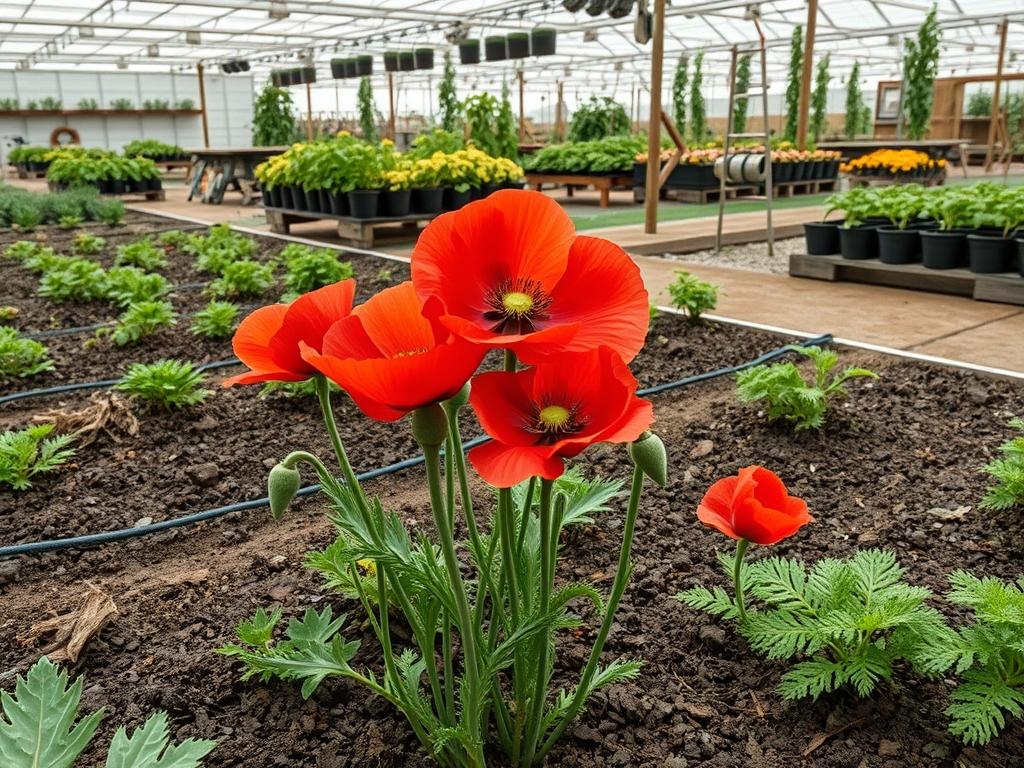
Integrating ephemeral blooms into a permanent landscape requires a strategic understanding of life cycles, especially when managing species that transition from vibrant focal points to structural seed heads. In professional landscape architecture, the poppy (Papaver) represents a unique challenge. While their spring display is unmatched for saturation and curb appeal, their rapid decline can leave unsightly gaps in a curated garden bed. Managing this transition through the intentional harvesting of garden poppy pods allows the designer to maintain a tidy aesthetic while capturing architectural elements for indoor use or future propagation. This process is not merely a gardening task; it is an essential component of professional outdoor environment management that balances biodiversity with the clean lines expected in high-end residential design.
Climate considerations play a vital role in determining the success of these plants within a larger landscape plan. In regions with high humidity, the drying process for pods often begins while the plant is still in the ground, necessitating a keen eye for fungal pathogens. Conversely, in arid climates, the pods may dry too quickly, shattering and self-seeding before the landscape crew can arrive for maintenance. By viewing the poppy pod as a secondary harvest, a landscape consultant can extend the functional value of the garden beyond the flowering stage. This approach prioritizes outdoor functionality, ensuring that every square foot of the planting plan contributes to the overall vision, whether through color, texture, or the sculptural silhouette of the dried seed heads.
Landscape Design Principles
When incorporating poppies into a professional landscape, symmetry and focal points must be managed with care. Because poppies are often seasonal, they should be planted in “pocket” formations within a mid-elevation layer. This ensures that as the plants enter the drying stage, their skeletal forms are framed by more permanent, evergreen structures or late-blooming perennials. Using the pods as a focal point requires a background of fine-textured foliage, such as Ornamental Grasses, which provides a neutral canvas for the pods’ geometric shapes.
Elevation layers are critical for maintaining visual balance. A well-designed border might feature low-growing groundcovers like Thyme in the foreground, with poppies occupying the 18 inch to 36 inch height range. This nesting technique hides the yellowing foliage of the poppy as it redirects its energy into the seed pod. Irrigation planning must also account for this transition. While poppies require consistent moisture during their growth phase, water must be drastically reduced as the pods begin to harden. Over-irrigation during the pod-ripening stage is a common mistake that leads to gray mold and poor seed quality.
Walkways and hardscaping should be designed to allow easy access for harvesting garden poppy pods without compacting the soil. A permanent Flagstone path or a neatly edged Crushed Granite walkway ensures that maintenance can be performed even after heavy rains. This accessibility is a hallmark of professional garden planning, where every element is accessible for curated intervention, preventing the landscape from becoming overgrown or inaccessible during the peak of the harvest.
Plant and Material Selection
| Plant Type | Sun Exposure | Soil Needs | Water Demand | Growth Speed | Maintenance Level |
| :— | :— | :— | :— | :— | :— |
| Papaver somniferum | Full Sun | Well-drained sandy loam | Low | Fast | Moderate |
| Papaver orientale | Full Sun | Rich, deep loam | Medium | Medium | Low |
| Eschscholzia californica | Full Sun | Poor, rocky soil | Very Low | Fast | Low |
| Papaver rhoeas | Full Sun | Average garden soil | Medium | Fast | Moderate |
| Papaver nudicaule | Full/Part Sun | Humus-rich soil | Medium | Medium | High |
Implementation Strategy
The transition from a flowering garden to a harvestable site begins with grading and soil preparation. Poppies require excellent drainage to prevent crown rot, which can be achieved by creating a slight 2 percent slope or utilizing raised beds with Sand and Compost mixtures. When the flowers begin to drop their petals, the landscape professional observes the development of the “capsule.” This is the beginning of the harvesting garden poppy pods cycle.
To implement a successful harvest, monitor the pods until they shift from a supple green to a dusty, chalky blue or tan. The most critical indicator of readiness is the opening of the small holes, often called “galleries” or “windows,” just beneath the crown of the pod. Use sharp Bypass pruners to cut the stems, leaving at least 12 inches of stalk for easy handling. If the goal is to maintain curb appeal, this harvest should be performed as soon as the pods are ripe to prevent the garden from looking weathered.
For the drying phase, move the stalks to a climate-controlled environment with high air circulation. Bundling the stems with Jute twine and hanging them upside down over a Canvas drop cloth is the professional standard. This allows any early-release seeds to be captured cleanly. If the pods are being kept for floral arrangements, they can be dried upright in tall Ceramic vases without water, though this may cause some slight bending in the stems if they are not fully lignified.
Common Landscaping Failures
One of the most frequent errors in garden planning is failing to account for the “post-bloom gap.” When poppies are planted in large monocultures, the landscape looks barren once the pods are harvested. This is often exacerbated by root overcrowding, where the aggressive root systems of poppies compete with neighboring plants for nutrients. Proper spacing of at least 12 inches between plants is necessary to ensure the health of both the poppy and its companions.
Drainage mistakes remain a primary cause of pod failure. If the site has heavy clay soil, the moisture trapped around the root zone can cause the pods to turn black and mushy before they reach maturity. This is solved by incorporating Perlite or Gravel into the planting site. Furthermore, irrigation inefficiencies, such as overhead sprinklers that wet the ripening pods, can lead to internal seed rot. Professional systems should use Drip irrigation or Soaker hoses buried beneath 3 inches of Cedar mulch to keep the foliage and fruit dry.
Seasonal Maintenance
Spring maintenance involves the thinning of seedlings to ensure adequate airflow. As the temperatures rise, a light application of Organic 5-10-5 fertilizer can support robust pod development. During the summer, the focus shifts entirely to moisture management. This is the peak window for harvesting garden poppy pods. Once the harvest is complete, the remaining foliage should be cut back to the ground to allow the surrounding perennials to fill the space.
In autumn, the landscape architect should focus on soil health. Adding a layer of Leaf mold or Aged manure replenishes the nitrogen used during the rapid growth phase. This is also the time for “site-seeding” if a naturalized look is desired. By shaking a few of the harvested pods over the designated area, you ensure a fresh crop for the following year. Winter management is minimal; however, in colder zones, a 4 inch layer of Clean straw or Evergreen boughs can protect the soil structure from the freeze-thaw cycle, preserving the site for early spring germination.
Professional Landscaping FAQ
When is the optimal time for harvesting garden poppy pods?
Harvest when the pods turn tan or dusty gray and the small vents beneath the top crown begin to open. At this stage, the seeds inside will rattle when the stem is lightly shaken, indicating the moisture content is sufficiently low.
What tools are best for cleanly removing pods without damaging the plant?
Use sterilized Bypass pruners or a sharp Floral knife to make a clean, slanted cut. This prevents crushing the vascular tissue of the stem and reduces the risk of introducing pathogens to the mother plant if it is a perennial variety.
How can I maintain curb appeal while pods are drying on the stalk?
Interplant poppies with tall, late-season perennials like Rudbeckia or Echinacea. These plants will grow over the fading poppy foliage, hiding the drying pods from the street while allowing them to reach maturity in a protected, shaded microclimate.
Do dried poppy pods require any special treatment for long-term display?
To preserve the color and structural integrity of the pods, spray them with a light coat of Matte floral sealant or unperfumed hairspray. This prevents the “galleries” from shedding seeds onto furniture and protects the pod from ambient humidity.
How should I store seeds collected during the harvesting process?
Place fully dried seeds in an Airtight glass jar or a Paper envelope stored in a cool, dark, and dry location. Ensure no residual moisture remains in the seeds to prevent mold, which can destroy the entire batch within weeks.