
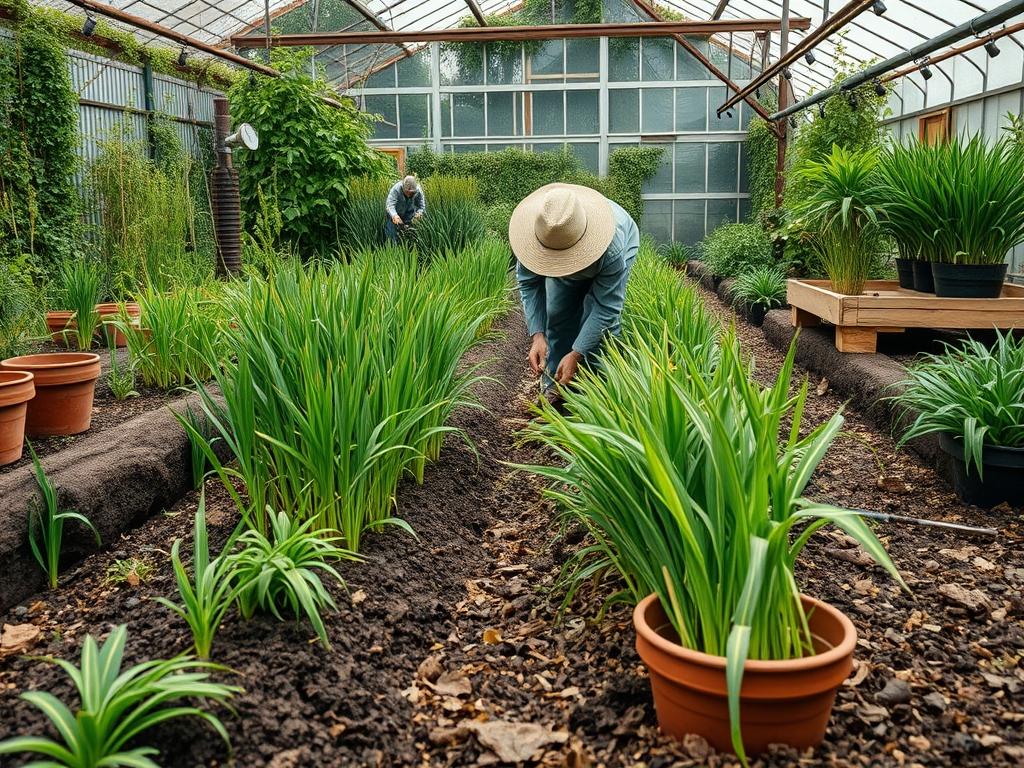
Integrating a functional wetland into a residential or estate landscape requires a sophisticated understanding of both hydraulic engineering and aesthetic composition. While many homeowners focus on traditional turf and shrubbery, the development of a managed waterway for harvesting garden wild rice represents the pinnacle of sustainable, productive landscaping. This endeavor addresses unique challenges such as soil saturation, water circulation, and accessibility. By treating the garden not just as a visual frame for the home but as a working ecosystem, the property owner gains significant curb appeal through the introduction of verticality, movement, and seasonal color shifts that only aquatic grasses can provide. The goal is to create an environment where the transition from the manicured lawn to the water edge is seamless, providing an outdoor living space that serves as both a sanctuary and a source of traditional food production. Designing for boat-based harvesting necessitates a deep commitment to site grading and the creation of navigable channels, ensuring that the landscape remains functional throughout the growing cycle.
Landscape Design Principles
Successful aquatic garden planning hinges on the principle of elevation layers. In a riparian design, the transition from upland to pond bottom must be carefully managed to support diverse plant life and human interaction. Symmetry can be achieved through the use of twin docks or mirrored plantings on opposite banks of a channel, providing a formal structure to an otherwise wild environment. Creating focal points, such as a central island of Zizania palustris or a strategically placed stone landing, draws the eye across the water surface and adds depth to the visual field.
Visual balance is maintained by contrasting the delicate, airy texture of wild rice stalks with the heavy, grounded appearance of Large Basalt Boulders or timber retaining walls. Irrigation planning in this context is less about sprinklers and more about hydrology; the designer must account for water depth fluctuations that occur during the peak summer months. Walkways should be designed to lead the observer toward the water, utilizing materials that can withstand occasional flooding, such as Decomposed Granite or Pressure-Treated Cedar. By incorporating these layers, the landscape architect ensures that the garden feels intentional rather than overgrown, even when the rice reaches its full height of 6 to 8 feet.
Plant and Material Selection
Selecting the correct biological and structural components is vital for a harvestable water garden. The following table outlines the primary selections for a temperate climate wetland landscape.
| Plant Type | Sun Exposure | Soil Needs | Water Demand | Growth Speed | Maintenance Level |
| :— | :— | :— | :— | :— | :— |
| Wild Rice (Zizania) | Full Sun | Muck/Silt | High (Standing) | Fast | Medium |
| Pickerelweed | Full to Part | Loamy Mud | High | Moderate | Low |
| Sweet Flag | Full Sun | Wet Clay | High | Moderate | Low |
| Water Lilies | Full Sun | Heavy Clay | Constant | Fast | High |
| Blue Flag Iris | Part Shade | Wet Organic | High | Moderate | Medium |
| River Birch | Full Sun | Moist Soil | Moderate | Fast | Low |
For hardscaping, use Non-Woven Geotextile Fabric beneath any stone elements to prevent sinking into the soft bank. Crushed Limestone can be used to stabilize paths, while Galvanized Steel Edging provides a crisp border between the lawn and the aquatic transition zone.
Implementation Strategy
The execution of a boat-accessible garden requires precise earthmoving. Initial grading must establish a gentle slope toward the water body, ideally a 3:1 ratio to ensure bank stability and allow for easy boat launching. Once the basin is excavated, a layer of Bentonite Clay or a high-quality 45-mil EPDM Liner should be installed if the natural soil does not hold water. Cover the liner with 12 inches of organic-rich silt to provide a rooting medium for the rice.
Edging should be defined by a mix of Riprap Stone and native sedges to prevent erosion from boat wakes. When planning the layout, ensure that the rowing or paddling channels are at least 5 feet wide to allow a small canoe or skiff to maneuver without damaging the fragile stalks. Mulch depth in the surrounding transition gardens should be maintained at 3 to 4 inches using Double-Shredded Hardwood Mulch, which stays in place better than light pine bark during heavy rains. For drainage, incorporate a French Drain system behind any retaining walls to manage runoff from the upland lawn, directing it away from the house and toward the pond.
Common Landscaping Failures
One of the most frequent mistakes in aquatic landscaping is improper bank stabilization. Without a combination of Geogrid and deep-rooted vegetation, the edges of the harvest pond will eventually slump, filling the water with sediment and making boat navigation impossible. Soil compaction is another significant hurdle; during the construction phase, heavy machinery can crush the pore space in the soil, leading to poor drainage in the surrounding turf. To avoid this, use AlturnaMATS or similar ground protection to distribute the weight of the equipment.
Root overcrowding occurs when fast-growing species like water lilies are not contained in submerged pots, eventually choking out the Wild Rice and preventing boat passage. Irrigation inefficiencies are also common; while the rice needs standing water, it must be oxygenated. A lack of a Subsurface Aeration System can lead to anaerobic conditions, causing a foul odor and harming the aesthetic appeal of the outdoor environment. Finally, improper spacing of the rice seeds can lead to a harvest that is too dense for a boat to enter, necessitating a planned grid of clear water lanes.
Seasonal Maintenance
Landscape management for a wild rice garden follows the rhythm of the water. In the spring, focus on debris removal and checking the integrity of all Pumps and Filters. This is the time to sow seeds in the muddy bottom once the water temperature reaches approximately 45 degrees Fahrenheit. Apply a slow-release aquatic fertilizer if the soil tests low for phosphorus.
Summer maintenance involves monitoring water levels and managing invasive weeds. Use a Long-Handled Skimmer to remove algae and floating debris. As the rice matures, ensure the boat channels remain clear of overhanging vegetation. Autumn is the season of the harvest. Traditional methods involve using Hand-Carved Cedar Knocking Sticks to gently tap the grain into the hull of a boat. After the harvest, cut the dead stalks down to the water line to prevent them from rotting in the pond over winter. During the winter months, ensure that any Floating De-icers are functional to protect the structural integrity of the docks and prevent a total freeze-over that could harm the dormant seeds in the muck.
Professional Landscaping FAQ
How deep should the water be for wild rice?
Maintain a consistent depth of 18 to 36 inches. While the plants can survive in shallower water, deeper levels discourage terrestrial weeds and provide enough clearance for a small boat to navigate the crop during the late summer harvest period.
What is the best way to prevent bank erosion?
Use a combination of Coir Logs and Fieldstone. The logs provide immediate structural support and a medium for plant roots to take hold, while the stones protect the shoreline from the mechanical energy of boat wakes and wind-driven ripples.
Can I grow wild rice in a small backyard?
Yes, provided you have at least 200 square feet of dedicated water space. While large-scale boat harvesting requires more room, a mini-wetland can be managed with a small coracle or by wading, provided the soil is properly prepared and graded.
Does wild rice help with water quality?
As a vigorous grower, wild rice acts as a natural filter, absorbing excess nitrogen and phosphorus from the water column. This helps prevent algae blooms and contributes to a clearer, healthier pond environment that enhances the overall curb appeal of the property.
What tools are needed for harvesting by boat?
You will need a Lightweight Canoe, two Wooden Knocking Sticks, and a Push Pole. The push pole is used instead of a paddle to minimize disturbance to the pond bottom and to navigate easily through the dense, vertical stalks of rice.